Iran hangs three men in first executions over January protests / Photo: © AFP

 London
 11 °C
11 °C
 Manchester
9 °C
Manchester
9 °C
 Glasgow
 13 °C
13 °C
 Dublin
11 °C
Dublin
11 °C
 Belfast
10 °C
Belfast
10 °C
 Washington
 23 °C
23 °C
 Denver
17 °C
Denver
17 °C
 Atlanta
23 °C
Atlanta
23 °C
 Dallas
32 °C
Dallas
32 °C
 Houston Texas
 31 °C
31 °C
 New Orleans
28 °C
New Orleans
28 °C
 El Paso
 28 °C
28 °C
 Phoenix
25 °C
Phoenix
25 °C
 Los Angeles
22 °C
San Diego
21 °C
San Francisco
20 °C
Chicago
24 °C
Minneapolis
12 °C
Seattle
16 °C
Portland
19 °C
Salt Lake City
Los Angeles
22 °C
San Diego
21 °C
San Francisco
20 °C
Chicago
24 °C
Minneapolis
12 °C
Seattle
16 °C
Portland
19 °C
Salt Lake City
 8 °C
Las Vegas
16 °C
Miami
27 °C
Jacksonville
24 °C
San Antonio
8 °C
Las Vegas
16 °C
Miami
27 °C
Jacksonville
24 °C
San Antonio
 32 °C
Bermuda
26 °C
Nassau
19 °C
Iqaluit
32 °C
Bermuda
26 °C
Nassau
19 °C
Iqaluit
 2 °C
Yellowknife
5 °C
Anchorage
6 °C
Fairbanks
2 °C
Barrow
-8 °C
Calgary
12 °C
Edmonton
24 °C
Winnipeg
9 °C
Goose Bay
8 °C
Halifax
16 °C
Boston
2 °C
Yellowknife
5 °C
Anchorage
6 °C
Fairbanks
2 °C
Barrow
-8 °C
Calgary
12 °C
Edmonton
24 °C
Winnipeg
9 °C
Goose Bay
8 °C
Halifax
16 °C
Boston
 15 °C
Ottawa
7 °C
Toronto
26 °C
Detroit
26 °C
Cleveland
25 °C
New York
21 °C
Baltimore
22 °C
Philadelphia
22 °C
Nuuk (Godthåb)
1 °C
Hong Kong
28 °C
Singapore
27 °C
Melbourne
27 °C
Canberra
11 °C
Adelaide
15 °C
Darwin
15 °C
Ottawa
7 °C
Toronto
26 °C
Detroit
26 °C
Cleveland
25 °C
New York
21 °C
Baltimore
22 °C
Philadelphia
22 °C
Nuuk (Godthåb)
1 °C
Hong Kong
28 °C
Singapore
27 °C
Melbourne
27 °C
Canberra
11 °C
Adelaide
15 °C
Darwin
 30 °C
Perth
21 °C
Fort Worth
32 °C
Honolulu
29 °C
Sydney
16 °C
Johannesburg
17 °C
Dubai
31 °C
Mumbai
29 °C
Zürich
15 °C
Tokyo
22 °C
Seoul
13 °C
Delhi
23 °C
Beijing
8 °C
Riyadh
28 °C
Prague
11 °C
Pennsylvania
22 °C
Valletta
18 °C
Manama
31 °C
Warsaw
7 °C
Stockholm
11 °C
30 °C
Perth
21 °C
Fort Worth
32 °C
Honolulu
29 °C
Sydney
16 °C
Johannesburg
17 °C
Dubai
31 °C
Mumbai
29 °C
Zürich
15 °C
Tokyo
22 °C
Seoul
13 °C
Delhi
23 °C
Beijing
8 °C
Riyadh
28 °C
Prague
11 °C
Pennsylvania
22 °C
Valletta
18 °C
Manama
31 °C
Warsaw
7 °C
Stockholm
11 °C
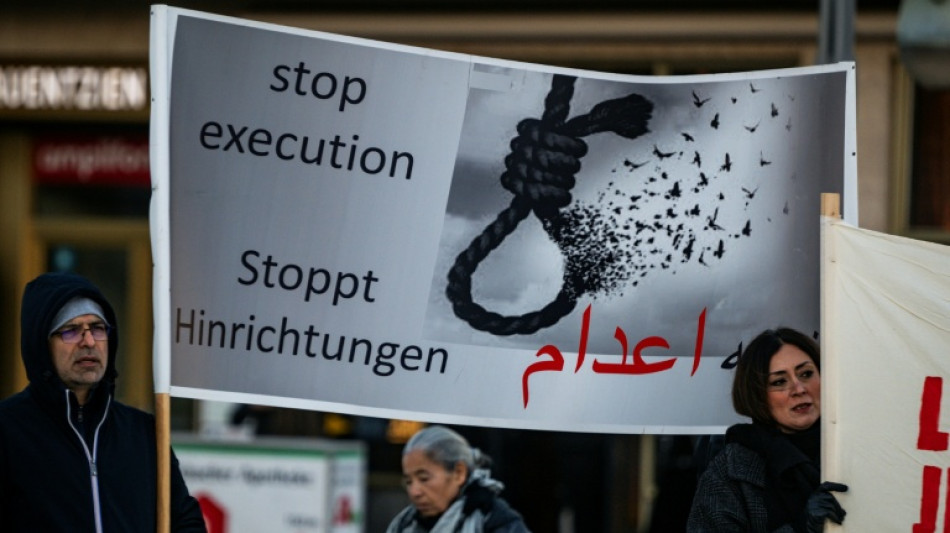
Iran executed three men on Thursday who were accused of killing police officers during protests in January, with activists warning of the risk of a new surge in hangings as war rages with Israel and the United States.
They were the first hangings Iran has carried out related to the nationwide demonstrations that were met with a brutal crackdown by the authorities.
Rights groups said the trio, who included a teenager who had taken part in international wrestling competitions, were executed without a fair trial and had given confessions under torture.
Mehdi Ghasemi, Saleh Mohammadi and Saeed Davoudi were hanged in the city of Qom south of Tehran after being convicted of the capital crime of waging war against God, known as moharebeh under Iran's sharia, the judiciary's Mizan news agency said.
They had been found guilty of involvement in the killing of two police officers and carrying out "operational actions" in favour of Israel and the United States.
There had been particular concern over the fate of Saleh Mohammadi, a teenage wrestling champion who had taken part in international competitions, who according to Amnesty International was denied "adequate defence and forced to make 'confessions'... in fast-tracked proceedings that bore no resemblance to a meaningful trial".
Norway-based NGO Iran Human Rights said after the executions the three "had been sentenced to death following an unfair trial, based on confessions obtained under torture".
It said Mohammadi had only turned 19 last week.
Iranian legal affairs monitor Dadban added that they were "deprived of effective access to independent counsel and the right to defence" and under such circumstances the use of the death penalty resembles an "extrajudicial killing".
- 'Risk of mass executions' -
Iranian authorities had the day earlier executed Kouroush Keyvani, a dual Iranian-Swedish national, on charges of spying for Israel, in a hanging strongly condemned by Stockholm and the EU.
That was the first public announcement of such an execution since Israel and the United States launched strikes on Iran on February 28, killing its supreme leader Ayatollah Ali Khamenei and triggering the war that has spread across the Middle East.
"We are deeply concerned about the risk of mass executions of protesters and political prisoners in the shadow of war," said Iran Human Rights (IHR).
"These executions are carried out to spread fear in the society, as the Islamic Republic knows that the main threat to its survival comes from the Iranian people demanding fundamental change," it added.
The hangings of the three men were the first officially announced executions related to the protests which broke out in Iran late December against the rising cost of living before morphing into nationwide anti-government demonstrations that peaked on January 8 and 9.
Rights groups accuse security forces of killing thousands in their crackdown on the protests, which authorities blamed on the US and Israel.
The US-based Human Rights Activists News Agency (HRANA) has recorded more than 7,000 killings, with the vast majority protesters, while warning the toll could be far higher.
Tehran has acknowledged that more than 3,000 people died during the unrest, including members of the security forces and innocent bystanders, and attributed the violence to "terrorist acts".
Iran's hardline judiciary chief Gholamhossein Mohseni Ejei has warned there will be "no leniency" against those convicted of violent acts during the protests.
IHR has said hundreds of people are facing charges linked to the protests that could see them sentenced to death. US President Donald Trump has initially warned the US would attack Iran if it executed protesters but subsequently focused on its nuclear programme.
Iran is the world's most prolific executioner after China, according to rights groups. Last year it hanged at least 1,500 people, according to figures from IHR.
The Islamic republic executed 13 people on charges related to the 2025 June war with Israel and 12 people on charges related to 2022-2023 nationwide protests, according to rights groups.
Q.Taylor--SFF