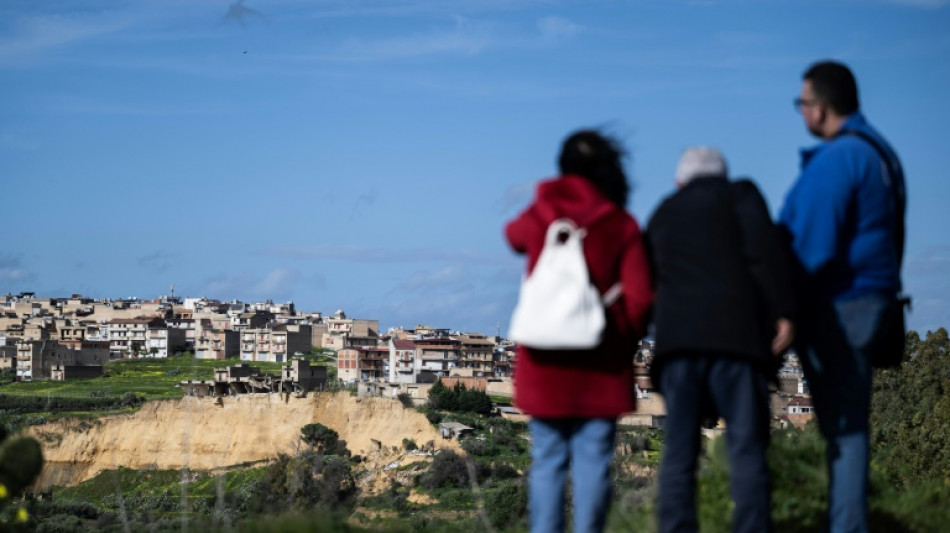
Fear in Sicilian town as vast landslide risks widening / Photo: © AFP

 London
 20 °C
20 °C

 Manchester
 17 °C
17 °C
 Glasgow
 10 °C
10 °C
 Dublin
 18 °C
18 °C
 Belfast
15 °C
Belfast
15 °C
 Washington
 16 °C
16 °C
 Denver
 27 °C
27 °C
 Atlanta
28 °C
Atlanta
28 °C
 Dallas
 36 °C
36 °C
 Houston Texas
 36 °C
36 °C
 New Orleans
32 °C
New Orleans
32 °C
 El Paso
22 °C
El Paso
22 °C
 Phoenix
36 °C
Phoenix
36 °C
 Los Angeles
26 °C
San Diego
26 °C
San Francisco
17 °C
Chicago
17 °C
Minneapolis
19 °C
Seattle
20 °C
Portland
22 °C
Salt Lake City
25 °C
Las Vegas
31 °C
Miami
29 °C
Jacksonville
30 °C
San Antonio
36 °C
Bermuda
29 °C
Nassau
18 °C
Iqaluit
3 °C
Yellowknife
15 °C
Anchorage
11 °C
Fairbanks
6 °C
Barrow
3 °C
Calgary
19 °C
Edmonton
23 °C
Winnipeg
20 °C
Goose Bay
16 °C
Halifax
15 °C
Boston
16 °C
Ottawa
17 °C
Toronto
16 °C
Detroit
18 °C
Cleveland
18 °C
New York
19 °C
Baltimore
16 °C
Philadelphia
17 °C
Nuuk (Godthåb)
4 °C
Hong Kong
28 °C
Singapore
25 °C
Melbourne
29 °C
Canberra
12 °C
Adelaide
12 °C
Darwin
23 °C
Perth
12 °C
Fort Worth
36 °C
Honolulu
30 °C
Sydney
15 °C
Johannesburg
16 °C
Dubai
34 °C
Mumbai
27 °C
Zürich
12 °C
Tokyo
22 °C
Seoul
17 °C
Delhi
26 °C
Beijing
17 °C
Riyadh
32 °C
Prague
Los Angeles
26 °C
San Diego
26 °C
San Francisco
17 °C
Chicago
17 °C
Minneapolis
19 °C
Seattle
20 °C
Portland
22 °C
Salt Lake City
25 °C
Las Vegas
31 °C
Miami
29 °C
Jacksonville
30 °C
San Antonio
36 °C
Bermuda
29 °C
Nassau
18 °C
Iqaluit
3 °C
Yellowknife
15 °C
Anchorage
11 °C
Fairbanks
6 °C
Barrow
3 °C
Calgary
19 °C
Edmonton
23 °C
Winnipeg
20 °C
Goose Bay
16 °C
Halifax
15 °C
Boston
16 °C
Ottawa
17 °C
Toronto
16 °C
Detroit
18 °C
Cleveland
18 °C
New York
19 °C
Baltimore
16 °C
Philadelphia
17 °C
Nuuk (Godthåb)
4 °C
Hong Kong
28 °C
Singapore
25 °C
Melbourne
29 °C
Canberra
12 °C
Adelaide
12 °C
Darwin
23 °C
Perth
12 °C
Fort Worth
36 °C
Honolulu
30 °C
Sydney
15 °C
Johannesburg
16 °C
Dubai
34 °C
Mumbai
27 °C
Zürich
12 °C
Tokyo
22 °C
Seoul
17 °C
Delhi
26 °C
Beijing
17 °C
Riyadh
32 °C
Prague
 11 °C
Pennsylvania
15 °C
Valletta
25 °C
Manama
34 °C
Warsaw
11 °C
Stockholm
9 °C
11 °C
Pennsylvania
15 °C
Valletta
25 °C
Manama
34 °C
Warsaw
11 °C
Stockholm
9 °C
Gaetano Ferrera had just a few minutes to grab belongings from his home, one of hundreds evacuated after a landslide in Sicily that experts warn could worsen due to heavy rainfall.
"Being left without anything is bad, it's bad. I've been here ever since I was a child," said Ferrera, visibly emotional as he locked the door behind him.
Ferrera and his family, including two 16-year-old daughters and elderly parents, have no idea whether they will ever be able to return.
The house sits in an area of Niscemi declared a "red zone" -- and therefore off limits -- after a four-kilometre (2.5-mile) long stretch of the hillside collapsed on Sunday, forcing the evacuation of some 1,500 people.
The town, built on unstable terrain, was battered by a powerful storm which hit southern Italy last week.
Though there were no deaths or injuries, experts say the gulf could extend -- and topple more houses -- when it rains again.
Italian Prime Minister Giorgia Meloni visited Wednesday, flying by helicopter over the gashed hillside and deep fissures in fields below.
She promised quick help, pointing to long delays in compensation from a previous large landslide in the same town in 1997.
Speaking to local officials after visiting the site, she said it still remained to be seen how many people would be "permanently displaced because the landslide is still moving".
- Landslide still active -
"We need to wait for the rains to stop and for the soil moisture to decrease", Luigi D'Angelo, the Civil Protection Agency's head of emergency management, told AFP.
He said "heavy rain" was forecast in the coming days.
Rubble from a few homes destroyed by the landslide could be seen at the bottom of the cliff, "and there's a risk that another 20 metres or so could fall, impacting other homes", he said.
The agency is using drones to monitor the red zone and satellite images to assess the speed of the landslide.
As locals watched a darkening sky, police patrolled streets empty of all but stray cats, while emergency services stood on standby on the edge of the red zone.
Niscemi, home to some 25,000 people and built on sandstone and clay, suffered a landslide in the same area nearly 30 years ago, and residents said this week's disaster had been long in the making.
Geologist Giuseppe Amato, head of water resources in Sicily for Legambiente, told AFP the landslide should serve as a warning as climate change leads to increasing weather extremes.
"Niscemi is another alarm bell... we must respond by changing our habits" and "choosing not to build in certain ways and in certain places".
"In 2025 alone, Sicily has been hit by 48 exceptional weather events", from wind and rain to extreme heat, showing the Mediterranean island is "a hot spot for climate change in all respects", he said.
According to Italy's Institute for Environmental Protection and Research (ISPRA), over one million Italians live in areas classed as "high or very high risk" for landslides.
- 'Land simply dropped away' -
Rosario Cona, 45, a farmhand, told AFP that on Sunday "the land simply dropped away".
"We watch houses falling, this is normality for us," he said.
Unlike 29 years ago, though, "we have to take responsibility", he said. "The time for sleepwalking is over."
As a mobile kitchen readied hot meals for evacuees, Cona said Niscemi's future was uncertain -- but he for one would never leave.
His family may not return to their home, just one row back from the cliff edge, but Cona said he would build a new one if necessary.
"I was born here, and I will die here", he said.
X.Roberts--SFF