Hantavirus ship passenger: 'They didn't take it seriously enough' / Photo: © AFP

 London
 18 °C
18 °C

 Manchester
15 °C
Manchester
15 °C
 Glasgow
 16 °C
16 °C
 Dublin
17 °C
Dublin
17 °C
 Belfast
16 °C
Belfast
16 °C
 Washington
31 °C
Washington
31 °C
 Denver
 22 °C
22 °C
 Atlanta
32 °C
Atlanta
32 °C
 Dallas
 36 °C
36 °C
 Houston Texas
32 °C
Houston Texas
32 °C
 New Orleans
32 °C
New Orleans
32 °C
 El Paso
31 °C
El Paso
31 °C
 Phoenix
37 °C
Phoenix
37 °C
 Los Angeles
36 °C
San Diego
34 °C
San Francisco
27 °C
Chicago
24 °C
Minneapolis
26 °C
Seattle
19 °C
Portland
21 °C
Salt Lake City
25 °C
Las Vegas
35 °C
Miami
Los Angeles
36 °C
San Diego
34 °C
San Francisco
27 °C
Chicago
24 °C
Minneapolis
26 °C
Seattle
19 °C
Portland
21 °C
Salt Lake City
25 °C
Las Vegas
35 °C
Miami
 30 °C
Jacksonville
32 °C
San Antonio
33 °C
Bermuda
28 °C
Nassau
27 °C
Iqaluit
8 °C
Yellowknife
17 °C
Anchorage
11 °C
Fairbanks
9 °C
Barrow
2 °C
Calgary
22 °C
Edmonton
33 °C
Winnipeg
20 °C
Goose Bay
19 °C
Halifax
26 °C
Boston
25 °C
Ottawa
18 °C
Toronto
22 °C
Detroit
24 °C
Cleveland
31 °C
New York
29 °C
Baltimore
31 °C
Philadelphia
30 °C
Nuuk (Godthåb)
6 °C
Hong Kong
28 °C
Singapore
29 °C
Melbourne
31 °C
Canberra
30 °C
Jacksonville
32 °C
San Antonio
33 °C
Bermuda
28 °C
Nassau
27 °C
Iqaluit
8 °C
Yellowknife
17 °C
Anchorage
11 °C
Fairbanks
9 °C
Barrow
2 °C
Calgary
22 °C
Edmonton
33 °C
Winnipeg
20 °C
Goose Bay
19 °C
Halifax
26 °C
Boston
25 °C
Ottawa
18 °C
Toronto
22 °C
Detroit
24 °C
Cleveland
31 °C
New York
29 °C
Baltimore
31 °C
Philadelphia
30 °C
Nuuk (Godthåb)
6 °C
Hong Kong
28 °C
Singapore
29 °C
Melbourne
31 °C
Canberra
 2 °C
Adelaide
9 °C
Darwin
25 °C
Perth
15 °C
Fort Worth
36 °C
Honolulu
24 °C
Sydney
10 °C
Johannesburg
14 °C
Dubai
38 °C
Mumbai
2 °C
Adelaide
9 °C
Darwin
25 °C
Perth
15 °C
Fort Worth
36 °C
Honolulu
24 °C
Sydney
10 °C
Johannesburg
14 °C
Dubai
38 °C
Mumbai
 29 °C
Zürich
15 °C
Tokyo
29 °C
Zürich
15 °C
Tokyo
 19 °C
Seoul
17 °C
Delhi
30 °C
Beijing
13 °C
Riyadh
39 °C
Prague
17 °C
Pennsylvania
29 °C
Valletta
29 °C
Manama
37 °C
Warsaw
25 °C
Stockholm
16 °C
19 °C
Seoul
17 °C
Delhi
30 °C
Beijing
13 °C
Riyadh
39 °C
Prague
17 °C
Pennsylvania
29 °C
Valletta
29 °C
Manama
37 °C
Warsaw
25 °C
Stockholm
16 °C
Ruhi Cenet was surprised when cruise-ship life carried on as usual aboard the MV Hondius, even after the captain announced the first passenger's death.
The Turkish travel vlogger had boarded the ship in Ushuaia, Argentina, on April 1 to do a story about one of its stops, Tristan da Cunha, the remote archipelago in the South Atlantic.
It started out as an idyllic trip, with 59 crew attending to the 88 passengers -- most of them amateur birdwatchers aged 60 and up, Cenet, who is 35, told AFP in an interview.
But things turned strange the morning of April 12, when the ship's captain announced into a microphone that a passenger had died.
The 70-year-old Dutch man passed away the day before, the captain can be seen telling passengers in a video Cenet shot.
"I am told by the doctor that we are not infectious," the captain says in the footage -- little realising the ship's British doctor would himself be in serious condition weeks later.
"He said it was due to natural causes," Cenet recalled in an interview by video link.
"They didn't even consider the possibility of having such a contagious disease," he added.
"They didn't take the problem seriously enough."
- 'Worst-case scenario' -
Three of the ship's passengers have now died, including the first victim's wife and a German woman.
The World Health Organization says at least five others from the ship have definitely or probably been infected with hantavirus, a rare, potentially deadly respiratory disease.
Cenet said he was startled to see that "everyday life continued" on the ship after the captain's announcement.
His videos show elderly passengers mingling around the buffet table.
"We again kept eating all together... and we didn't wear any masks," he said.
To be safe, he and his cameraman decided to self-isolate, he told AFP.
"We didn't know there was a virus, but we just took precautions," he said.
A few days later, the ship anchored off Tristan da Cunha for the day.
Cenet remains haunted by that stop, fearing a "worst-case scenario", he said.
"I wish we did not land there after the first casualty, because along with us, there were a hundred more passengers, and they were interacting with the islanders," he said.
"This is one of my regrets, because the island is the most remote one, and they don't have enough medical centres, enough doctors."
- $10,000 trip -
Cenet disembarked from the ship on the British overseas territory of Saint Helena on April 24, along with about 20 other passengers.
The next day, he boarded a flight to South Africa.
It was the same one carrying the wife of the first victim.
She died the next day.
"She was in a wheelchair... Her head was down. Apparently the illness started getting to her," Cenet said.
He remembered how after her husband's death, many passengers on the ship had gathered around her to console her.
From South Africa, Cenet and his cameraman returned to Istanbul.
"When we got to Turkey, we were told that as long as we don't show any symptoms, at this point we don't have to be quarantined," he said.
"We are trying to isolate ourselves as much as we can."
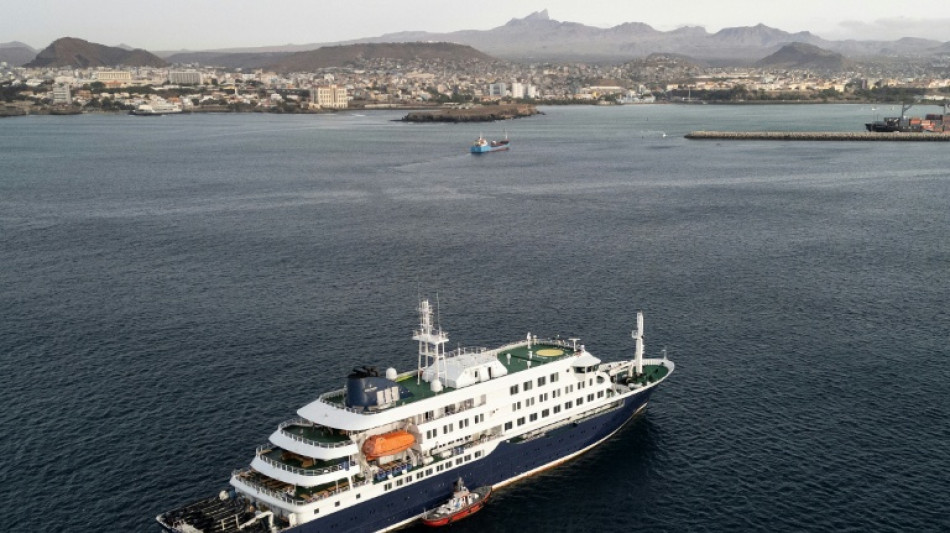
The Hondius, which has been in quarantine off Cape Verde, left its anchorage there on Wednesday for Spain's Canary Islands.
An acquaintance still on board told Cenet the passengers were now isolated in their cabins and wearing masks.
But "I think these kind of ships should have some sort of a lab or necessary equipment" in case of outbreaks, said Cenet, adding that passengers had paid around $10,000 each for the cruise.
"I think these kind of amenities are needed," he said.
"One doctor wasn't enough."
E.Cruz--SFF