India's royals find new power in their past / Photo: © AFP

 London
 9 °C

 Manchester
 5 °C
 Glasgow
8 °C
 Dublin
8 °C
 Belfast
8 °C
 Washington
11 °C
 Denver
10 °C
 Atlanta
14 °C
 Dallas
22 °C
 Houston Texas
25 °C
 New Orleans
23 °C
 El Paso
23 °C
 Phoenix
18 °C
 Los Angeles
17 °C
San Diego
 18 °C
San Francisco
15 °C
Chicago
15 °C
Minneapolis
 17 °C
Seattle
6 °C
Portland
 7 °C
Salt Lake City
8 °C
Las Vegas
15 °C
Miami
25 °C
Jacksonville
23 °C
San Antonio
23 °C
Bermuda
21 °C
Nassau
12 °C
Iqaluit
 -5 °C
Yellowknife
 0 °C
Anchorage
3 °C
Fairbanks
-6 °C
Barrow
-6 °C
Calgary
0 °C
Edmonton
11 °C
Winnipeg
14 °C
Goose Bay
9 °C
Halifax
7 °C
Boston
9 °C
Ottawa
11 °C
Toronto
10 °C
Detroit
12 °C
Cleveland
14 °C
New York
12 °C
Baltimore
8 °C
Philadelphia
11 °C
Nuuk (Godthåb)
-4 °C
Hong Kong
29 °C
Singapore
 31 °C
Melbourne
23 °C
Canberra
21 °C
Adelaide
 24 °C
Darwin
33 °C
Perth
 21 °C
Fort Worth
22 °C
Honolulu
27 °C
Sydney
26 °C
Johannesburg
15 °C
Dubai
 27 °C
Mumbai
28 °C
Zürich
4 °C
Tokyo
18 °C
Seoul
13 °C
Delhi
18 °C
Beijing
12 °C
Riyadh
24 °C
Prague
5 °C
Pennsylvania
9 °C
Valletta
 17 °C
Manama
29 °C
Warsaw
6 °C
Stockholm
7 °C
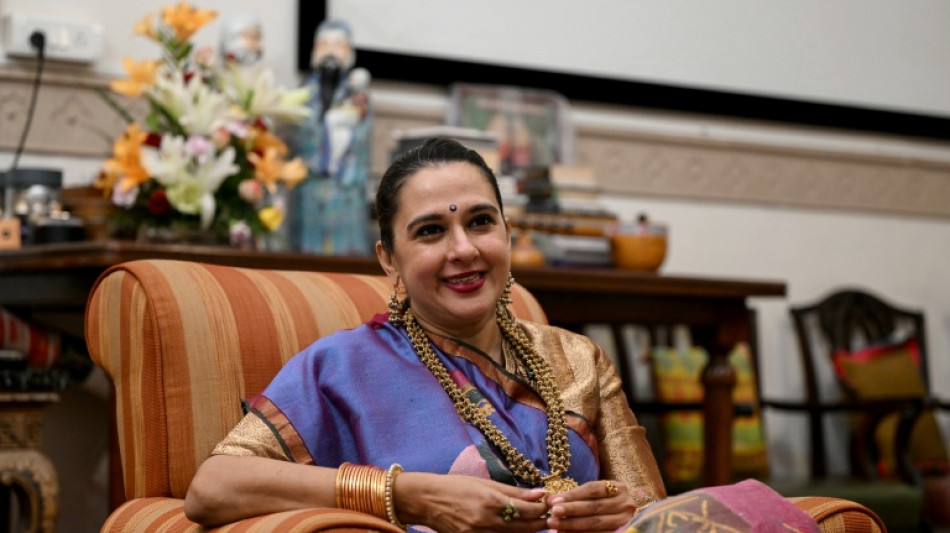
In a sprawling palace in western India, the "queen" or Maharani of Baroda welcomes guests with fragrant rose petals, presenting torchlit dances of Hindu myths.
Dressed in glittering finery, Radhikaraje Gaekwad is a queen in name only, a modern businesswoman presiding over a world her ancestors once ruled.
"The key has been that we have adapted," 48-year-old Gaekwad told AFP in her vast Lakshmi Vilas Palace, describing how India's former royals have found new roles, from cultural ambassadors to politics.
"My work has always been to try and bring in change for what I feel would be for the betterment of society," said Gaekwad, who works to preserve art accumulated by generations of rulers.
"A glimpse of what was left behind... can bring that sense of identity and pride back in their roots, and help them in the future."
Under British rule, more than 565 princely states enjoyed nominal autonomy across roughly 40 percent of the land. Baroda, today Vadodara in Gujarat state, was among the most powerful.
The maharajas joined democratic India after independence in 1947 and became ordinary citizens, but their enduring cultural influence is something politicians of all parties seek to harness.
"This cultural capital has been banked on by the descendants of the erstwhile maharajas to get into active politics," said historian Manu S. Pillai.
- 'Quest for heroes' -
Prime Minister Narendra Modi's Hindu-nationalist government has sought to draw on a royal past outside foreign control to reinforce its national narrative.
Modi's party includes elected lawmakers such as Communications Minister Jyotiraditya Scindia, of the Gwalior dynasty, and Rajasthan Deputy Chief Minister Diya Kumari, of Jaipur's royal family.
"There is a quest for heroes," Pillai added. "Nationalist history has become very popular and... the Hindu right is very keen to tap into cultural icons."
Modi last year laid the foundation stone for a $39 million "Museum of Royal Kingdoms" celebrating their history.
The site near Vadodara lies beside the world's tallest statue, a 182-metre (597-foot) monument to Sardar Vallabhbhai Patel, whom Modi honoured with its inauguration in 2018 for his role in bringing princely states into India.
Visitors were divided over the role of royals today.
"I hold the royal families in high regard," said Arti Shukla, visiting from Vadodara.
Nishant Kulkarni, a bank worker from Mumbai, was more cynical.
"I only came to see this massive statue," he said. "The royal families certainly played a role in the past, but there is no real need for their services anymore."
- 'Storytellers' -
Beyond politics, many maharajahs see themselves as stewards of tradition, said Siddhaant Mohta, director of Sopaan, which organises cultural exhibitions in royal sites -- including in Vadodara's palace.
"The royal families are custodians of heritage," Mohta said, pointing to work to overhaul Vadodara's Maharaja Fateh Singh Museum, which houses more than 30 works by
celebrated 19th-century painter Raja Ravi Varma.
A Varma work fetched $17.9 million at auction in Mumbai in April, an Indian record.
Deborah Swallow, former director of London's Courtauld Institute of Art, is advising on the project, praising the legacy of royal patronage that helped fund it.
"That tradition is being beautifully followed today," she said.
Others, such as Raseshwari Rajya Laxmi, Maharani of Jaisalmer, said their titles open doors -- explaining how her family has helped twin the historic walled city with Carcassonne in France.
"We are sharing ideas on promoting and preserving their culture," she said.
For Gaekwad, her work includes social entrepreneurship, promoting social inclusion through initiatives such as a transgender-run cafe, as well as supporting traditional crafts and customs.
Her father, Ranjitsinh Jhala, 87, took a different path.
Born into Wankaner's ruling family in 1939, before India's princes surrendered their powers, he was raised in a world where tiger hunting was a royal passion.
But he became a civil servant, drafted India's wildlife protection law, and helped turn vast tracts of princely hunting grounds into national parks.
"If that was what the princes left behind, it compensates far more than what they shot," he said.
Akshita Bhanj Deo, in her 30s, daughter of the 47th ruler of Odisha's Bhanja dynasty, represents a younger generation seeking modern meaning in historic titles. She has turned her palace into a hotel, and runs a foundation to support marginalised groups.
"A lot of erstwhile royal families see themselves in a space where they can actually make a sense of community happen," she said.
"We're just the bards and storytellers between the past and future."
F.Young--SFF