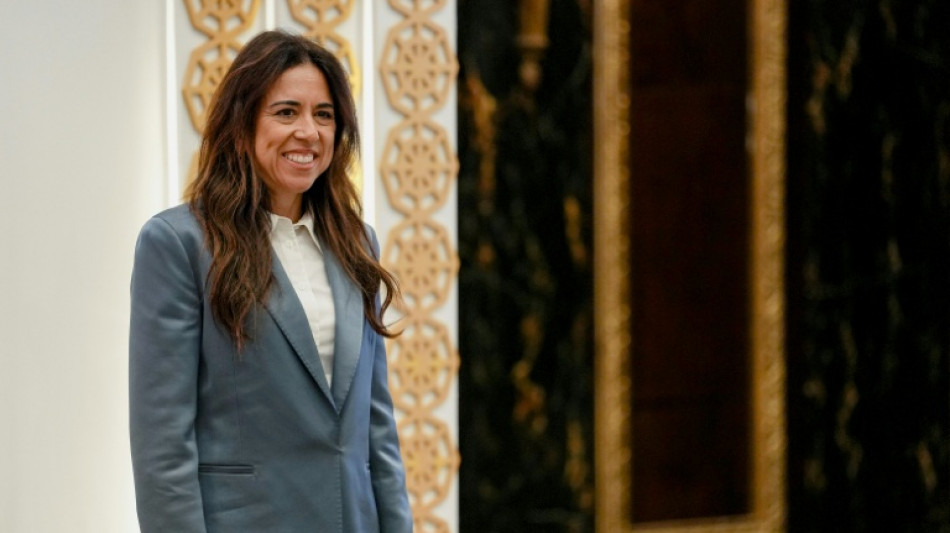
UAE nominates official to lead UN / Photo: © POOL/AFP/File

 London
 9 °C

 Manchester
 7 °C
 Glasgow
 10 °C
 Dublin
 8 °C
 Belfast
6 °C
 Washington
 20 °C
 Denver
 24 °C
 Atlanta
 23 °C
 Dallas
27 °C
 Houston Texas
29 °C
 New Orleans
25 °C
 El Paso
28 °C
 Phoenix
31 °C
 Los Angeles
21 °C
San Diego
25 °C
San Francisco
 19 °C
Chicago
22 °C
Minneapolis
23 °C
Seattle
17 °C
Portland
20 °C
Salt Lake City
21 °C
Las Vegas
28 °C
Miami
28 °C
Jacksonville
24 °C
San Antonio
29 °C
Bermuda
27 °C
Nassau
16 °C
Iqaluit
-6 °C
Yellowknife
9 °C
Anchorage
 1 °C
Fairbanks
-5 °C
Barrow
-4 °C
Calgary
20 °C
Edmonton
24 °C
Winnipeg
15 °C
Goose Bay
14 °C
Halifax
11 °C
Boston
12 °C
Ottawa
14 °C
Toronto
15 °C
Detroit
18 °C
Cleveland
18 °C
New York
18 °C
Baltimore
20 °C
Philadelphia
18 °C
Nuuk (Godthåb)
-5 °C
Hong Kong
26 °C
Singapore
27 °C
Melbourne
27 °C
Canberra
12 °C
Adelaide
18 °C
Darwin
28 °C
Perth
17 °C
Fort Worth
27 °C
Honolulu
27 °C
Sydney
18 °C
Johannesburg
21 °C
Dubai
31 °C
Mumbai
 31 °C
Zürich
10 °C
Tokyo
22 °C
Seoul
5 °C
Delhi
22 °C
Beijing
1 °C
Riyadh
30 °C
Prague
11 °C
Pennsylvania
18 °C
Valletta
21 °C
Manama
31 °C
Warsaw
13 °C
Stockholm
12 °C
The UAE nominated Wednesday its foreign ministry official Lana Nusseibeh to run in the contest to lead the UN as none of the six existing candidates has emerged as a clear front-runner.
Lana Nusseibeh is a well-regarded minister of state at the United Arab Emirates foreign ministry, having previously represented Abu Dhabi at the UN.
"I am standing to be Secretary-General because I believe this is a moment to act with greater urgency: to act earlier, bring people together across difference, and drive the work forward until it produces concrete results," she said in a statement.
In the latest informal straw poll held last week to gauge which candidates have a shot of becoming the next UN Secretary General, every contender received an effective veto.
Five of the 15 members of the UN Security Council wield veto power and can shut down any candidate that is unacceptable to them, which happened Friday when all seven candidates received at least two vetoes.
One candidate, Macky Sall of Senegal, subsequently dropped out.
That left the frontrunner Costa Rica's Rebeca Grynspan -- who has been among the frontrunners in the five previous polls -- running alongside Guyanese ex-foreign minister Carolyn Rodrigues-Birkett.
Also in the race are Argentina's Rafael Grossi, the current head of the UN nuclear watchdog, Ecuador's Ivonne A-Baki and Maria Fernanda Espinosa, and Uganda's Olara Otunnu.
The outgoing secretary-general, Antonio Guterres of Portugal, ends his second five-year term on December 31, 2026.
Even if a candidate earns the required nine votes from the 15 available in the Security Council, they must also avoid a veto by the five major powers, which are deeply divided.
Once a candidate clears those bars, their name will go to the General Assembly of all UN members for confirmation.
The Security Council straw poll was devised in the early 1980s in an attempt to break a deadlock between two candidates shut down by vetoes.
The informal mechanism has persisted, in various forms, despite criticism from countries opposed to the opaque process.
Each of the 15 Security Council members must anonymously assign each candidate one of three labels: "encourage," "discourage," or "no opinion."
It is tradition that the UN's top job should rotate between different regions.
Under that premise, the role should go to a candidate from Latin America this time.
Q.Nelson--SFF