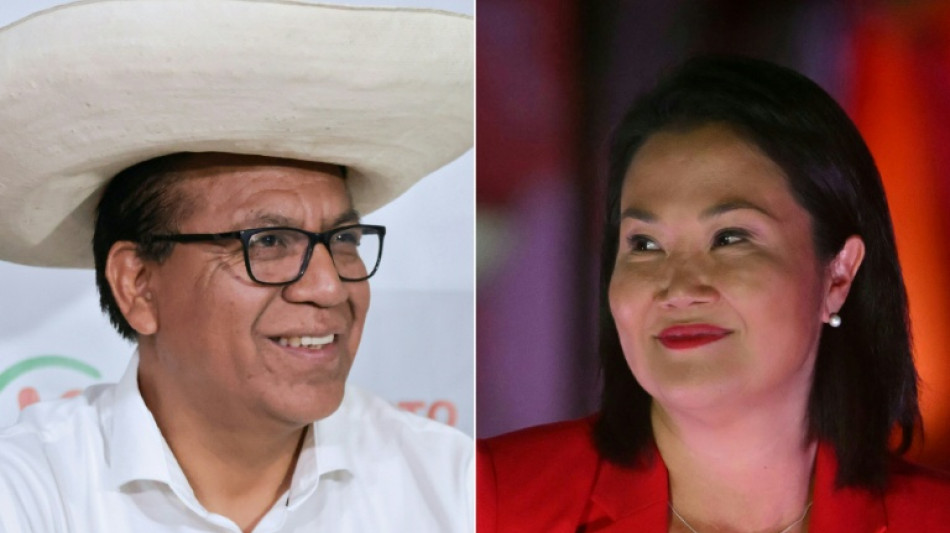
Polls open in tight Peru presidential runoff / Photo: © AFP

 London
 16 °C
16 °C
 Manchester
 15 °C
15 °C
 Glasgow
 12 °C
12 °C
 Dublin
16 °C
Dublin
16 °C
 Belfast
15 °C
Belfast
15 °C
 Washington
15 °C
Washington
15 °C
 Denver
 17 °C
17 °C
 Atlanta
15 °C
Atlanta
15 °C
 Dallas
22 °C
Dallas
22 °C
 Houston Texas
26 °C
Houston Texas
26 °C
 New Orleans
20 °C
New Orleans
20 °C
 El Paso
20 °C
El Paso
20 °C
 Phoenix
 22 °C
22 °C
 Los Angeles
15 °C
San Diego
17 °C
San Francisco
11 °C
Chicago
18 °C
Minneapolis
Los Angeles
15 °C
San Diego
17 °C
San Francisco
11 °C
Chicago
18 °C
Minneapolis
 21 °C
Seattle
6 °C
Portland
6 °C
Salt Lake City
14 °C
Las Vegas
18 °C
Miami
21 °C
Seattle
6 °C
Portland
6 °C
Salt Lake City
14 °C
Las Vegas
18 °C
Miami
 26 °C
Jacksonville
19 °C
San Antonio
24 °C
Bermuda
26 °C
Nassau
13 °C
Iqaluit
-5 °C
Yellowknife
5 °C
Anchorage
6 °C
Fairbanks
2 °C
Barrow
26 °C
Jacksonville
19 °C
San Antonio
24 °C
Bermuda
26 °C
Nassau
13 °C
Iqaluit
-5 °C
Yellowknife
5 °C
Anchorage
6 °C
Fairbanks
2 °C
Barrow
 -1 °C
Calgary
-1 °C
Edmonton
13 °C
Winnipeg
5 °C
Goose Bay
12 °C
Halifax
11 °C
Boston
10 °C
Ottawa
12 °C
Toronto
14 °C
Detroit
16 °C
Cleveland
16 °C
New York
13 °C
Baltimore
15 °C
Philadelphia
13 °C
Nuuk (Godthåb)
0 °C
Hong Kong
29 °C
Singapore
28 °C
Melbourne
22 °C
Canberra
17 °C
Adelaide
14 °C
Darwin
30 °C
Perth
18 °C
Fort Worth
22 °C
Honolulu
24 °C
Sydney
27 °C
Johannesburg
-1 °C
Calgary
-1 °C
Edmonton
13 °C
Winnipeg
5 °C
Goose Bay
12 °C
Halifax
11 °C
Boston
10 °C
Ottawa
12 °C
Toronto
14 °C
Detroit
16 °C
Cleveland
16 °C
New York
13 °C
Baltimore
15 °C
Philadelphia
13 °C
Nuuk (Godthåb)
0 °C
Hong Kong
29 °C
Singapore
28 °C
Melbourne
22 °C
Canberra
17 °C
Adelaide
14 °C
Darwin
30 °C
Perth
18 °C
Fort Worth
22 °C
Honolulu
24 °C
Sydney
27 °C
Johannesburg
 27 °C
Dubai
35 °C
Mumbai
38 °C
Zürich
14 °C
Tokyo
22 °C
Seoul
22 °C
Delhi
30 °C
Beijing
19 °C
Riyadh
37 °C
Prague
12 °C
Pennsylvania
14 °C
Valletta
25 °C
Manama
37 °C
Warsaw
11 °C
Stockholm
9 °C
27 °C
Dubai
35 °C
Mumbai
38 °C
Zürich
14 °C
Tokyo
22 °C
Seoul
22 °C
Delhi
30 °C
Beijing
19 °C
Riyadh
37 °C
Prague
12 °C
Pennsylvania
14 °C
Valletta
25 °C
Manama
37 °C
Warsaw
11 °C
Stockholm
9 °C
Polls opened in Peru's presidential runoff Sunday, with crime and political instability dominating a race to choose the country's ninth leader in a decade.
Pre-election surveys showed a tight race between conservative four-time presidential hopeful Keiko Fujimori and leftist ex-minister Roberto Sanchez.
Sanchez, a psychologist, surged late in the race to reach the runoff, thanks to strong support in rural areas.
From the Andes to the Amazon, around 27 million Peruvians can cast ballots to choose a president for a five-year term.
The first round was marred by logistical problems and a vote count that took weeks to complete, deepening distrust in Peru's creaking institutions.
"I hope the entire process is carried out transparently, that the people's vote is respected" early voter Evelyn Pazos, 43, told AFP.
On the eve of the election, a judge said Sanchez must stand trial over past financial irregularities in his party, raising claims of interference.
If he wins, he would have presidential immunity, though remain vulnerable to the country's right-leaning legislature -- which has ousted several recent presidents.
Fujimori, 51, appeals to the mixed legacy of her late father, who stabilized the economy and defeated a Maoist insurgency, but was convicted of corruption and crimes against humanity.
She is hoping to ride a surge of support for right-wing US-backed politicians across Latin America who have won recent elections in Bolivia, Chile, Ecuador and beyond.
She has promised to militarize prisons and expel some migrants with the "same force" used by her father against insurgents in the 1990s.
"There is a lot of disorder and corruption, and we're going to vote, as always, for the 'lesser evil'," Hugo Vasquez, a 67-year-old crafts seller in Lima, told AFP.
Sanchez, a 57-year-old congressman draws on the rural background of his mentor, former president Pedro Castillo, a schoolteacher jailed after a failed attempt to dissolve Congress in 2022.
- 'Communism' or 'dictatorship' -
He has moderated early calls for "radical change" and distanced himself from ultranationalists.
He told AFP he wants a "respectful" relationship with US President Donald Trump.
Sanchez, who always wears the broad-brimmed palm straw hat gifted to him by Castillo -- whom he plans to pardon -- accuses his rival of being part of a "dictatorship" led by the powerful Congress that counts several former presidents among its members.
Neither Sanchez nor Fujimori has a legislative majority. Whoever wins must build alliances to complete their term, according to analyst Jeffrey Radzinsky.
"Whoever wins will face questions of legitimacy if the result is close. That means more instability" said analyst David Sulmont.
The winner will replace interim president Jose Maria Balcazar from July 28.
Despite political disillusionment, Peruvians' main concern is security, as criminal gangs spread and extortion complaints spiked ninefold in five years.
"They kill, dismember, demand protection money. Enough!" said 58-year-old taxi driver Roberto Lovaton.
Sanchez proposes tackling corruption in the police and judiciary, which he says are complicit with criminal networks.
The winner will inherit a stable economy, with GDP growth of over three percent and low inflation.
However, seven out of 10 workers are in the informal economy.
Fujimori supports neoliberal policies, property rights and attracting US investment.
Sanchez has promised wage increases and sought to reassure investors by pledging to maintain an open economy and central bank independence, key to economic stability.
A.Evans--SFF