Bulgaria ex-president wins parliamentary majority / Photo: © AFP

 London
 19 °C
19 °C

 Manchester
 16 °C
16 °C
 Glasgow
 12 °C
12 °C
 Dublin
15 °C
Dublin
15 °C
 Belfast
 14 °C
14 °C
 Washington
 14 °C
14 °C
 Denver
12 °C
Denver
12 °C
 Atlanta
16 °C
Atlanta
16 °C
 Dallas
 26 °C
26 °C
 Houston Texas
27 °C
Houston Texas
27 °C
 New Orleans
20 °C
New Orleans
20 °C
 El Paso
19 °C
El Paso
19 °C
 Phoenix
20 °C
Phoenix
20 °C
 Los Angeles
14 °C
San Diego
Los Angeles
14 °C
San Diego
 16 °C
San Francisco
12 °C
Chicago
23 °C
Minneapolis
12 °C
Seattle
9 °C
Portland
6 °C
Salt Lake City
16 °C
San Francisco
12 °C
Chicago
23 °C
Minneapolis
12 °C
Seattle
9 °C
Portland
6 °C
Salt Lake City
 9 °C
Las Vegas
14 °C
Miami
25 °C
Jacksonville
20 °C
San Antonio
26 °C
Bermuda
25 °C
Nassau
15 °C
Iqaluit
0 °C
Yellowknife
4 °C
Anchorage
4 °C
Fairbanks
0 °C
Barrow
-5 °C
Calgary
4 °C
Edmonton
19 °C
Winnipeg
4 °C
Goose Bay
9 °C
Halifax
13 °C
Boston
12 °C
Ottawa
6 °C
Toronto
16 °C
Detroit
20 °C
Cleveland
19 °C
New York
15 °C
Baltimore
14 °C
Philadelphia
14 °C
Nuuk (Godthåb)
1 °C
Hong Kong
30 °C
Singapore
30 °C
Melbourne
21 °C
Canberra
12 °C
Adelaide
13 °C
Darwin
30 °C
Perth
9 °C
Las Vegas
14 °C
Miami
25 °C
Jacksonville
20 °C
San Antonio
26 °C
Bermuda
25 °C
Nassau
15 °C
Iqaluit
0 °C
Yellowknife
4 °C
Anchorage
4 °C
Fairbanks
0 °C
Barrow
-5 °C
Calgary
4 °C
Edmonton
19 °C
Winnipeg
4 °C
Goose Bay
9 °C
Halifax
13 °C
Boston
12 °C
Ottawa
6 °C
Toronto
16 °C
Detroit
20 °C
Cleveland
19 °C
New York
15 °C
Baltimore
14 °C
Philadelphia
14 °C
Nuuk (Godthåb)
1 °C
Hong Kong
30 °C
Singapore
30 °C
Melbourne
21 °C
Canberra
12 °C
Adelaide
13 °C
Darwin
30 °C
Perth
 24 °C
Fort Worth
25 °C
Honolulu
25 °C
Sydney
16 °C
Johannesburg
29 °C
Dubai
38 °C
Mumbai
37 °C
Zürich
14 °C
Tokyo
22 °C
Seoul
18 °C
Delhi
32 °C
Beijing
20 °C
Riyadh
36 °C
Prague
12 °C
Pennsylvania
13 °C
Valletta
25 °C
Manama
35 °C
Warsaw
11 °C
Stockholm
8 °C
24 °C
Fort Worth
25 °C
Honolulu
25 °C
Sydney
16 °C
Johannesburg
29 °C
Dubai
38 °C
Mumbai
37 °C
Zürich
14 °C
Tokyo
22 °C
Seoul
18 °C
Delhi
32 °C
Beijing
20 °C
Riyadh
36 °C
Prague
12 °C
Pennsylvania
13 °C
Valletta
25 °C
Manama
35 °C
Warsaw
11 °C
Stockholm
8 °C
Bulgarian ex-president Rumen Radev, an EU critic who has called for renewing ties with Russia, took an absolute majority in parliamentary elections that could spell an end to the country's half-decade of political uncertainty, according to near complete vote results on Monday.
The European Union's poorest member has experienced eight votes since 2021, when anti-graft rallies brought down the conservative administration of long-time pro-European leader Boyko Borissov.
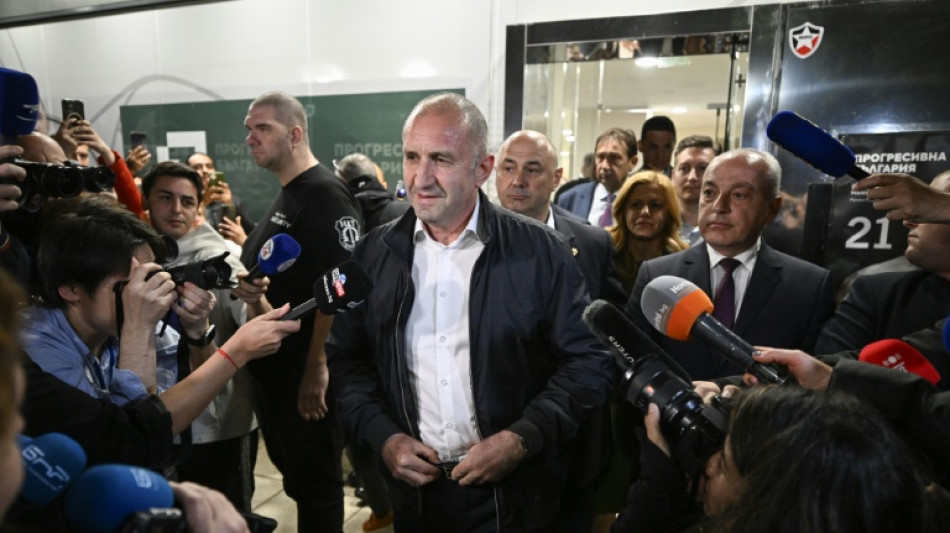
Radev, 62, who resigned earlier this year after nine years as president, ran in Sunday's vote on a pledge to fight corruption, bringing together a wide spectrum of voters, with the turnout the highest since 2021.
Radev's Progessive Bulgaria grouping secured 44.7 percent in Sunday's vote, according to official results with 91.7 percent of the votes counted, putting him on course to gain some 130 seats in the 240-seat parliament.
The landslide victory marks the first outright parliamentary majority for a single formation in Bulgaria since 1997 when a centre-right, pro-European grouping won.
Borissov's GERB party slumped to 13.4 percent of the vote, running neck and neck with the liberal PP-DB coalition, which stood at 13.2 percent, according to the electoral commission's results.
The far-right Vazrazhdane party and the Turkish and Roma minority party MRF also made it into parliament, according to the near-complete vote count.
- ' Victory of hope' -
"PB has won unequivocally -- a victory of hope over distrust, a victory of freedom over fear," Radev told reporters outside his group's office in Sofia on Sunday as projections trickled in.
He said Bulgaria would "make every effort to continue on its European path".
"But believe me, a strong Bulgaria and a strong Europe need critical thinking and pragmatism. Europe has fallen victim to its own ambition to be a moral leader in a world with new rules," the former air force general added.
Radev has said he wants to rid the Balkan nation of 6.5 million people of its "oligarchic governance model".
He supported anti-corruption protests last year that brought down the latest conservative-backed government.
While Radev can govern on its own, "the real question" is whether he will take "real steps" against high-level corruption, including through reforms of the judiciary, political analyst Teodor Slavev said.
For key judicial or constitutional changes requiring a two-thirds majority, he will need to find support in parliament from other parties.
- 'Eurosceptic' path -
Radev is expected to face "pressure" to lead Bulgaria down a "eurosceptic" path, both from within his own party and the far-right opposition, according to Daniel Smilov, a political scientist at the Center for Liberal Strategies.
"His initial signals are that he will pursue a pro-European policy and will not block the EU... The whole question is whether those signals will actually be followed through," he told AFP.
Ahead of the vote, Radev has called for "practical relations with Russia, based on mutual respect and equal treatment".
He has also criticised a 10-year defence agreement signed last month between Bulgaria and Ukraine, which has been battling Russia's full-scale invasion since 2022.
And he has opposed Bulgaria sending arms to Ukraine, though he has said he would not use his country's veto to block EU decisions.
Borissov, who headed the country virtually uninterrupted for close to a decade, congratulated Radev earlier Sunday but insisted that "winning elections is one thing, governing is another".
The 65-year-old has dismissed claims that Radev brings something "new", while highlighting his own party's "extremely pro-European position", including support for Ukraine and the EU.Participation had fallen to just 39 percent in the 2024 elections amid widespread public distrust in politics.
"Everything simply has to change," Stiliana Andonova, a retired engineer, told AFP after casting her ballot in Sofia, citing concerns over corruption and the judiciary.
Political parties had urged Bulgarians to vote in order to curb the effectiveness of vote buying.
In recent weeks, police have seized more than one million euros in raids against vote buying and detained hundreds of people, including local councillors and mayors.
Q.Nelson--SFF