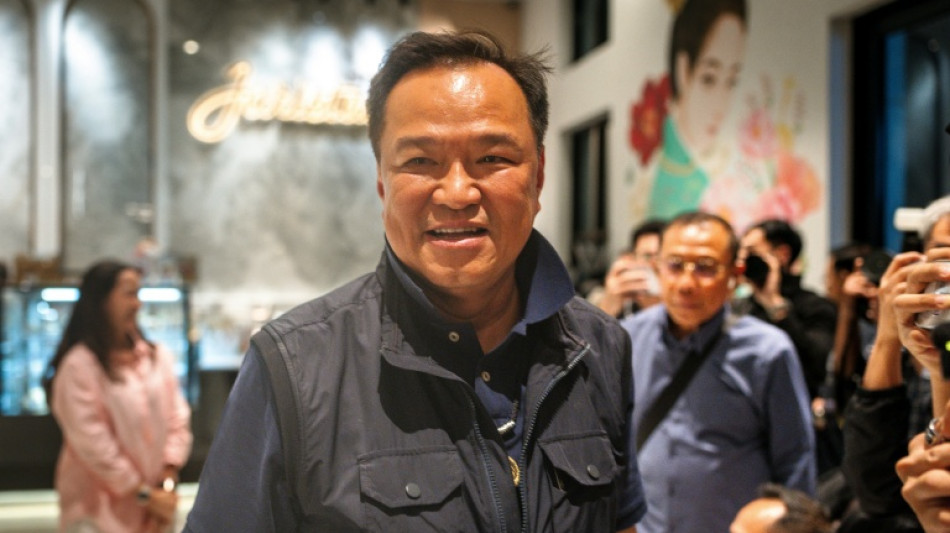
Thailand's Anutin rides wave of nationalism to election victory / Photo: © AFP

 London
 7 °C
7 °C

 Manchester
3 °C
Manchester
3 °C
 Glasgow
 10 °C
10 °C
 Dublin
5 °C
Dublin
5 °C
 Belfast
6 °C
Belfast
6 °C
 Washington
 15 °C
15 °C
 Denver
6 °C
Denver
6 °C
 Atlanta
 13 °C
13 °C
 Dallas
 13 °C
13 °C
 Houston Texas
16 °C
Houston Texas
16 °C
 New Orleans
17 °C
New Orleans
17 °C
 El Paso
10 °C
El Paso
10 °C
 Phoenix
24 °C
Phoenix
24 °C
 Los Angeles
27 °C
San Diego
29 °C
San Francisco
18 °C
Chicago
7 °C
Minneapolis
3 °C
Seattle
16 °C
Portland
15 °C
Salt Lake City
12 °C
Las Vegas
22 °C
Miami
26 °C
Jacksonville
Los Angeles
27 °C
San Diego
29 °C
San Francisco
18 °C
Chicago
7 °C
Minneapolis
3 °C
Seattle
16 °C
Portland
15 °C
Salt Lake City
12 °C
Las Vegas
22 °C
Miami
26 °C
Jacksonville
 24 °C
San Antonio
14 °C
Bermuda
26 °C
Nassau
14 °C
Iqaluit
-11 °C
Yellowknife
6 °C
Anchorage
5 °C
Fairbanks
-1 °C
Barrow
24 °C
San Antonio
14 °C
Bermuda
26 °C
Nassau
14 °C
Iqaluit
-11 °C
Yellowknife
6 °C
Anchorage
5 °C
Fairbanks
-1 °C
Barrow
 -3 °C
Calgary
10 °C
Edmonton
10 °C
Winnipeg
5 °C
Goose Bay
6 °C
Halifax
14 °C
Boston
15 °C
Ottawa
5 °C
Toronto
5 °C
Detroit
7 °C
Cleveland
9 °C
New York
14 °C
Baltimore
15 °C
Philadelphia
15 °C
Nuuk (Godthåb)
1 °C
Hong Kong
-3 °C
Calgary
10 °C
Edmonton
10 °C
Winnipeg
5 °C
Goose Bay
6 °C
Halifax
14 °C
Boston
15 °C
Ottawa
5 °C
Toronto
5 °C
Detroit
7 °C
Cleveland
9 °C
New York
14 °C
Baltimore
15 °C
Philadelphia
15 °C
Nuuk (Godthåb)
1 °C
Hong Kong
 30 °C
Singapore
30 °C
Singapore
 31 °C
Melbourne
24 °C
Canberra
19 °C
Adelaide
23 °C
Darwin
31 °C
Melbourne
24 °C
Canberra
19 °C
Adelaide
23 °C
Darwin
 32 °C
Perth
23 °C
Fort Worth
11 °C
Honolulu
25 °C
Sydney
20 °C
Johannesburg
22 °C
Dubai
33 °C
Mumbai
35 °C
Zürich
13 °C
Tokyo
26 °C
Seoul
26 °C
Delhi
30 °C
Beijing
16 °C
Riyadh
32 °C
Prague
8 °C
Pennsylvania
15 °C
Valletta
24 °C
Manama
36 °C
Warsaw
4 °C
Stockholm
9 °C
32 °C
Perth
23 °C
Fort Worth
11 °C
Honolulu
25 °C
Sydney
20 °C
Johannesburg
22 °C
Dubai
33 °C
Mumbai
35 °C
Zürich
13 °C
Tokyo
26 °C
Seoul
26 °C
Delhi
30 °C
Beijing
16 °C
Riyadh
32 °C
Prague
8 °C
Pennsylvania
15 °C
Valletta
24 °C
Manama
36 °C
Warsaw
4 °C
Stockholm
9 °C
Thailand's caretaker premier Anutin Charnvirakul was preparing for coalition talks Monday after his conservative Bhumjaithai Party surged to a stunning election victory on a wave of nationalism.
The pro-military and pro-monarchy party had its best electoral performance ever in polls that took place after border clashes with Cambodia during two rounds of deadly fighting last year.
But Anutin, the scion of a construction dynasty, will need to tackle anaemic economic growth and manage fallout over multibillion-dollar cyberscam networks operating from the region.
"Thailand will move like it moved in the past three months. We will see nationalism, a strong position on Cambodia and economic policies. Nothing changes," said Virot Ali, politics lecturer at Thammasat University.
Bhumjaithai was forecast by local media to have won almost 200 seats in Sunday's vote, well ahead of others but short of an outright majority in the 500-member lower house.
The reformist People's Party trailed with around 120 seats, while Pheu Thai -- the party of jailed former prime minister Thaksin Shinawatra -- came in third.
Voters appeared to turn their backs on the two parties, with their vote shares diving compared to the last poll in 2023, according to preliminary results from the election commission.
Pheu Thai had its worst showing since Thaksin founded his political dynasty, after his daughter Paetongtarn was felled as prime minister over her handling of the Cambodia border dispute.
Thaksin is serving a one-year prison sentence for corruption in office, but many observers expect him to be released earlier than scheduled alongside a political agreement.
- Phone call scandal -
Paul Chambers, an associate senior fellow at ISEAS-Yusof Ishak Institute in Singapore, told AFP that Bhumjaithai achieved victory by "emphasizing its commitment to nationalism and the king".
The conservatives also benefitted from the "continuing unpopularity of Pheu Thai" following a leaked phone call in which Paetongtarn referred to Cambodia's former leader Hun Sen as "uncle" and described a Thai military commander as her "opponent".
The leak sparked public and political backlash, and she was later dismissed from office by the constitutional court on an ethics complaint.
Still, Pheu Thai is seen as a likely coalition partner for Anutin, as they were allies until Bhumjaithai pulled out over the border dispute scandal.
Anutin, who took office in September, declined to be drawn Sunday on potential coalition talks, noting the election results remained unofficial.
"We will wait until it's more clear, and every party has to meet their executive board to discuss the position," he said.
Political analyst Napon Jatusripitak expected Bhumjaithai to "move quickly" to form a government in which its interests would prevail.
The conflict with Cambodia, which killed scores of people on both sides and displaced around a million altogether, was top of mind for voters.
Soon after becoming premier following Paetongtarn's removal, Anutin authorised the armed forces to take whatever action they saw fit on the border.
Thailand's military took control of several disputed areas in the latest fighting in December, and a fragile ceasefire remains in place.
The Southeast Asian nation's political history is replete with military coups, bloody street protests and judicial intervention.
Its constitution, drafted under military rule following the last coup in 2014, gives significant power to institutions appointed by the senate, which is not directly elected.
Around 60 percent of voters were projected to have backed constitutional reform in principle in a referendum on Sunday, albeit with no specific measures on the table.
But Bhumjaithai will now be in a position to guide the reform process, and its conservative instincts make radical change less likely.
I.Sanders--SFF