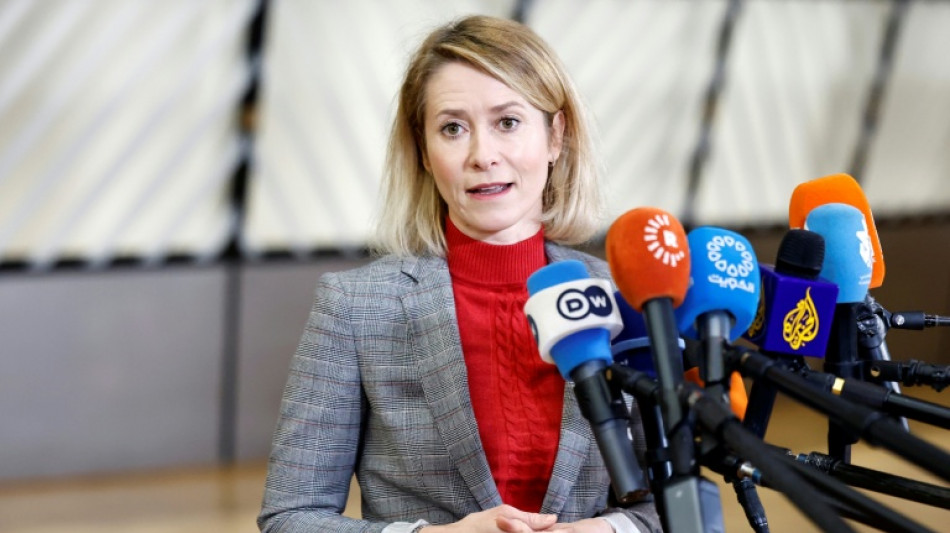
EU to put Iran Guards on 'terrorist list' / Photo: © AFP

 London
 14 °C
14 °C
 Manchester
13 °C
Manchester
13 °C
 Glasgow
14 °C
Glasgow
14 °C
 Dublin
 12 °C
12 °C
 Belfast
 12 °C
12 °C
 Washington
 12 °C
12 °C
 Denver
8 °C
Denver
8 °C
 Atlanta
13 °C
Atlanta
13 °C
 Dallas
11 °C
Dallas
11 °C
 Houston Texas
14 °C
Houston Texas
14 °C
 New Orleans
14 °C
New Orleans
14 °C
 El Paso
 7 °C
7 °C
 Phoenix
21 °C
Phoenix
21 °C
 Los Angeles
23 °C
San Diego
26 °C
San Francisco
17 °C
Chicago
7 °C
Minneapolis
6 °C
Seattle
14 °C
Portland
12 °C
Salt Lake City
10 °C
Las Vegas
16 °C
Miami
30 °C
Jacksonville
20 °C
San Antonio
13 °C
Bermuda
27 °C
Nassau
10 °C
Iqaluit
-9 °C
Yellowknife
4 °C
Anchorage
3 °C
Fairbanks
0 °C
Barrow
Los Angeles
23 °C
San Diego
26 °C
San Francisco
17 °C
Chicago
7 °C
Minneapolis
6 °C
Seattle
14 °C
Portland
12 °C
Salt Lake City
10 °C
Las Vegas
16 °C
Miami
30 °C
Jacksonville
20 °C
San Antonio
13 °C
Bermuda
27 °C
Nassau
10 °C
Iqaluit
-9 °C
Yellowknife
4 °C
Anchorage
3 °C
Fairbanks
0 °C
Barrow
 -2 °C
Calgary
6 °C
Edmonton
10 °C
Winnipeg
3 °C
Goose Bay
3 °C
Halifax
8 °C
Boston
9 °C
Ottawa
3 °C
Toronto
4 °C
Detroit
7 °C
Cleveland
9 °C
New York
10 °C
Baltimore
12 °C
Philadelphia
10 °C
Nuuk (Godthåb)
1 °C
Hong Kong
-2 °C
Calgary
6 °C
Edmonton
10 °C
Winnipeg
3 °C
Goose Bay
3 °C
Halifax
8 °C
Boston
9 °C
Ottawa
3 °C
Toronto
4 °C
Detroit
7 °C
Cleveland
9 °C
New York
10 °C
Baltimore
12 °C
Philadelphia
10 °C
Nuuk (Godthåb)
1 °C
Hong Kong
 28 °C
Singapore
29 °C
Melbourne
27 °C
Canberra
9 °C
Adelaide
21 °C
Darwin
28 °C
Perth
28 °C
Singapore
29 °C
Melbourne
27 °C
Canberra
9 °C
Adelaide
21 °C
Darwin
28 °C
Perth
 18 °C
Fort Worth
10 °C
Honolulu
18 °C
Fort Worth
10 °C
Honolulu
 25 °C
Sydney
14 °C
Johannesburg
31 °C
Dubai
33 °C
Mumbai
32 °C
Zürich
12 °C
Tokyo
19 °C
Seoul
21 °C
Delhi
26 °C
Beijing
17 °C
Riyadh
35 °C
Prague
16 °C
Pennsylvania
9 °C
Valletta
24 °C
Manama
34 °C
Warsaw
13 °C
Stockholm
9 °C
25 °C
Sydney
14 °C
Johannesburg
31 °C
Dubai
33 °C
Mumbai
32 °C
Zürich
12 °C
Tokyo
19 °C
Seoul
21 °C
Delhi
26 °C
Beijing
17 °C
Riyadh
35 °C
Prague
16 °C
Pennsylvania
9 °C
Valletta
24 °C
Manama
34 °C
Warsaw
13 °C
Stockholm
9 °C
EU foreign ministers were expected to agree Thursday to put Iran's Revolutionary Guards on the bloc's "terrorist list" after a deadly crackdown on mass protests.
"If you act as a terrorist, you should also be treated as terrorists," EU foreign policy chief Kaja Kallas told journalists heading into the ministers' meeting in Brussels.
She said the step puts the Revolutionary Guards on the same level as jihadist groups such as Al-Qaeda and the Islamic State group.
Though symbolic, the EU move will send a strong message of condemnation to Iran after thousands of people were reported killed during the protests that rocked the country.
The 27-nation bloc meanwhile also adopted visa bans and asset freezes on 21 state entities and Iranian officials -- including the interior minister, prosecutor general and regional IRGC commanders -- over the repression.
Iranian authorities acknowledge that thousands were killed during the protests, giving a toll of over 3,000 people, but say the majority were members of the security forces or bystanders killed by "rioters".
Rights groups say the toll is far higher, potentially in the tens of thousands, and note that protesters were killed by security forces including the Revolutionary Guards (IRGC) directly firing on them.
- France, Italy shift -
The IRGC is the ideological arm of Tehran's military and was created after the 1979 revolution to protect the clerical leadership. The Guards control or own companies across the Iranian economy, including major strategic sectors.
"The estimate is that still the diplomatic channels will remain open even after the listing of the Revolutionary Guards," Kallas said.
The EU action against the IRGC comes after France announced Wednesday it backed the move, following a similar shift from Italy.
The step would match similar classification enacted by the United States, Canada and Australia.
Paris had widely been seen as reluctant to act against the IRGC due to fears over the impact on Europeans detained in the country and a wish to keep diplomatic ties open.
"There can be no impunity for the crimes committed," French Foreign Minister Jean-Noel Barrot told reporters on arrival in Brussels.
"This decision is also an appeal by France to the Iranian authorities to release the prisoners thrown by thousands into the regime's prisons, to end the executions that are perpetuating the most violent repression in Iran's modern history," he said.
Barrot urged Tehran to end an internet blackout and "give back to the Iranian people the capacity to choose their own future."
The EU has already sanctioned several hundred Iranian officials and entities over crackdowns on previous protest movements and over Tehran's support for Russia's war on Ukraine.
The IRGC as a whole and senior commanders are already under EU sanctions, meaning that adding them to the terror blacklist is expected to have little practical impact on the organisation.
A.Evans--SFF