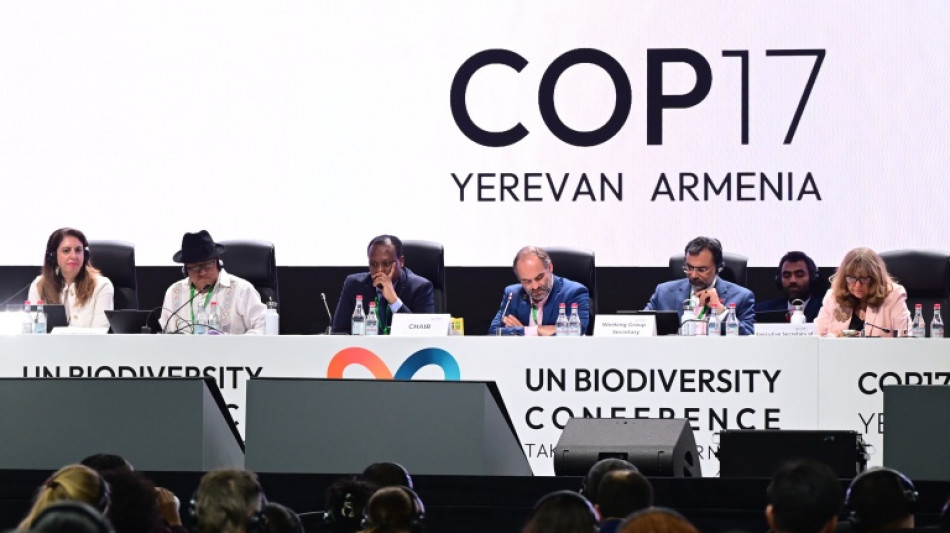
Nations agree push to get nature goals on track / Photo: © AFP

 London
 11 °C

 Manchester
10 °C
 Glasgow
 10 °C
 Dublin
 12 °C
 Belfast
13 °C
 Washington
 23 °C
 Denver
19 °C
 Atlanta
 27 °C
 Dallas
23 °C
 Houston Texas
25 °C
 New Orleans
25 °C
 El Paso
20 °C
 Phoenix
22 °C
 Los Angeles
20 °C
San Diego
21 °C
San Francisco
19 °C
Chicago
 13 °C
Minneapolis
14 °C
Seattle
8 °C
Portland
12 °C
Salt Lake City
16 °C
Las Vegas
 21 °C
Miami
29 °C
Jacksonville
23 °C
San Antonio
19 °C
Bermuda
23 °C
Nassau
18 °C
Iqaluit
 -4 °C
Yellowknife
1 °C
Anchorage
7 °C
Fairbanks
5 °C
Barrow
-2 °C
Calgary
0 °C
Edmonton
26 °C
Winnipeg
8 °C
Goose Bay
13 °C
Halifax
18 °C
Boston
18 °C
Ottawa
12 °C
Toronto
13 °C
Detroit
14 °C
Cleveland
13 °C
New York
18 °C
Baltimore
22 °C
Philadelphia
21 °C
Nuuk (Godthåb)
-2 °C
Hong Kong
24 °C
Singapore
 27 °C
Melbourne
28 °C
Canberra
13 °C
Adelaide
 17 °C
Darwin
27 °C
Perth
16 °C
Fort Worth
23 °C
Honolulu
27 °C
Sydney
17 °C
Johannesburg
 20 °C
Dubai
30 °C
Mumbai
27 °C
Zürich
9 °C
Tokyo
15 °C
Seoul
11 °C
Delhi
17 °C
Beijing
4 °C
Riyadh
28 °C
Prague
8 °C
Pennsylvania
19 °C
Valletta
19 °C
Manama
30 °C
Warsaw
9 °C
Stockholm
7 °C
Nearly 200 nations on Friday adopted hard-fought agreements at a UN biodiversity summit aimed at getting the world on course to halt the destruction of nature by 2030.
Delegates cheered as the crucial texts were approved in overtime following two weeks of tense negotiations at the COP17 conference in Armenia's capital Yerevan.
"And that's it. Perfect," said COP17 president Hambardzum Matevosyan to applause as he brought down the gavel on the documents, the final versions of which were not immediately available.
The world adopted a historic pact in 2022 setting ambitious targets to halt biodiversity loss by 2030.
But ahead of the summit, the UN warned that countries would fail to meet the goal unless they urgently correct course.
Most of the objectives are falling short, including targets to protect 30 percent of Earth's land and oceans, tackle pollution, and provide poorer countries with greater conservation finance.
A draft COP17 text had called on countries to "accelerate" efforts to keep the pact alive.
The much-anticipated text stressed that "increased action" was needed to tackle the root drivers of nature loss.
Highlighting the disagreements that dogged the talks, the "global review" proposed various options to achieve the 2030 goal. It was not immediately clear which made the cut.
The text "needed to respond to the irrefutable evidence that we are off track for our 2030 deadline, and while not particularly exciting or detailed, it's good news that countries could reach agreement," Catherine Weller from Fauna and Flora told AFP.
Kirsty Leong from WWF International told AFP the "outcome has its strengths and weaknesses, but, on balance, it's a good outcome".
- 'Weak terms' -
During negotiations, countries wrangled over reforming subsidies and other incentives that encourage activities harmful to nature, such as fossil fuels, intensive agriculture and overfishing.
Governments had pledged to reduce this spending but made little progress, with an estimated $2.4 trillion still flowing every year to harmful subsidies.
An Lambrechts from Greenpeace International said it was crucial that spending was switched to nature protection and restoration.
"Even though the agreed decision text expresses it in weak terms, COP17 saw important political momentum to address harmful financial incentives -- including subsidies -- and that's urgently needed," she told AFP.
A separate row revolved around finding new cash sources to fund conservation efforts -- a hot-button issue with public budgets under strain amid an energy crisis and conflicts in Ukraine and the Middle East.
To restore degraded ecosystems, save endangered species and conserve forests, wetlands and other vital natural habitats, the world needs an estimated $700 billion more every year than it currently spends.
The European Union led a charge for wealthy emerging economies such as China to contribute to global conservation efforts, a contentious issue at COP17.
In a sign of possible compromise, another draft text that circulated Friday invited countries outside the developed country donors to voluntarily join the group.
It did not compel any country to contribute to biodiversity finance but asked for volunteers to "signal interest".
- Science under attack -
Efforts to refine the lacklustre Cali Fund -- a UN mechanism for sharing profits from corporations that use genetic data from plants and other organisms -- also proved difficult.
The fund set out to raise $1 billion a year for conservation in developing countries when it launched in early 2025. So far, it has attracted around $10,000.
Nations have also feuded over key scientific reports, with a small handful of countries accused of stonewalling efforts to accept the benchmark findings of a UN-backed biodiversity body.
"The attacks on science have bothered me a lot," French Ecological Transition Minister Monique Barbut said.
Around 70 ministers joined the negotiations this week in an effort to nudge things along, while indigenous leaders and civil society activists appealed to nations to act with greater urgency.
The COP17 summit was also expected to decide on Friday whether Panama or Ecuador will host the next biodiversity summit in 2028.
Q.Taylor--SFF