WHO Reports 53,000 TB Deaths in South Africa Amid Declining Incidence

 London
 8 °C
 Manchester
 6 °C
 Glasgow
7 °C
 Dublin
7 °C
 Belfast
 8 °C
 Washington
8 °C
 Denver
7 °C
 Atlanta
5 °C
 Dallas
 11 °C
 Houston Texas
14 °C
 New Orleans
15 °C
 El Paso
 8 °C
 Phoenix
 18 °C
 Los Angeles
 16 °C
San Diego
 16 °C
San Francisco
16 °C
Chicago
3 °C
Minneapolis
-4 °C
Seattle
12 °C
Portland
12 °C
Salt Lake City
8 °C
Las Vegas
14 °C
Miami
22 °C
Jacksonville
 11 °C
San Antonio
12 °C
Bermuda
24 °C
Nassau
6 °C
Iqaluit
-6 °C
Yellowknife
-1 °C
Anchorage
-1 °C
Fairbanks
 -7 °C
Barrow
-11 °C
Calgary
4 °C
Edmonton
2 °C
Winnipeg
-7 °C
Goose Bay
2 °C
Halifax
 5 °C
Boston
3 °C
Ottawa
2 °C
Toronto
1 °C
Detroit
4 °C
Cleveland
4 °C
New York
4 °C
Baltimore
7 °C
Philadelphia
5 °C
Nuuk (Godthåb)
0 °C
Hong Kong
25 °C
Singapore
28 °C
Melbourne
19 °C
Canberra
17 °C
Adelaide
15 °C
Darwin
31 °C
Perth
21 °C
Fort Worth
11 °C
Honolulu
23 °C
Sydney
21 °C
Johannesburg
32 °C
Dubai
29 °C
Mumbai
31 °C
Zürich
7 °C
Tokyo
15 °C
Seoul
13 °C
Delhi
26 °C
Beijing
3 °C
Riyadh
20 °C
Prague
8 °C
Pennsylvania
5 °C
Valletta
25 °C
Manama
25 °C
Warsaw
4 °C
Stockholm
3 °C
South Africa recorded approximately 53,000 deaths from tuberculosis in 2025, according to new estimates released by the World Health Organization. While the number of people falling ill with the disease has declined by 63% since 2015, mortality rates have fallen much more slowly, leaving TB as a persistent and deadly public health challenge.
South Africa recorded approximately 53,000 deaths from tuberculosis in 2025, according to new estimates released by the World Health Organization (WHO). The figures, published alongside the Global Tuberculosis Report 2026, highlight a stark disparity in the country’s epidemic trajectory: while the number of people falling ill with TB has declined significantly over the past decade, the absolute number of fatalities remains stubbornly high.
The WHO estimates that 235,000 people in South Africa fell ill with tuberculosis in 2025. This represents a substantial reduction from previous years, with the national TB incidence rate declining by 63% since 2015. However, the mortality decline has not kept pace. Over the same ten-year period, the absolute number of annual deaths due to TB has decreased by only 19%, according to WHO data.
The epidemic in South Africa remains closely linked to HIV. Of the estimated 235,000 people who fell ill with TB in 2025, approximately 139,000 were living with HIV. Among the 53,000 TB deaths recorded that year, just over half—27,000 individuals—were people living with HIV.
The report also identified 14,000 cases of drug-resistant TB in the country in 2025. Drug-resistant strains present a more complex treatment landscape and are often associated with higher mortality rates and longer treatment durations compared to drug-susceptible TB.
There is a notable divergence between the WHO’s estimates and those produced by Thembisa, the leading mathematical model of HIV and TB in South Africa developed by local researchers. Thembisa estimated that 306,000 people aged 15 and older fell ill with TB in 2025, a figure substantially higher than the WHO’s 235,000 estimate for all ages. However, the mortality figures from both sources are closely aligned, with Thembisa also estimating 53,000 deaths among those aged 15 and older.
Both the WHO and Thembisa estimates are more than double the number of TB deaths reported by Statistics South Africa (Stats SA). Stats SA recorded just under 19,000 TB deaths in 2024. This discrepancy is attributed to the different methodologies used: the WHO and Thembisa rely on statistical modeling to account for unreported cases, while Stats SA figures are derived from death notifications. Evidence suggests that certain conditions are systematically under-reported on these official notifications in South Africa.
The WHO’s headline figure of 235,000 new cases refers specifically to people who fell ill with TB in 2025. It does not include individuals who contracted the disease in previous years and remained ill into 2025. Consequently, the total burden of active TB disease in the population during that year is substantially higher than the incidence figure suggests.
The data also sheds light on the issue of "missing cases"—individuals who develop TB but are not diagnosed or are diagnosed late. The number of people diagnosed with TB in South Africa has generally hovered around 200,000 annually. If the WHO’s estimate of 235,000 new cases is accurate, the gap between new infections and diagnoses narrows to approximately 35,000 missing cases. This is a significant improvement from estimates five years ago, which suggested over 100,000 missing cases.
However, experts caution against concluding that diagnostic gaps are resolved. The WHO itself notes that its incidence estimate carries high uncertainty, with a 95% confidence interval ranging from 148,000 to 342,000 cases. Furthermore, Thembisa’s higher estimate of 306,000 cases suggests the gap may be wider than the WHO data indicates.
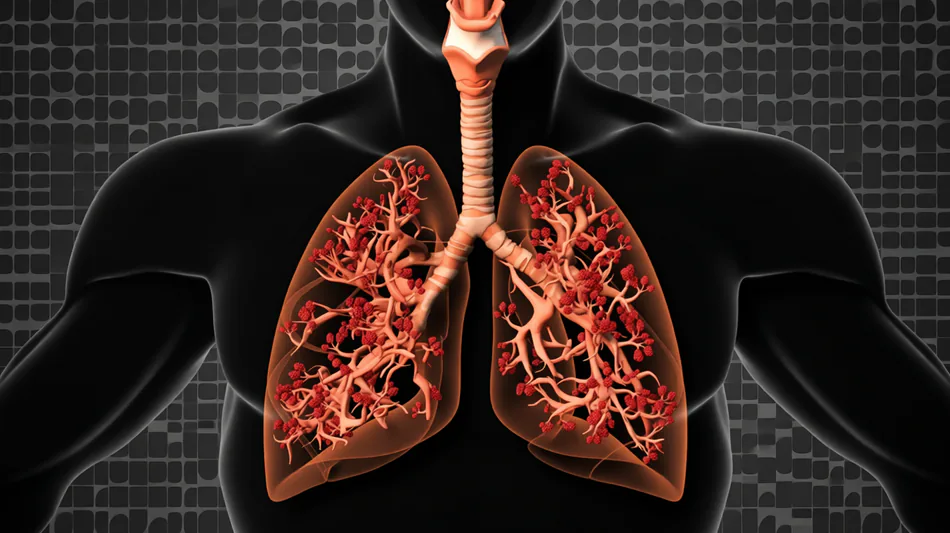
Recent modeling studies indicate that a major barrier to diagnosis is that many people presenting at public sector clinics with classic TB symptoms—such as persistent cough, night sweats, fatigue, chest pain, fever, and unexplained weight loss—are not offered TB tests. Researchers suggest that increasing testing rates among symptomatic clinic attendees could be one of the most effective interventions in controlling the epidemic.
Globally, the WHO estimated that 10.6 million people fell ill with TB in 2025, with 1.1 million deaths. Of those infected, only 8.4 million were diagnosed, leaving an estimated 2.2 million undiagnosed or unreported.
Dr. Tedros Adhanom Ghebreyesus, WHO Director-General, acknowledged the progress made in reducing cases and deaths but emphasized the urgency of continued action. "The continued decline in TB cases and deaths is very encouraging, especially given the challenges many countries have faced from funding cuts," Dr. Tedros said in a media statement. "Many governments have dug deeper into their own budgets to protect the gains they have made. And yet, more than one million people still die each year from a disease that is preventable and treatable. We urge countries and partners to urgently expand access to TB services, protect essential funding and accelerate the development of new tools to end this epidemic."
The WHO noted that global deaths have fallen by 35% since 2015, and treatment has saved an estimated 86 million lives since 2000. This marks the achievement of the first mortality milestone of the WHO’s End TB Strategy, albeit five years behind schedule. Despite this progress, the global incidence rate has declined by only 14% since 2015, falling far short of the 50% reduction target set for 2025. TB remains the leading cause of death from a single infectious agent worldwide.
K.Torres--SFF