Mobile boat clinics bring healthcare to India's remote islands / Photo: © AFP

 London
 14 °C
14 °C

 Manchester
 12 °C
12 °C
 Glasgow
 7 °C
7 °C
 Dublin
 16 °C
16 °C
 Belfast
 15 °C
15 °C
 Washington
18 °C
Washington
18 °C
 Denver
 17 °C
17 °C
 Atlanta
22 °C
Atlanta
22 °C
 Dallas
28 °C
Dallas
28 °C
 Houston Texas
27 °C
Houston Texas
27 °C
 New Orleans
24 °C
New Orleans
24 °C
 El Paso
27 °C
El Paso
27 °C
 Phoenix
31 °C
Phoenix
31 °C
 Los Angeles
19 °C
San Diego
21 °C
San Francisco
14 °C
Chicago
15 °C
Minneapolis
11 °C
Seattle
15 °C
Portland
16 °C
Salt Lake City
19 °C
Las Vegas
25 °C
Miami
25 °C
Jacksonville
24 °C
San Antonio
28 °C
Bermuda
28 °C
Nassau
17 °C
Iqaluit
0 °C
Yellowknife
10 °C
Anchorage
10 °C
Fairbanks
5 °C
Barrow
1 °C
Calgary
15 °C
Edmonton
21 °C
Winnipeg
10 °C
Goose Bay
9 °C
Halifax
12 °C
Boston
13 °C
Ottawa
9 °C
Toronto
10 °C
Detroit
12 °C
Cleveland
14 °C
New York
17 °C
Baltimore
17 °C
Philadelphia
17 °C
Nuuk (Godthåb)
1 °C
Hong Kong
Los Angeles
19 °C
San Diego
21 °C
San Francisco
14 °C
Chicago
15 °C
Minneapolis
11 °C
Seattle
15 °C
Portland
16 °C
Salt Lake City
19 °C
Las Vegas
25 °C
Miami
25 °C
Jacksonville
24 °C
San Antonio
28 °C
Bermuda
28 °C
Nassau
17 °C
Iqaluit
0 °C
Yellowknife
10 °C
Anchorage
10 °C
Fairbanks
5 °C
Barrow
1 °C
Calgary
15 °C
Edmonton
21 °C
Winnipeg
10 °C
Goose Bay
9 °C
Halifax
12 °C
Boston
13 °C
Ottawa
9 °C
Toronto
10 °C
Detroit
12 °C
Cleveland
14 °C
New York
17 °C
Baltimore
17 °C
Philadelphia
17 °C
Nuuk (Godthåb)
1 °C
Hong Kong
 32 °C
Singapore
32 °C
Singapore
 27 °C
Melbourne
25 °C
Canberra
13 °C
Adelaide
18 °C
Darwin
31 °C
Perth
21 °C
Fort Worth
26 °C
Honolulu
26 °C
Sydney
15 °C
Johannesburg
14 °C
Dubai
34 °C
Mumbai
29 °C
Zürich
8 °C
Tokyo
30 °C
Seoul
29 °C
Delhi
33 °C
Beijing
30 °C
Riyadh
33 °C
Prague
10 °C
Pennsylvania
15 °C
Valletta
26 °C
Manama
34 °C
Warsaw
10 °C
Stockholm
10 °C
27 °C
Melbourne
25 °C
Canberra
13 °C
Adelaide
18 °C
Darwin
31 °C
Perth
21 °C
Fort Worth
26 °C
Honolulu
26 °C
Sydney
15 °C
Johannesburg
14 °C
Dubai
34 °C
Mumbai
29 °C
Zürich
8 °C
Tokyo
30 °C
Seoul
29 °C
Delhi
33 °C
Beijing
30 °C
Riyadh
33 °C
Prague
10 °C
Pennsylvania
15 °C
Valletta
26 °C
Manama
34 °C
Warsaw
10 °C
Stockholm
10 °C
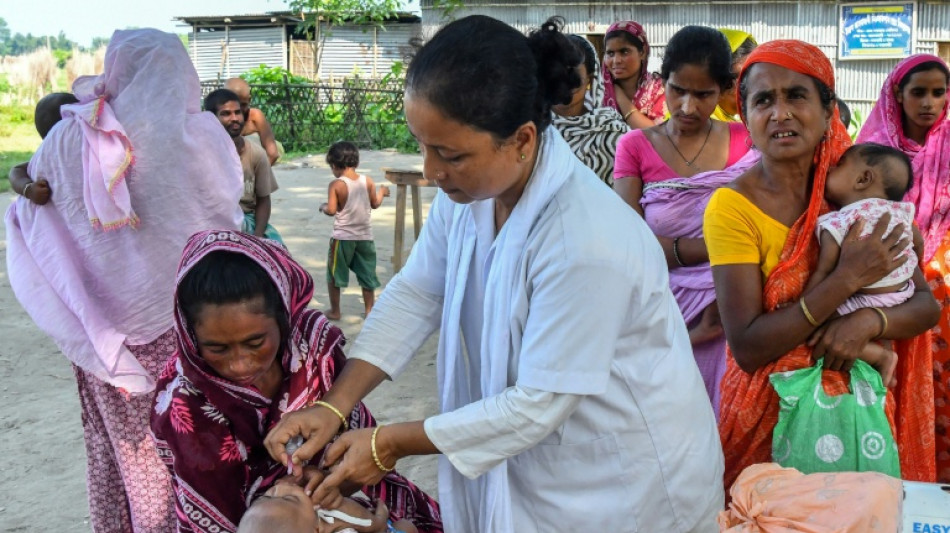
An infant lets out a feeble cry as a doctor administers a routine but vital injection aboard a mobile boat clinic, part of a network serving remote riverine communities in northeastern India.
Hundreds of thousands of people in Assam state, crisscrossed by the Brahmaputra river, live on "chars", or temporary river islands and sandbars where access to even basic healthcare can be a challenge.
More than 2,000 such islands dot the state where there are limited health facilities, most "with little or no manpower", according to the local government.
But the network of mobile boat clinics has brought doctors, medicines, vaccines and basic laboratory services to 13 districts across the state.
For thousands of villagers on these remote islands -- many prone to flooding and erosion -- the clinics provide a vital link to healthcare.
"We are totally dependent on the boat clinic," said Rekibul Amin, a resident of the Barballa river island in Nalbari district, which has no medical facilities at all.
"Whatever medicines people receive here, they get them through the boat clinic," Amin said, adding that women in particular had "benefited greatly".
An initiative of non-profit The Centre for North East Studies and Policy Research, the "Akha" -- Assamese for "hope" -- boat network was launched in 2005.
It has expanded to 15 boats, with support from authorities and UNICEF, now serving roughly 20,000 people a month, according to the UN agency.
Maternal and infant health are the main areas of focus, in a bid to help reduce mortality rates that exceed that national average.
Despite significant gains in recent years, infant and maternal mortality rates continue to languish in Assam, a state of more than 30 million people.
According to official figures, the state has an average of 29 infant deaths and 34 under-five deaths per 1,000 live births, compared with national rates of 24 and 28 deaths, respectively.
Maternal deaths in Assam stood at 125 per 100,000 live births as against 88 nationally.
"Mainly, we are targeting the pregnant women who need the antenatal care checkup and the newborn babies who need the routine immunisation," said Habibul Hoque, medical officer at a boat clinic serving Nalbari.
"We are very happy to serve the people of these 'char' areas," he said, where poverty and illiteracy are some of the barriers to healthcare access.
G.Miller--SFF