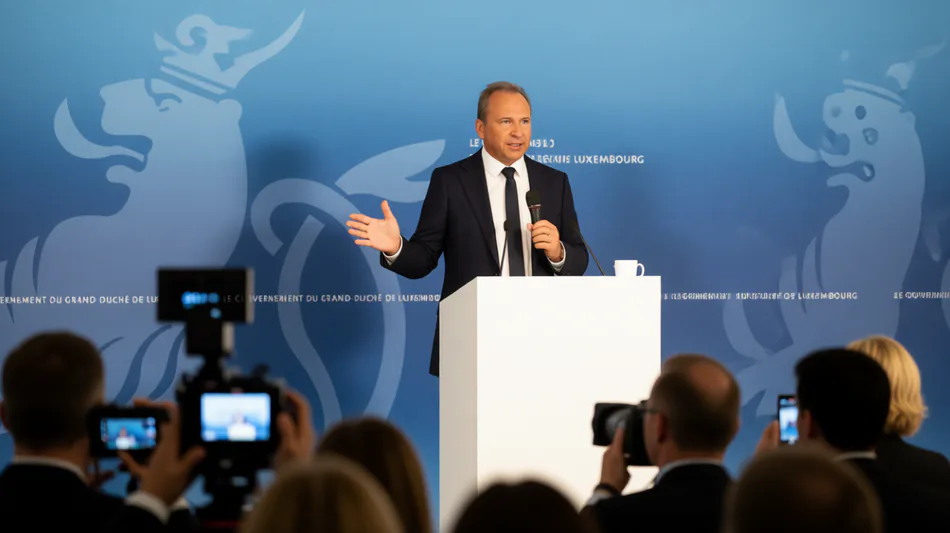
Luxembourg Defends Defence Bond Tax Exemption Amid EU Infringement Notice

 London
 6 °C

 Manchester
 7 °C
 Glasgow
1 °C
 Dublin
 7 °C
 Belfast
 7 °C
 Washington
4 °C
 Denver
 -1 °C
 Atlanta
8 °C
 Dallas
 2 °C
 Houston Texas
5 °C
 New Orleans
10 °C
 El Paso
 0 °C
 Phoenix
13 °C
 Los Angeles
15 °C
San Diego
12 °C
San Francisco
12 °C
Chicago
3 °C
Minneapolis
-3 °C
Seattle
14 °C
Portland
9 °C
Salt Lake City
2 °C
Las Vegas
7 °C
Miami
21 °C
Jacksonville
14 °C
San Antonio
2 °C
Bermuda
23 °C
Nassau
4 °C
Iqaluit
 -7 °C
Yellowknife
-8 °C
Anchorage
-7 °C
Fairbanks
-23 °C
Barrow
-6 °C
Calgary
-1 °C
Edmonton
3 °C
Winnipeg
-4 °C
Goose Bay
-3 °C
Halifax
2 °C
Boston
0 °C
Ottawa
 -5 °C
Toronto
-2 °C
Detroit
1 °C
Cleveland
0 °C
New York
3 °C
Baltimore
3 °C
Philadelphia
2 °C
Nuuk (Godthåb)
-6 °C
Hong Kong
19 °C
Singapore
 30 °C
Melbourne
21 °C
Canberra
15 °C
Adelaide
19 °C
Darwin
27 °C
Perth
17 °C
Fort Worth
0 °C
Honolulu
 19 °C
Sydney
19 °C
Johannesburg
23 °C
Dubai
29 °C
Mumbai
31 °C
Zürich
4 °C
Tokyo
10 °C
Seoul
6 °C
Delhi
22 °C
Beijing
-2 °C
Riyadh
28 °C
Prague
2 °C
Pennsylvania
0 °C
Valletta
22 °C
Manama
26 °C
Warsaw
1 °C
Stockholm
1 °C
Luxembourg’s Ministry of Finance has firmly defended its tax exemption policy for the recently launched Defence Bond after receiving a formal infringement notice from the European Commission. Finance Minister Gilles Roth stated that the legal framework remains valid and announced that identical tax principles will apply to a forthcoming Housing Bond, despite Brussels’ concerns regarding the free movement of capital.
The European Commission has issued a formal notice to Luxembourg concerning the tax exemption granted on its Defence Bond, initiating a legal dialogue that the Luxembourg government intends to defend vigorously. The country has been granted two months to respond to the letter of formal notice, which challenges the preferential treatment afforded to investors in the sovereign security.
Finance Minister Gilles Roth has maintained his position regarding the mechanism established at the start of the year, asserting that the legal framework currently in force remains applicable to holders of the bond. The Ministry of Finance characterized the Commission’s action as the beginning of a formal legal process and stated that the government intends to fully defend the compliance of national legislation and the public interest objectives it pursues.
The Defence Bond, a €150 million government security dedicated to defence financing, was fully subscribed in less than 24 hours upon its issuance. According to figures presented by Roth in the Chamber of Deputies, a total of 2,380 individuals subscribed to the bond, with 96.7 percent identified as tax residents of Luxembourg. For these savers, the security yielded an annual rate of 2.25 percent, with interest exempt from taxation.
The European Commission considers that the specific conditions of this exemption encouraged savers to favor the Luxembourg security over comparable government bonds issued elsewhere in the European Union or the European Economic Area. The Commission regards this dynamic as a restriction on the free movement of capital. If Luxembourg’s response to the formal notice is deemed insufficient, the Commission may issue a reasoned opinion, marking the second stage of the infringement procedure.
The controversy centers on the Act of 19 December 2025, which arose from Bill No. 8633 tabled by Minister Roth. This legislation extended tax exemptions in principle to foreign government bonds, provided they met specific criteria: denomination in euros, a maturity of three years, and the highest credit rating from at least two internationally recognized rating agencies at the time of issue. The issuance and subscription window was set between 15 January and 15 February 2026.
While the government argued that any sovereign bond meeting these criteria could benefit from the same treatment, the European Commission takes account of their cumulative effect. According to Brussels, the combination of dates, currency, maturity, and credit rating effectively restricted the exemption to the Defence Bond. With the same gross coupon, this advantage provides the Luxembourg bond a higher net yield than securities on which interest is taxable.
The Ministry of Finance noted that defence spending is not included among the fiscal criteria for eligibility. The Netherlands has already issued three-year government bonds denominated in euros available to private individuals through authorized banks, covering general financing needs. The Commission’s press release did not specify any particular foreign issue that may have been excluded during the window set by Luxembourg.
Despite the ongoing dispute regarding the Defence Bond, the Ministry of Finance considers this tax approach equally appropriate for the upcoming Housing Bond. This €250 million security, described as a "citizens' bond," is designed to support affordable housing. The matter was clarified within the Finance Committee of the Chamber of Deputies.
A tax bill currently under examination by the Chamber of Employees provides for a full exemption from interest for resident individuals regarding the Housing Bond. It incorporates the same criteria relating to currency, maturity, and credit rating. It sets a new one-month window for issuance and subscription, running from 1 to 31 January 2027.
The formal notice relates specifically to the law of December 2025 governing the Defence Bond. Luxembourg is therefore defending the criteria applied to its defence bond at the very moment it is proposing to adopt them to finance affordable housing.
H.Reyes--SFF