Kevin Warsh: New Fed chair who vows not to be Trump's puppet / Photo: © AFP

 London
 15 °C
15 °C
 Manchester
 13 °C
13 °C
 Glasgow
15 °C
Glasgow
15 °C
 Dublin
13 °C
Dublin
13 °C
 Belfast
13 °C
Belfast
13 °C
 Washington
17 °C
Washington
17 °C
 Denver
16 °C
Denver
16 °C
 Atlanta
16 °C
Atlanta
16 °C
 Dallas
 23 °C
23 °C
 Houston Texas
23 °C
Houston Texas
23 °C
 New Orleans
 19 °C
19 °C
 El Paso
18 °C
El Paso
18 °C
 Phoenix
27 °C
Phoenix
27 °C
 Los Angeles
20 °C
San Diego
21 °C
San Francisco
Los Angeles
20 °C
San Diego
21 °C
San Francisco
 14 °C
Chicago
19 °C
Minneapolis
19 °C
Seattle
14 °C
Chicago
19 °C
Minneapolis
19 °C
Seattle
 9 °C
Portland
9 °C
Portland
 9 °C
Salt Lake City
20 °C
Las Vegas
25 °C
Miami
31 °C
Jacksonville
27 °C
San Antonio
22 °C
Bermuda
9 °C
Salt Lake City
20 °C
Las Vegas
25 °C
Miami
31 °C
Jacksonville
27 °C
San Antonio
22 °C
Bermuda
 27 °C
Nassau
17 °C
Iqaluit
-5 °C
Yellowknife
-1 °C
Anchorage
9 °C
Fairbanks
-1 °C
Barrow
1 °C
Calgary
1 °C
Edmonton
16 °C
Winnipeg
12 °C
Goose Bay
9 °C
Halifax
13 °C
Boston
12 °C
Ottawa
8 °C
Toronto
10 °C
Detroit
17 °C
Cleveland
16 °C
New York
17 °C
Baltimore
16 °C
Philadelphia
17 °C
Nuuk (Godthåb)
1 °C
Hong Kong
26 °C
Singapore
29 °C
Melbourne
29 °C
Canberra
10 °C
Adelaide
13 °C
Darwin
28 °C
Perth
16 °C
Fort Worth
22 °C
Honolulu
25 °C
Sydney
27 °C
Nassau
17 °C
Iqaluit
-5 °C
Yellowknife
-1 °C
Anchorage
9 °C
Fairbanks
-1 °C
Barrow
1 °C
Calgary
1 °C
Edmonton
16 °C
Winnipeg
12 °C
Goose Bay
9 °C
Halifax
13 °C
Boston
12 °C
Ottawa
8 °C
Toronto
10 °C
Detroit
17 °C
Cleveland
16 °C
New York
17 °C
Baltimore
16 °C
Philadelphia
17 °C
Nuuk (Godthåb)
1 °C
Hong Kong
26 °C
Singapore
29 °C
Melbourne
29 °C
Canberra
10 °C
Adelaide
13 °C
Darwin
28 °C
Perth
16 °C
Fort Worth
22 °C
Honolulu
25 °C
Sydney
 19 °C
Johannesburg
29 °C
Dubai
36 °C
Mumbai
34 °C
Zürich
14 °C
Tokyo
20 °C
Seoul
16 °C
Delhi
29 °C
Beijing
14 °C
Riyadh
36 °C
Prague
13 °C
Pennsylvania
14 °C
Valletta
26 °C
Manama
34 °C
Warsaw
13 °C
Stockholm
7 °C
19 °C
Johannesburg
29 °C
Dubai
36 °C
Mumbai
34 °C
Zürich
14 °C
Tokyo
20 °C
Seoul
16 °C
Delhi
29 °C
Beijing
14 °C
Riyadh
36 °C
Prague
13 °C
Pennsylvania
14 °C
Valletta
26 °C
Manama
34 °C
Warsaw
13 °C
Stockholm
7 °C
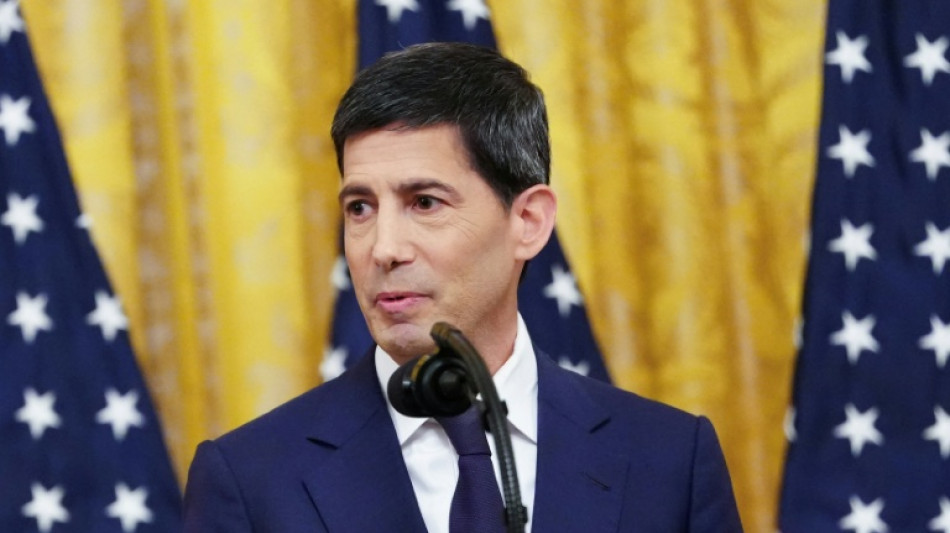
Kevin Warsh, the new chair of the US Federal Reserve, returns to the central bank with an ambitious reform agenda and the looming threat of intimidation by the man who nominated him: US President Donald Trump.
Warsh was confirmed to a four-year term as the central bank's chief by the Senate last week, and took his oath of office at a glitzy White House ceremony on Friday.
"I believe, Mr. President, these years can bring unmatched prosperity that will raise living standards for Americans from all walks of life, and the Fed has something to do with it," said Warsh, after Trump heaped effusive praise on him.
The 56-year-old native of upstate New York left his first term on the board prematurely in 2011, griping over policy differences.
Now, he returns to lead the Fed -- whose mandates include managing US inflation and ensuring maximum employment -- with goals of changing how it makes decisions, communicates those moves and implements policy shifts.
He does so at a time of unprecedented political pressure on the Fed's independence, with Trump demanding lower interest rates to spur activity in the world's largest economy.
Trump frequently criticized and insulted Warsh's predecessor, Jerome Powell, over a lack of rate cuts. His administration targeted Powell in a criminal probe and is still attempting to remove another Fed governor, Lisa Cook.
At his confirmation hearing before the Senate banking committee, Warsh vowed to preserve the Fed's independence, saying he would "absolutely not" be the president's puppet.
At his swearing-in, Warsh did not return to the theme of independence, vowing instead to take on "static frameworks and models" and to uphold "clear standards of integrity and performance."
- Fed criticism -
Born and raised in Albany, Warsh earned degrees from Stanford University and Harvard Law School.
He is married to Jane Lauder, a granddaughter of cosmetics legend Estee Lauder. Her billionaire father Ronald Lauder is one of Trump's longtime associates.
Warsh started his career at investment giant Morgan Stanley, specializing in mergers and acquisitions.
He later joined then-US president George W. Bush's administration, serving as a White House economic policy advisor from 2002-2006 before being nominated to the Fed's Board of Governors.
Warsh served on the board during the global financial crisis, and eventually left in 2011 over differences on how the central bank should tackle it. He has since worked on Wall Street and on the boards of various companies, including UPS.
"I saw the Fed and its people at their very best, but I also witnessed an institution that was tempted to play a larger role in the economy and society," Warsh said at his confirmation hearing.
That language echoes Trump, whose administration has called for the Federal Reserve to stay in its lane and has questioned its credibility.
In his first tenure at the Fed, Warsh was considered a "hawk" -- a policymaker who favors addressing the inflation side of the mandate, usually by raising interest rates.
In recent years, he has changed his tune, aligning with Trump's demands for lower interest rates despite the US economy facing stubbornly high inflation since the Covid-19 pandemic.
Warsh blames high inflation on "policy errors" by the Fed in 2021 and 2022.
He has called for "regime change" in policymaking, including changing the data the Fed bases its decisions on, removing forward guidance from its communications and encouraging more of a "good family fight" at meetings.
He also wants to shrink the Fed's balance sheet, preferring to use interest rates as the central bank's primary tool on both sides of its mandate.
- 'Very smooth' -
David Wessel, senior fellow at the Brookings Institution, said Warsh has outlined a wide-ranging agenda, but one should "watch what he does, not what he has said."
Warsh will not simply be able to impose his will on the central bank, and will have to work with his fellow policymakers, Wessel told AFP.
"He is very smooth, and generally good with the people, and that will serve him well in this endeavor as long as he doesn't move too fast or too radically."
Kathryn Judge, a law professor at Columbia University, said existing divisions at the Fed will pose a "significant challenge" to Warsh.
"I think we really just have to wait and see," Judge said.
"It's been a long time since we've had a chair coming in who is seeking to chart a new course, rather than to build on the success of his predecessors."
X.White--SFF