Hiam Abbass says 'cinema is a political act' after Berlin row / Photo: © AFP

 London
 24 °C
24 °C

 Manchester
 17 °C
17 °C
 Glasgow
 19 °C
19 °C
 Dublin
18 °C
Dublin
18 °C
 Belfast
17 °C
Belfast
17 °C
 Washington
29 °C
Washington
29 °C
 Denver
36 °C
Denver
36 °C
 Atlanta
31 °C
Atlanta
31 °C
 Dallas
 36 °C
36 °C
 Houston Texas
34 °C
Houston Texas
34 °C
 New Orleans
34 °C
New Orleans
34 °C
 El Paso
35 °C
El Paso
35 °C
 Phoenix
39 °C
Phoenix
39 °C
 Los Angeles
29 °C
San Diego
28 °C
San Francisco
Los Angeles
29 °C
San Diego
28 °C
San Francisco
 17 °C
Chicago
31 °C
Minneapolis
34 °C
Seattle
19 °C
Portland
21 °C
Salt Lake City
36 °C
Las Vegas
41 °C
Miami
32 °C
Jacksonville
36 °C
San Antonio
33 °C
Bermuda
26 °C
Nassau
27 °C
Iqaluit
3 °C
Yellowknife
13 °C
Anchorage
15 °C
Fairbanks
15 °C
Barrow
0 °C
Calgary
25 °C
Edmonton
30 °C
Winnipeg
27 °C
Goose Bay
25 °C
Halifax
23 °C
Boston
25 °C
Ottawa
29 °C
Toronto
25 °C
Detroit
29 °C
Cleveland
27 °C
New York
29 °C
Baltimore
29 °C
Philadelphia
29 °C
Nuuk (Godthåb)
12 °C
Hong Kong
26 °C
Singapore
28 °C
Melbourne
33 °C
Canberra
17 °C
Chicago
31 °C
Minneapolis
34 °C
Seattle
19 °C
Portland
21 °C
Salt Lake City
36 °C
Las Vegas
41 °C
Miami
32 °C
Jacksonville
36 °C
San Antonio
33 °C
Bermuda
26 °C
Nassau
27 °C
Iqaluit
3 °C
Yellowknife
13 °C
Anchorage
15 °C
Fairbanks
15 °C
Barrow
0 °C
Calgary
25 °C
Edmonton
30 °C
Winnipeg
27 °C
Goose Bay
25 °C
Halifax
23 °C
Boston
25 °C
Ottawa
29 °C
Toronto
25 °C
Detroit
29 °C
Cleveland
27 °C
New York
29 °C
Baltimore
29 °C
Philadelphia
29 °C
Nuuk (Godthåb)
12 °C
Hong Kong
26 °C
Singapore
28 °C
Melbourne
33 °C
Canberra
 4 °C
Adelaide
9 °C
Darwin
21 °C
Perth
13 °C
Fort Worth
36 °C
Honolulu
24 °C
Sydney
4 °C
Adelaide
9 °C
Darwin
21 °C
Perth
13 °C
Fort Worth
36 °C
Honolulu
24 °C
Sydney
 10 °C
Johannesburg
11 °C
Dubai
34 °C
Mumbai
10 °C
Johannesburg
11 °C
Dubai
34 °C
Mumbai
 28 °C
Zürich
25 °C
Tokyo
25 °C
Seoul
28 °C
Zürich
25 °C
Tokyo
25 °C
Seoul
 27 °C
Delhi
34 °C
Beijing
26 °C
Riyadh
36 °C
Prague
27 °C
Pennsylvania
28 °C
Valletta
29 °C
Manama
34 °C
Warsaw
27 °C
Stockholm
19 °C
27 °C
Delhi
34 °C
Beijing
26 °C
Riyadh
36 °C
Prague
27 °C
Pennsylvania
28 °C
Valletta
29 °C
Manama
34 °C
Warsaw
27 °C
Stockholm
19 °C
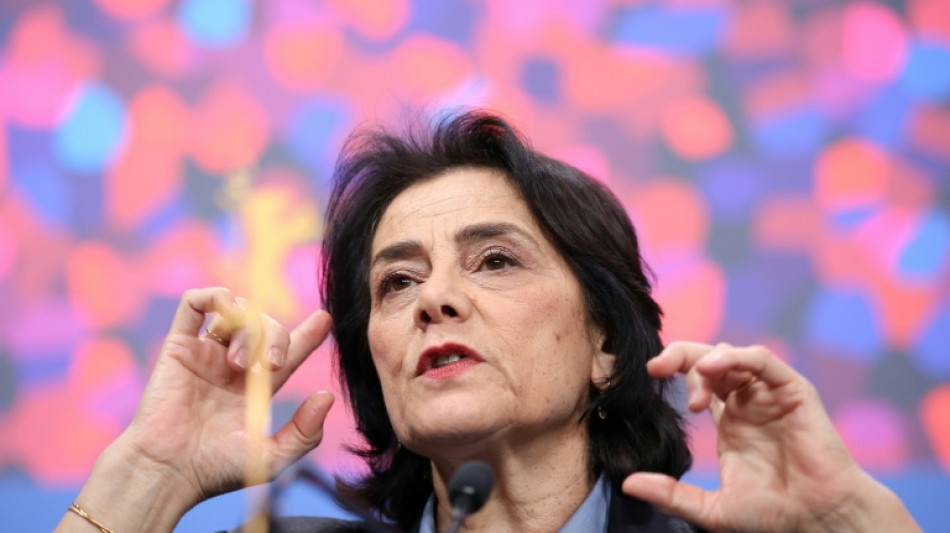
The start of this year's Berlin Film Festival was marked by a row over how far film should venture into politics but for prominent French-Palestinian actor Hiam Abbass, "everything we do is a political act".
Abbass is starring in two films being presented at this year's Berlinale festival and in an AFP interview she emphasised the importance of a politically engaged approach to cinema.
At Thursday's opening press conference jury president Wim Wenders sparked controversy by saying "we cannot really enter the field of politics", in response to a question about Germany's support for Gaza.
"I don't agree," Abbass told AFP.
"There's a lack of courage among people in the film world -- among some, not all," said Abbass, who gained global attention for her role as Marcia Roy in the hit HBO series Succession.
She recognised that Wenders's remarks were "taken out of context", as he did talk about cinema's capacity to "change the world", albeit in a different way from party politics.
Nevertheless, Abbass said she was glad to see filmmakers at this year's festival "commit to amplifying stories and voices of minorities, oppressed people, people experiencing bombardment, genocides".
"Today more than ever, if we don't tackle these subjects, we're making art for art's sake, and that's something that doesn't interest me."
- 'Act of resistance' -
Abbass, who was born in Nazareth in northern Israel but has been living in France for 37 years, stars in two films at the festival with striking political messages.
"In a Whisper" by Tunisian director Leyla Bouzid addresses the issue of LGBTQ life in Tunisia, where same-sex relationships are illegal.
"In some Arab countries, it's really a very sensitive subject and we need to talk about it," says Abbass, while noting that homophobia is by no means confined to that part of the world.
In "Only Rebels Win" by Lebanese filmmaker Danielle Arbid, Abbass plays a Christian Palestinian living in Beirut who faces a backlash from those around her because of her relationship with a South Sudanese Muslim migrant 40 years her junior.
Israeli bombardments between September and November 2024 forced the production to relocate from Beirut to a studio near Paris, where the team deployed creative solutions to recreate the Lebanese capital.
Abbass said the circumstances turned the film into "an act of resistance".
When the bombardment of Beirut began, "I told Danielle: 'Whatever you do, wherever you go, I'll follow you, because this film has to get made'."
- Academy's 'open-mindedness' -
Before starting on "Only Rebels Win", Abbass had just finished working on "Palestine 36" by Annemarie Jacir, a depiction of the Palestinian uprising against the British Mandate in 1936.
That film almost did not happen because of the war in Gaza, sparked by Hamas's October 7, 2023 attack on Israel, which resulted in the deaths of 1,221 people, according to an AFP tally based on official Israeli figures.
Israel's retaliation has left at least 71,000 people dead in Gaza, according to the health ministry in the Hamas-run territory, whose figures the United Nations considers reliable.
Abbass said that the "the film waited eight months so that it could be shot," with production forced to move to Jordan instead of the Israeli-occupied West Bank.
Abbass said that the team decided that "at a certain point, we couldn't keep being subject to" the decisions of the Israeli government.
She also welcomed the Academy's decision to include three films highlighting the Palestinian experience in its shortlist for best international feature film: "Palestine 36", Kaouther Ben Hania's "The Voice of Hind Rajab" and Cherien Dabis's "All That's Left of You".
Only Kaouther Ben Hania's film ultimately made the final list of five nominees.
But Abbass praised the "open-mindedness" of the Academy to bring these films "almost to the final stages of the Oscars" after what she termed Israel's "genocide" in Gaza.
T.Martin--SFF