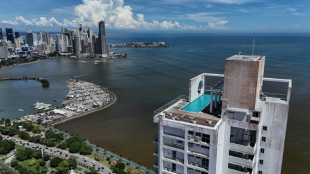
Albania TikTok ban violated free speech, court rules / Photo: © AFP

 London
 14 °C
14 °C
 Manchester
 12 °C
12 °C
 Glasgow
14 °C
Glasgow
14 °C
 Dublin
11 °C
Dublin
11 °C
 Belfast
11 °C
Belfast
11 °C
 Washington
13 °C
Washington
13 °C
 Denver
 16 °C
16 °C
 Atlanta
 15 °C
15 °C
 Dallas
21 °C
Dallas
21 °C
 Houston Texas
22 °C
Houston Texas
22 °C
 New Orleans
20 °C
New Orleans
20 °C
 El Paso
18 °C
El Paso
18 °C
 Phoenix
29 °C
Phoenix
29 °C
 Los Angeles
21 °C
San Diego
21 °C
San Francisco
Los Angeles
21 °C
San Diego
21 °C
San Francisco
 15 °C
Chicago
18 °C
Minneapolis
16 °C
Seattle
9 °C
Portland
10 °C
Salt Lake City
22 °C
Las Vegas
27 °C
Miami
28 °C
Jacksonville
25 °C
San Antonio
19 °C
Bermuda
25 °C
Nassau
12 °C
Iqaluit
15 °C
Chicago
18 °C
Minneapolis
16 °C
Seattle
9 °C
Portland
10 °C
Salt Lake City
22 °C
Las Vegas
27 °C
Miami
28 °C
Jacksonville
25 °C
San Antonio
19 °C
Bermuda
25 °C
Nassau
12 °C
Iqaluit
 -4 °C
Yellowknife
1 °C
Anchorage
8 °C
Fairbanks
-2 °C
Barrow
-4 °C
Yellowknife
1 °C
Anchorage
8 °C
Fairbanks
-2 °C
Barrow
 0 °C
Calgary
3 °C
Edmonton
15 °C
Winnipeg
14 °C
Goose Bay
2 °C
Halifax
8 °C
Boston
8 °C
Ottawa
1 °C
Toronto
10 °C
Detroit
15 °C
Cleveland
14 °C
New York
14 °C
Baltimore
13 °C
Philadelphia
12 °C
Nuuk (Godthåb)
0 °C
Hong Kong
0 °C
Calgary
3 °C
Edmonton
15 °C
Winnipeg
14 °C
Goose Bay
2 °C
Halifax
8 °C
Boston
8 °C
Ottawa
1 °C
Toronto
10 °C
Detroit
15 °C
Cleveland
14 °C
New York
14 °C
Baltimore
13 °C
Philadelphia
12 °C
Nuuk (Godthåb)
0 °C
Hong Kong
 29 °C
Singapore
29 °C
Singapore
 29 °C
Melbourne
26 °C
Canberra
15 °C
Adelaide
16 °C
Darwin
30 °C
Perth
17 °C
Fort Worth
20 °C
Honolulu
26 °C
Sydney
22 °C
Johannesburg
29 °C
Dubai
38 °C
Mumbai
36 °C
Zürich
13 °C
Tokyo
22 °C
Seoul
21 °C
Delhi
33 °C
Beijing
22 °C
Riyadh
37 °C
Prague
13 °C
Pennsylvania
9 °C
Valletta
25 °C
Manama
35 °C
Warsaw
12 °C
Stockholm
6 °C
29 °C
Melbourne
26 °C
Canberra
15 °C
Adelaide
16 °C
Darwin
30 °C
Perth
17 °C
Fort Worth
20 °C
Honolulu
26 °C
Sydney
22 °C
Johannesburg
29 °C
Dubai
38 °C
Mumbai
36 °C
Zürich
13 °C
Tokyo
22 °C
Seoul
21 °C
Delhi
33 °C
Beijing
22 °C
Riyadh
37 °C
Prague
13 °C
Pennsylvania
9 °C
Valletta
25 °C
Manama
35 °C
Warsaw
12 °C
Stockholm
6 °C
An almost year-long ban on TikTok by the Albanian government violated freedom of expression and press freedom, Albania’s Constitutional Court ruled on Wednesday in a decision praised by journalists.
The Albanian government blocked the billion-user app in March 2025 after the fatal stabbing of a teenager during a fight linked to a social-media dispute.
But the Albanian Journalists Association, an investigative media outlet and an NGO challenged the decision in court, saying the ban breached the constitutional right to free speech.
"It represented a very dangerous precedent for freedom of expression and for the space of public communication in Albania," Albanian Journalists Association representative Isa Myzyraj told AFP.
He praised the ruling as an "important development for the protection of democratic standards in Albania".
In its decision, the court concluded "that the interruption of access to the TikTok platform constitutes a restriction of freedom of expression and freedom of the press".
The government suspended the TikTok ban in early February, but the judges said the case was of "public interest" and that proceedings should continue despite the repeal of the decision under review.
- VPN -
In practice, enforcing the ban proved difficult and raised questions about its effectiveness.
Many Albanian users said they barely noticed the ban, as the app remained accessible via VPNs, or virtual private networks, which enable users to hide their locations.
Esmeralda Plori, a 21-year-old communications student and bar worker in the Albanian capital Tirana, said she had no trouble accessing the platform.
"TikTok worked without any problems... routing through countries such as Romania or Bulgaria," she said.
Plori called it "absurd" to ban one of the platforms most used by young Albanians "without taking into account how the internet actually works today".
"I'm grateful to the government for enabling 88 percent of Albanians to learn what a VPN is and how it works. Every cloud has a silver lining," she added.
Like her, Martin Taka, a 21-year-old journalism student from Tirana, never stopped using TikTok.
"A single VPN app was enough. The process is very simple and accessible to everyone," he said.
According to Taka, if TikTok had wanted to examine his geolocation more closely, the app could have found him "very easily".
"But they’re not interested in that because, in the end, their aim is to have as many users as possible on their platform," he said.
- Opposite effect -
Owned by Chinese group ByteDance, TikTok faces regular accusations of harming users' mental health and spreading violent or misogynistic content, while the European Union warns its "addictive features" could harm users' wellbeing, particularly minors.
Commenting on the court decision, Prime Minister Edi Rama wrote on X that the court "thinks that 90 percent of Albanian parents and teachers were wrong when they called for TikTok to be shut down".
"Fortunately, we reopened TikTok thanks to the company's understanding and the additional measures it took, precisely as a result of the ban," Rama said.
But for Elvin Luku, a 32-year-old communication and new media professor from Tirana, the ban "had no impact on educating the younger generation" and may even have had the opposite effect.
"It encouraged young people to connect even more through VPNs, despite the risks to their personal data," he said.
TikTok was not immediately available for comment.
The app, built on short, addictive videos, has also faced global accusations ranging from improper data collection to facilitating electoral manipulation.
Several countries have taken action over its potential impact on young users.
In December, Australia banned those under 16 from accessing several social media platforms, including TikTok, Instagram and YouTube -- a world first that has since inspired other countries.
B.Turner--SFF