Brazil's top court strikes down law blocking Indigenous land claims / Photo: © AFP/File

 London
 19 °C
19 °C

 Manchester
16 °C
Manchester
16 °C
 Glasgow
 9 °C
9 °C
 Dublin
 17 °C
17 °C
 Belfast
15 °C
Belfast
15 °C
 Washington
16 °C
Washington
16 °C
 Denver
26 °C
Denver
26 °C
 Atlanta
27 °C
Atlanta
27 °C
 Dallas
 35 °C
35 °C
 Houston Texas
35 °C
Houston Texas
35 °C
 New Orleans
 30 °C
30 °C
 El Paso
 26 °C
26 °C
 Phoenix
37 °C
Phoenix
37 °C
 Los Angeles
25 °C
San Diego
Los Angeles
25 °C
San Diego
 25 °C
San Francisco
17 °C
Chicago
17 °C
Minneapolis
17 °C
Seattle
21 °C
Portland
22 °C
Salt Lake City
21 °C
Las Vegas
32 °C
Miami
28 °C
Jacksonville
28 °C
San Antonio
35 °C
Bermuda
28 °C
Nassau
17 °C
Iqaluit
25 °C
San Francisco
17 °C
Chicago
17 °C
Minneapolis
17 °C
Seattle
21 °C
Portland
22 °C
Salt Lake City
21 °C
Las Vegas
32 °C
Miami
28 °C
Jacksonville
28 °C
San Antonio
35 °C
Bermuda
28 °C
Nassau
17 °C
Iqaluit
 2 °C
Yellowknife
15 °C
Anchorage
12 °C
Fairbanks
7 °C
Barrow
3 °C
Calgary
19 °C
Edmonton
20 °C
Winnipeg
19 °C
Goose Bay
13 °C
Halifax
12 °C
Boston
14 °C
Ottawa
12 °C
Toronto
15 °C
Detroit
18 °C
Cleveland
16 °C
New York
18 °C
Baltimore
15 °C
Philadelphia
16 °C
Nuuk (Godthåb)
2 °C
Yellowknife
15 °C
Anchorage
12 °C
Fairbanks
7 °C
Barrow
3 °C
Calgary
19 °C
Edmonton
20 °C
Winnipeg
19 °C
Goose Bay
13 °C
Halifax
12 °C
Boston
14 °C
Ottawa
12 °C
Toronto
15 °C
Detroit
18 °C
Cleveland
16 °C
New York
18 °C
Baltimore
15 °C
Philadelphia
16 °C
Nuuk (Godthåb)
 3 °C
Hong Kong
28 °C
Singapore
25 °C
Melbourne
28 °C
Canberra
15 °C
Adelaide
18 °C
Darwin
27 °C
Perth
15 °C
Fort Worth
34 °C
Honolulu
30 °C
Sydney
16 °C
Johannesburg
13 °C
Dubai
34 °C
Mumbai
28 °C
Zürich
11 °C
Tokyo
23 °C
Seoul
21 °C
Delhi
26 °C
Beijing
18 °C
Riyadh
30 °C
Prague
11 °C
Pennsylvania
14 °C
Valletta
23 °C
Manama
33 °C
Warsaw
11 °C
Stockholm
9 °C
3 °C
Hong Kong
28 °C
Singapore
25 °C
Melbourne
28 °C
Canberra
15 °C
Adelaide
18 °C
Darwin
27 °C
Perth
15 °C
Fort Worth
34 °C
Honolulu
30 °C
Sydney
16 °C
Johannesburg
13 °C
Dubai
34 °C
Mumbai
28 °C
Zürich
11 °C
Tokyo
23 °C
Seoul
21 °C
Delhi
26 °C
Beijing
18 °C
Riyadh
30 °C
Prague
11 °C
Pennsylvania
14 °C
Valletta
23 °C
Manama
33 °C
Warsaw
11 °C
Stockholm
9 °C
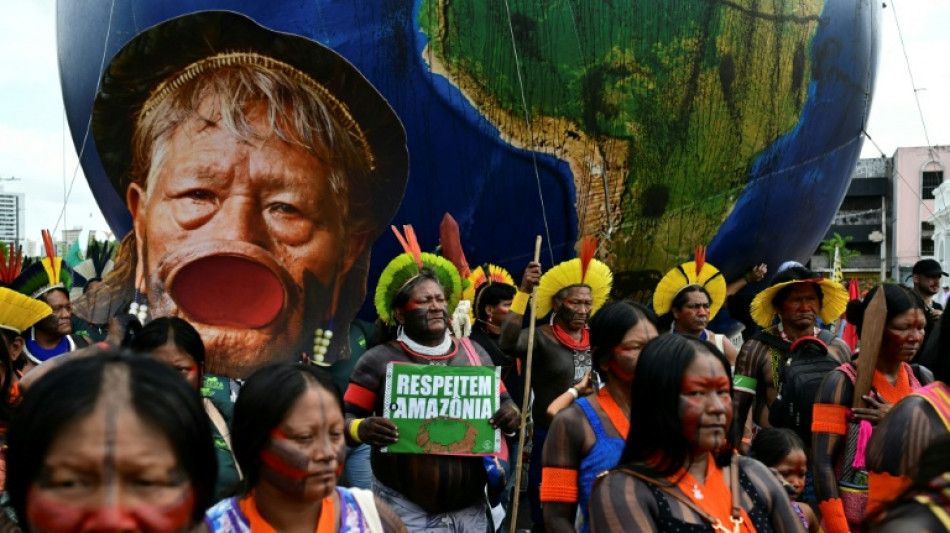
Brazil's top court struck down a law on Thursday that limits Indigenous people's rights to their ancestral lands, the latest twist in a long legal battle over native territory.
Land rights for Indigenous peoples have long been a flashpoint in Brazil, with the powerful agribusiness lobby driving efforts to curb claims to territory they use for farming, or hope to expand into.
Indigenous people are considered important stewards of biodiversity and rainforest protection in areas such as the Amazon, which is crucial in the fight against the climate crisis.
Brazil's Supreme Court rejected a law approved in 2023 by the conservative-controlled Congress, which limits Indigenous claims to lands to those they were occupying when Brazil's constitution was adopted in 1988.
Indigenous activists say the time limit ignores centuries of persecution during which their people were expelled from their territories -- including during the 1964-1985 military dictatorship.
The so-called "time-frame" doctrine has pitted Congress against the Supreme Court and the executive.
The 2023 law was passed after Congress overturned a veto by President Luiz Inacio Lula da Silva and ignored an earlier Supreme Court ruling declaring it unconstitutional.
The Supreme Court reacted by beginning a process of conciliation between all parties involved.
Over the past few months, around twenty hearings have been held with Indigenous organizations and those in favor of the time-frame doctrine.
Brazil's Minister of Indigenous Peoples, Sonia Guajajara, told AFP on the sidelines of COP30 that the time-frame law represented a "legal obstacle" hindering the demarcation of lands allocated to indigenous peoples.
Brazil is home to 1.7 million Indigenous people, out of a total population of over 200 million.
Lula made the demarcation of Indigenous lands a campaign promise and has approved around 20 territories since he returned to office in 2023.
While the STF has rejected the law, the battle is far from over.
Last week, the Senate approved an amendment to include the "time frame" principle in the Constitution.
The proposal must now be approved by the Chamber of Deputies.
U.Campbell--SFF