US fears rapid escalation in Mideast after Houthis attack Riyadh / Photo: © AFP

 London
 16 °C
16 °C

 Manchester
 13 °C
13 °C
 Glasgow
14 °C
Glasgow
14 °C
 Dublin
 12 °C
12 °C
 Belfast
10 °C
Belfast
10 °C
 Washington
23 °C
Washington
23 °C
 Denver
 13 °C
13 °C
 Atlanta
22 °C
Atlanta
22 °C
 Dallas
28 °C
Dallas
28 °C
 Houston Texas
27 °C
Houston Texas
27 °C
 New Orleans
26 °C
New Orleans
26 °C
 El Paso
26 °C
El Paso
26 °C
 Phoenix
32 °C
Phoenix
32 °C
 Los Angeles
20 °C
San Diego
20 °C
San Francisco
14 °C
Chicago
20 °C
Minneapolis
15 °C
Seattle
13 °C
Portland
16 °C
Salt Lake City
13 °C
Las Vegas
27 °C
Miami
Los Angeles
20 °C
San Diego
20 °C
San Francisco
14 °C
Chicago
20 °C
Minneapolis
15 °C
Seattle
13 °C
Portland
16 °C
Salt Lake City
13 °C
Las Vegas
27 °C
Miami
 24 °C
Jacksonville
25 °C
San Antonio
27 °C
Bermuda
28 °C
Nassau
18 °C
Iqaluit
3 °C
Yellowknife
11 °C
Anchorage
9 °C
Fairbanks
8 °C
Barrow
-1 °C
Calgary
13 °C
Edmonton
25 °C
Winnipeg
10 °C
Goose Bay
8 °C
Halifax
11 °C
Boston
11 °C
Ottawa
8 °C
Toronto
14 °C
Detroit
16 °C
Cleveland
19 °C
New York
19 °C
Baltimore
22 °C
Philadelphia
19 °C
Nuuk (Godthåb)
2 °C
Hong Kong
24 °C
Jacksonville
25 °C
San Antonio
27 °C
Bermuda
28 °C
Nassau
18 °C
Iqaluit
3 °C
Yellowknife
11 °C
Anchorage
9 °C
Fairbanks
8 °C
Barrow
-1 °C
Calgary
13 °C
Edmonton
25 °C
Winnipeg
10 °C
Goose Bay
8 °C
Halifax
11 °C
Boston
11 °C
Ottawa
8 °C
Toronto
14 °C
Detroit
16 °C
Cleveland
19 °C
New York
19 °C
Baltimore
22 °C
Philadelphia
19 °C
Nuuk (Godthåb)
2 °C
Hong Kong
 31 °C
Singapore
31 °C
Singapore
 32 °C
Melbourne
27 °C
Canberra
32 °C
Melbourne
27 °C
Canberra
 23 °C
Adelaide
20 °C
Darwin
31 °C
Perth
20 °C
Fort Worth
29 °C
Honolulu
27 °C
Sydney
30 °C
Johannesburg
12 °C
Dubai
36 °C
Mumbai
30 °C
Zürich
13 °C
Tokyo
23 °C
Seoul
28 °C
Delhi
33 °C
Beijing
28 °C
Riyadh
35 °C
Prague
14 °C
Pennsylvania
18 °C
Valletta
25 °C
Manama
33 °C
Warsaw
16 °C
Stockholm
13 °C
23 °C
Adelaide
20 °C
Darwin
31 °C
Perth
20 °C
Fort Worth
29 °C
Honolulu
27 °C
Sydney
30 °C
Johannesburg
12 °C
Dubai
36 °C
Mumbai
30 °C
Zürich
13 °C
Tokyo
23 °C
Seoul
28 °C
Delhi
33 °C
Beijing
28 °C
Riyadh
35 °C
Prague
14 °C
Pennsylvania
18 °C
Valletta
25 °C
Manama
33 °C
Warsaw
16 °C
Stockholm
13 °C
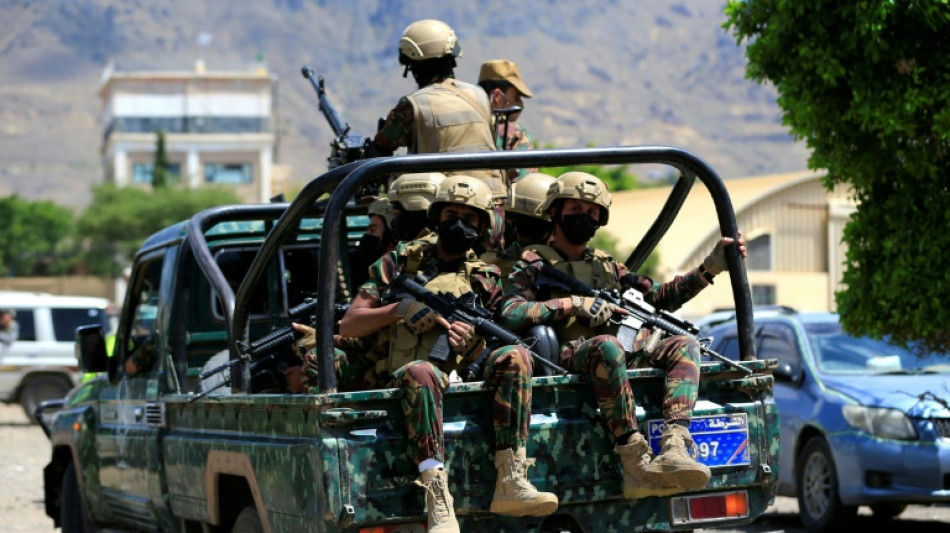
The United States warned Saturday that hostilities between Saudi Arabia and Iran-backed Houthis could "escalate rapidly" after a missile attack targeted Riyadh for the first time since the Yemen conflict resumed.
US President Donald Trump cut short a weekend at Camp David, a secluded presidential complex in rural Maryland, to return unexpectedly to the White House on Saturday.
The White House gave no explanation for the early return, which comes as a new threshold was crossed in the conflict between Saudi Arabia and the Houthis, who control a large part of Yemen and are fighting government forces backed by a coalition led by Riyadh.
Loud explosions rang out twice on Saturday in the Saudi capital, where AFP journalists saw a fuel tank bearing the logo of oil giant Aramco on fire near the airport.
"This military conflict has the potential to escalate rapidly," the US State Department warned, adding American citizens outside the Middle East should "seriously reconsider travel to and through the region".
The Houthis's lightning offensive seizing swathes of Yemeni territory in recent weeks has left hundreds dead and, according to the UN, displaced more than 110,000 people.
- 'Thwarted'-
These clashes and the subsequent hostilities with the kingdom have already disrupted Saudi Arabia's exports -- the world's leading supplier of crude oil -- as well as maritime traffic.
The Riyadh-led coalition confirmed Saturday evening on X that a ballistic missile launched by the Houthis towards the capital was "successfully intercepted and destroyed".
The coalition added that the pro-Iranian fighters had tried to target "civilians and civilian infrastructure" in several cities in the west of the kingdom, including the port of Yanbu on the Red Sea, an important export hub for Saudi oil.
It said these attacks were "thwarted by the Gulf monarchy's air defences".
Saudi Arabia has responded with scores of airstrikes on Houthi-held areas but failed to stop the advance.
The Houthis said it had responded to recent Saudi attacks by carrying out "two successful military operations using a large number of ballistic and cruise missiles and drones", Houthi military spokesman Yahya Saree said in a statement on Telegram.
"The first targeted sensitive sites in the Saudi capital, Riyadh, and the second targeted Aramco facilities in Yanbu."
Saudi authorities had earlier issued an overnight air raid alert.
Hours after the early morning alert, residents told AFP on condition of anonymity that they heard what sounded like a round of explosions echoing through parts of the Saudi capital.
- Lightning offensive -
This is the first time since Yemen's civil war resumed that strikes have threatened the Saudi capital, piling further pressure on a global economy already rocked by seven months of war between the US and Iran.
"The area is under a hostile aerial threat," according to a message received just before 3:00 am by Riyadh residents, urging them to stay indoors.
AFP journalists then heard two explosions, before the Saudi civil defence agency lifted the alert half an hour later.
"I heard the alarm, then my windows shook," a Riyadh resident told AFP. Another resident described the attack as "terrifying".
The incident comes days after Riyadh accused the Houthis of targeting Mecca on Wednesday, denouncing it as a "cowardly terrorist attack" on Islam's holy city, which welcomes millions of pilgrims each year. The Houthis strongly denied the accusation, calling it a "worn-out lie".
The group has reported scores of retaliatory strikes carried out daily by Riyadh since their offensive this month to take over the country's entire Red Sea coast, giving them control over the vital Bab al-Mandab strait.
The United States, according to US news platform Axios, last week refused a Saudi request to strike the Houthis.
Washington approved a $24.3 billion sale of 48 F-35 fighter jets to the kingdom on Thursday to help Riyadh "deter current and future threats", the US State Department said.
War in Yemen broke out in 2014 when the Houthis seized control of the capital Sanaa and other regions, triggering a military intervention led by Saudi Arabia in March 2015.
The fragile truce reached in 2022 between the warring parties collapsed in July, when the Houthis defied Riyadh's control of Yemeni airspace by allowing an Iranian aircraft to land in Yemen.
The apparent attack came as the Houthis improve their defences in newly conquered territory along Yemen's Red Sea coastline, with members of the group telling AFP they have been installing radar and digging tunnels.
burs-ane/abs
A.Smith--SFF