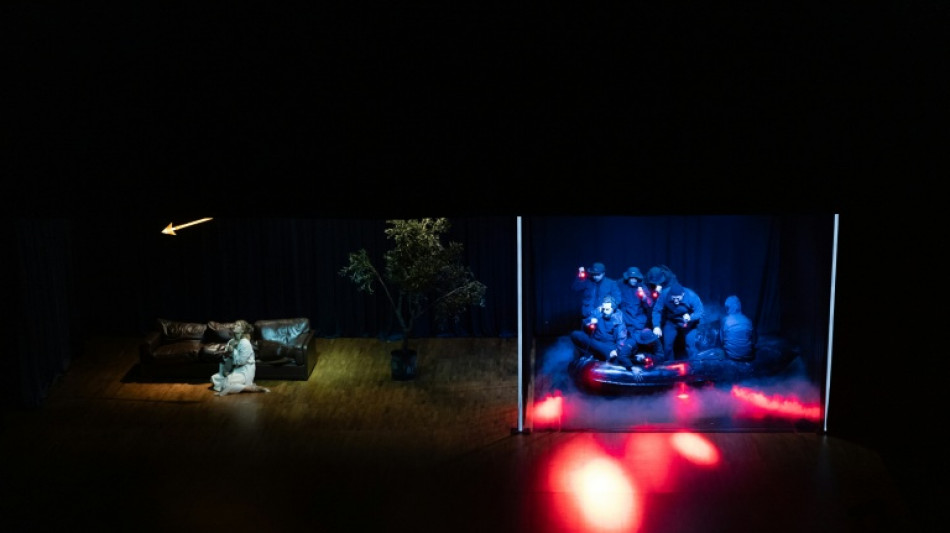
Drones in Ithaca: Azov's Odyssey turns Ukraine war into modern myth / Photo: © AFP

 London
 16 °C
16 °C

 Manchester
 16 °C
16 °C
 Glasgow
10 °C
Glasgow
10 °C
 Dublin
13 °C
Dublin
13 °C
 Belfast
 14 °C
14 °C
 Washington
 13 °C
13 °C
 Denver
10 °C
Denver
10 °C
 Atlanta
15 °C
Atlanta
15 °C
 Dallas
22 °C
Dallas
22 °C
 Houston Texas
23 °C
Houston Texas
23 °C
 New Orleans
21 °C
New Orleans
21 °C
 El Paso
 23 °C
23 °C
 Phoenix
27 °C
Phoenix
27 °C
 Los Angeles
 22 °C
San Diego
23 °C
San Francisco
22 °C
San Diego
23 °C
San Francisco
 17 °C
Chicago
14 °C
Minneapolis
6 °C
Seattle
13 °C
Portland
17 °C
Chicago
14 °C
Minneapolis
6 °C
Seattle
13 °C
Portland
 12 °C
Salt Lake City
16 °C
Las Vegas
24 °C
Miami
26 °C
Jacksonville
19 °C
San Antonio
24 °C
Bermuda
24 °C
Nassau
16 °C
Iqaluit
-7 °C
Yellowknife
0 °C
Anchorage
10 °C
Fairbanks
12 °C
Salt Lake City
16 °C
Las Vegas
24 °C
Miami
26 °C
Jacksonville
19 °C
San Antonio
24 °C
Bermuda
24 °C
Nassau
16 °C
Iqaluit
-7 °C
Yellowknife
0 °C
Anchorage
10 °C
Fairbanks
 1 °C
Barrow
1 °C
Calgary
2 °C
Edmonton
14 °C
Winnipeg
1 °C
Goose Bay
9 °C
Halifax
12 °C
Boston
15 °C
Ottawa
7 °C
Toronto
10 °C
Detroit
13 °C
Cleveland
14 °C
New York
18 °C
Baltimore
14 °C
Philadelphia
15 °C
Nuuk (Godthåb)
-4 °C
Hong Kong
27 °C
Singapore
29 °C
Melbourne
25 °C
Canberra
15 °C
Adelaide
18 °C
Darwin
31 °C
Perth
20 °C
Fort Worth
21 °C
Honolulu
28 °C
Sydney
21 °C
Johannesburg
18 °C
Dubai
28 °C
Mumbai
1 °C
Barrow
1 °C
Calgary
2 °C
Edmonton
14 °C
Winnipeg
1 °C
Goose Bay
9 °C
Halifax
12 °C
Boston
15 °C
Ottawa
7 °C
Toronto
10 °C
Detroit
13 °C
Cleveland
14 °C
New York
18 °C
Baltimore
14 °C
Philadelphia
15 °C
Nuuk (Godthåb)
-4 °C
Hong Kong
27 °C
Singapore
29 °C
Melbourne
25 °C
Canberra
15 °C
Adelaide
18 °C
Darwin
31 °C
Perth
20 °C
Fort Worth
21 °C
Honolulu
28 °C
Sydney
21 °C
Johannesburg
18 °C
Dubai
28 °C
Mumbai
 27 °C
Zürich
10 °C
Tokyo
18 °C
Seoul
13 °C
Delhi
17 °C
Beijing
11 °C
Riyadh
23 °C
Prague
4 °C
Pennsylvania
13 °C
Valletta
20 °C
Manama
29 °C
Warsaw
4 °C
Stockholm
9 °C
27 °C
Zürich
10 °C
Tokyo
18 °C
Seoul
13 °C
Delhi
17 °C
Beijing
11 °C
Riyadh
23 °C
Prague
4 °C
Pennsylvania
13 °C
Valletta
20 °C
Manama
29 °C
Warsaw
4 °C
Stockholm
9 °C
In a theatrical adaptation of the Odyssey by Ukraine's Azov military corps, Penelope beats a suitor to death with plastic grocery bags.
An attack drone flies over the stage to chase a soldier, while Odysseus shouts for battlefield updates over a radio.
Men sleep in khaki sleeping bags.
"We are not doing Homer, that's very important. Our Odyssey is about our heroes, though we draw on archaic, mythical, and profoundly significant themes," says Darya Legeyda, who plays Penelope.
The longing for home at the heart of Homer's Odyssey resonates in Ukraine, where Russia's invasion has displaced millions and sent hundreds of thousands to fight, with tens of thousands still missing or held captive.
While the epic has found audiences worldwide with Christopher Nolan's blockbuster, Kyiv has staged its adaptation: a collaboration between the Ivan Franko Theatre and the Azov military corps.
Written and performed by Azov service members, the play is part of the unit's cultural outreach, and ticket funds go to an organisation supporting prisoners of war.
It tells the story of Azov through the Odyssey's familiar narratives -- while echoing experiences from people across Ukraine -- showing how the war reshapes popular culture.
Until the last minute, there was no certainty that the premiere would take place.
The previous day's performance had been cancelled as Russia launched waves of drones at Kyiv.
Even before drones came to disturb his plans, director Ivan Uryvskyi told AFP he had not felt this nervous in a long time.
"I've staged many productions, but this one is rather special."
- 'Something of a myth' -
This Odyssey takes place on the Maeotis -– the ancient name for the Sea of Azov –- on whose shores lies Mariupol, a city occupied by Russia since 2022.
The sea gave its name to the Azov unit, then a fringe battalion with far-right roots that earned its first stripes by recapturing Mariupol after Russian-backed separatists briefly seized the city in 2014.
The unit has since integrated into the regular army and, when Russia launched its invasion in 2022, Azov fighters were among the last to hold out during the siege of Mariupol.
The episode cemented the unit's transformation into a national symbol of resistance.
"Azov is often perceived as something of a myth," said Uryvskyi, who felt a "huge responsibility" to convey that reputation on stage.
In one smoke-filled scene, Odysseus negotiates with a camouflage-clad Cyclops, a composition recalling photographs from the 2022 siege, when Azov commander Denys Prokopenko negotiated with a Russian counterpart.
Azov fighters eventually surrendered, believing they would return home.
Four years later, hundreds remain captive.
Moscow has been staging trials to highlight the unit's far-right roots -- which Azov denies –- to reinforce its widely disputed claims that the invasion aims to "denazify" Ukraine.
Ukrainians, meanwhile, have held weekly rallies asking to "Free Azov" fighters –- a slogan that also hangs above the theatre entrance.
Among the public, people primarily saw Azov as one of Ukraine's most effective units, among the first to fight Russian-backed forces in 2014.
"They are not extremists, they are just people who truly love Ukraine and are fighting for it," said 51-year-old Tetyana Osypovych.
She teared up speaking about the show that made her relive "the whole spectrum of the terrible emotions" Ukrainians go through.
- 'Keep waiting or not' –
Odysseus' voyage is punctuated by bass-heavy and ominous music, including the melody of the Russian folk song "Kalinka".
In the realm of the dead, he meets his deceased mother and confesses his guilt over failing to retrieve the body of his comrade Elpenor.
That anguish is familiar to Ukraine's soldiers, including lead actor Danylo Mireshkin, who serves with Azov.
"This was the hardest part: reliving this experience again and again," Mireshkin said.
"It's a sacred duty: always retrieve the wounded, the fallen. But it doesn't always work out."
Left without news of missing loved ones, partners face a difficult choice between waiting or moving on.
While Penelope's loyalty to Odysseus doesn't falter, actress Legeyda refrains from telling other women what choice to make.
"We don't know how we're supposed to cope, whether to keep waiting or not," she says.
This version doesn't say if Odysseus returns.
"Maybe, we won't have a happy ending in the classical sense," Legeyda says.
"Perhaps we need to talk about it. And cry about it. And live on."
H.King--SFF