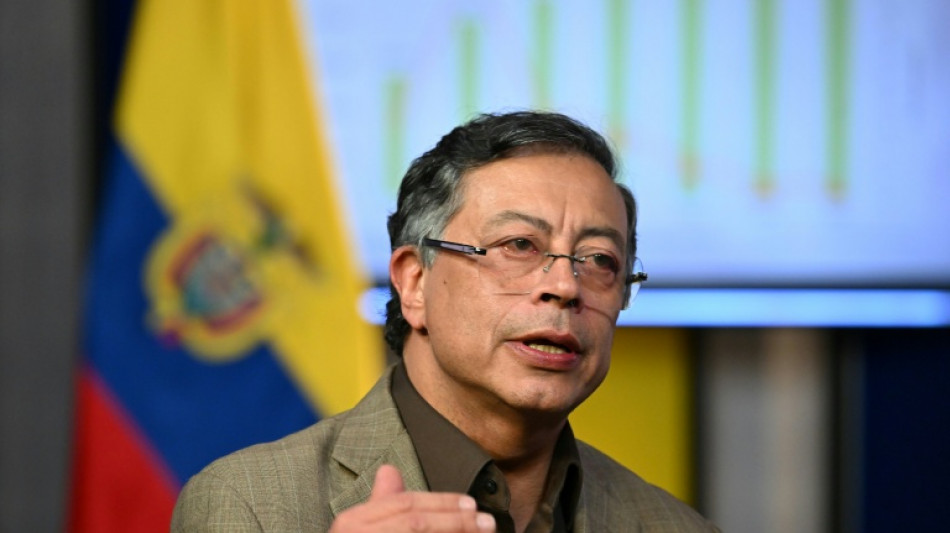
US allying itself with Colombian 'narco-traffickers,' Petro accuses / Photo: © AFP

 London
 16 °C
16 °C
 Manchester
 15 °C
15 °C
 Glasgow
 12 °C
12 °C
 Dublin
16 °C
Dublin
16 °C
 Belfast
15 °C
Belfast
15 °C
 Washington
15 °C
Washington
15 °C
 Denver
 17 °C
17 °C
 Atlanta
15 °C
Atlanta
15 °C
 Dallas
22 °C
Dallas
22 °C
 Houston Texas
26 °C
Houston Texas
26 °C
 New Orleans
20 °C
New Orleans
20 °C
 El Paso
20 °C
El Paso
20 °C
 Phoenix
 22 °C
22 °C
 Los Angeles
15 °C
San Diego
17 °C
San Francisco
11 °C
Chicago
18 °C
Minneapolis
Los Angeles
15 °C
San Diego
17 °C
San Francisco
11 °C
Chicago
18 °C
Minneapolis
 21 °C
Seattle
6 °C
Portland
6 °C
Salt Lake City
14 °C
Las Vegas
18 °C
Miami
21 °C
Seattle
6 °C
Portland
6 °C
Salt Lake City
14 °C
Las Vegas
18 °C
Miami
 26 °C
Jacksonville
19 °C
San Antonio
24 °C
Bermuda
26 °C
Nassau
13 °C
Iqaluit
-5 °C
Yellowknife
5 °C
Anchorage
6 °C
Fairbanks
2 °C
Barrow
26 °C
Jacksonville
19 °C
San Antonio
24 °C
Bermuda
26 °C
Nassau
13 °C
Iqaluit
-5 °C
Yellowknife
5 °C
Anchorage
6 °C
Fairbanks
2 °C
Barrow
 -1 °C
Calgary
-1 °C
Edmonton
13 °C
Winnipeg
5 °C
Goose Bay
12 °C
Halifax
11 °C
Boston
10 °C
Ottawa
12 °C
Toronto
14 °C
Detroit
16 °C
Cleveland
16 °C
New York
13 °C
Baltimore
15 °C
Philadelphia
13 °C
Nuuk (Godthåb)
0 °C
Hong Kong
29 °C
Singapore
28 °C
Melbourne
22 °C
Canberra
17 °C
Adelaide
14 °C
Darwin
30 °C
Perth
18 °C
Fort Worth
22 °C
Honolulu
24 °C
Sydney
27 °C
Johannesburg
-1 °C
Calgary
-1 °C
Edmonton
13 °C
Winnipeg
5 °C
Goose Bay
12 °C
Halifax
11 °C
Boston
10 °C
Ottawa
12 °C
Toronto
14 °C
Detroit
16 °C
Cleveland
16 °C
New York
13 °C
Baltimore
15 °C
Philadelphia
13 °C
Nuuk (Godthåb)
0 °C
Hong Kong
29 °C
Singapore
28 °C
Melbourne
22 °C
Canberra
17 °C
Adelaide
14 °C
Darwin
30 °C
Perth
18 °C
Fort Worth
22 °C
Honolulu
24 °C
Sydney
27 °C
Johannesburg
 27 °C
Dubai
35 °C
Mumbai
38 °C
Zürich
14 °C
Tokyo
22 °C
Seoul
22 °C
Delhi
30 °C
Beijing
19 °C
Riyadh
37 °C
Prague
12 °C
Pennsylvania
14 °C
Valletta
25 °C
Manama
37 °C
Warsaw
11 °C
Stockholm
9 °C
27 °C
Dubai
35 °C
Mumbai
38 °C
Zürich
14 °C
Tokyo
22 °C
Seoul
22 °C
Delhi
30 °C
Beijing
19 °C
Riyadh
37 °C
Prague
12 °C
Pennsylvania
14 °C
Valletta
25 °C
Manama
37 °C
Warsaw
11 °C
Stockholm
9 °C
Colombia's outgoing President Gustavo Petro tore into his US counterpart Donald Trump on Thursday for supporting a hard-right candidate to succeed him, accusing Washington of allying itself with the "narco-traffickers" it professes to combat.
The famously outspoken Petro was reacting to Trump's full-throated endorsement of tough-talking lawyer Abelardo de la Espriella over a leftist senator in Colombia's presidential election.
De la Espriella, 47, made a fortune representing drug-trafficking paramilitaries, fraudsters and soccer stars.
He generated surprise by defeating leftist Senator Ivan Cepeda, an ally of Petro, in the first round of voting in Sunday's presidential election.
The two will face off again in a June 21 runoff.
Trump on Tuesday backed De la Espriella, citing his "tremendous accomplishments in life, and his political support for me, personally."
Petro, Colombia's first left-wing leader, has criticized Trump's meddling in the campaign.
"Their (US) allies in Colombia come from the narco-paramilitary regime; they are genocidal and drug traffickers," he told AFP in an interview at the presidential palace.
Trump has sought to influence several recent elections in Latin America by backing right-wingers who talk tough on crime and migration against leftists he dismisses as Marxists.
Espriella has promised to deepen US-Colombian relations "like never before" if elected.
He has the backing of hardline former president Alvaro Uribe, who is accused of colluding with paramilitaries behind the massacres of thousands of civilians during the worst years of Colombia's more-than-six-decade conflict.
Both Petro and Cepeda accuse the paramilitaries of committing a "genocide" of leftist political activists and politicians, including Cepeda's father, a communist senator, who was assassinated in 1994.
The Colombian right and Trump administration, for their part, accuse Petro of being soft on left-wing guerrilla groups, some of whom continue to fight the state and live off cocaine trafficking.
Petro expressed "regret" that "figures and governments who want to fight drug trafficking are actually helping to bring crime to political power in Colombia."
- Ideological opposites -
He accused Trump of reneging on an agreement the pair struck in February not to interfere in Colombia's election.
"What they (the United States) are implementing is an ideological policy that divides the world between those who think like them and those of us who don't," Petro said as he munched on a chocolate bar made by farmers who replaced their coca plants -- which produces the main ingredient in cocaine -- with cocoa trees.
Last year, Trump imposed sanctions on Petro, calling him a "drug leader" for failing to rein in soaring cocaine production and trafficking.
Colombia is the world's biggest producer of the drug.
Trump and Petro also clashed over the US leader's migrant deportations and campaign of deadly strikes on suspected Latin American drug boats.
But they smoothed over the tensions during Petro's visit to the White House in February.
The Colombian presidential election has been dominated by the worst wave of violence in the decade since the Marxist rebel army FARC agreed to a landmark peace deal with the state in 2016.
While Colombia has thrived in the years since, pockets of the country remain gripped by armed groups vying for control of cocaine routes, illegal gold mining and extortion.
De la Espriella has rejected Petro's policy of trying to negotiate with the guerrillas, and vowed instead to crush them militarily.
Cepeda, who helped negotiate the 2016 peace deal and design Petro's "total peace" strategy, has vowed to prioritize dialogue and social upliftment in rebel-held areas.
X.White--SFF