Migrant journeys in focus ahead of pope visit to Spain's Canaries / Photo: © AFP

 London
 16 °C
16 °C

 Manchester
15 °C
Manchester
15 °C
 Glasgow
 14 °C
14 °C
 Dublin
18 °C
Dublin
18 °C
 Belfast
17 °C
Belfast
17 °C
 Washington
 15 °C
15 °C
 Denver
 16 °C
16 °C
 Atlanta
15 °C
Atlanta
15 °C
 Dallas
21 °C
Dallas
21 °C
 Houston Texas
 26 °C
26 °C
 New Orleans
20 °C
New Orleans
20 °C
 El Paso
20 °C
El Paso
20 °C
 Phoenix
 22 °C
22 °C
 Los Angeles
15 °C
San Diego
16 °C
San Francisco
11 °C
Chicago
18 °C
Minneapolis
18 °C
Seattle
Los Angeles
15 °C
San Diego
16 °C
San Francisco
11 °C
Chicago
18 °C
Minneapolis
18 °C
Seattle
 5 °C
Portland
5 °C
Salt Lake City
13 °C
Las Vegas
17 °C
Miami
5 °C
Portland
5 °C
Salt Lake City
13 °C
Las Vegas
17 °C
Miami
 26 °C
Jacksonville
19 °C
San Antonio
24 °C
Bermuda
26 °C
Nassau
13 °C
Iqaluit
-5 °C
Yellowknife
5 °C
Anchorage
26 °C
Jacksonville
19 °C
San Antonio
24 °C
Bermuda
26 °C
Nassau
13 °C
Iqaluit
-5 °C
Yellowknife
5 °C
Anchorage
 5 °C
Fairbanks
2 °C
Barrow
-1 °C
Calgary
-2 °C
Edmonton
13 °C
Winnipeg
5 °C
Goose Bay
13 °C
Halifax
11 °C
Boston
10 °C
Ottawa
12 °C
Toronto
14 °C
Detroit
15 °C
Cleveland
16 °C
New York
13 °C
Baltimore
15 °C
Philadelphia
14 °C
Nuuk (Godthåb)
1 °C
Hong Kong
28 °C
Singapore
28 °C
Melbourne
22 °C
Canberra
16 °C
Adelaide
13 °C
Darwin
29 °C
Perth
16 °C
Fort Worth
21 °C
Honolulu
24 °C
Sydney
24 °C
Johannesburg
28 °C
Dubai
34 °C
Mumbai
35 °C
Zürich
16 °C
Tokyo
20 °C
Seoul
22 °C
Delhi
29 °C
Beijing
17 °C
Riyadh
36 °C
Prague
13 °C
Pennsylvania
15 °C
Valletta
26 °C
Manama
36 °C
Warsaw
10 °C
Stockholm
9 °C
5 °C
Fairbanks
2 °C
Barrow
-1 °C
Calgary
-2 °C
Edmonton
13 °C
Winnipeg
5 °C
Goose Bay
13 °C
Halifax
11 °C
Boston
10 °C
Ottawa
12 °C
Toronto
14 °C
Detroit
15 °C
Cleveland
16 °C
New York
13 °C
Baltimore
15 °C
Philadelphia
14 °C
Nuuk (Godthåb)
1 °C
Hong Kong
28 °C
Singapore
28 °C
Melbourne
22 °C
Canberra
16 °C
Adelaide
13 °C
Darwin
29 °C
Perth
16 °C
Fort Worth
21 °C
Honolulu
24 °C
Sydney
24 °C
Johannesburg
28 °C
Dubai
34 °C
Mumbai
35 °C
Zürich
16 °C
Tokyo
20 °C
Seoul
22 °C
Delhi
29 °C
Beijing
17 °C
Riyadh
36 °C
Prague
13 °C
Pennsylvania
15 °C
Valletta
26 °C
Manama
36 °C
Warsaw
10 °C
Stockholm
9 °C
Haruna Ndom, 18, set out two years ago on a days-long journey across the Atlantic in a fragile boat with dozens of other migrants.
Now in Spain's Canary Islands, one of the main entry points into Europe for African migrants, he hopes to build a future that will allow him to support his family in Senegal.
Ndom recalled being afraid during the roughly 1,000-kilometre (600-mile) Atlantic crossing to the archipelago off northwest Africa, one of the world's deadliest migration routes.
"At least I know how to swim," he told AFP, an advantage over many of the others aboard the boat.
Like him, tens of thousands of migrants have arrived after navigating the perilous Atlantic route to the Spanish archipelago, which Pope Leo XIV will visit during a June 6-12 trip to Spain.
The US-born pope, who has repeatedly called for compassion for those seeking a better life abroad, will spend the final two days of the trip on the islands of Gran Canaria and Tenerife, where he will meet migrants and organisations working to support them.
Last year, 1,172 migrants died or went missing attempting to reach the Canary Islands, according to the International Organization for Migration (IOM).
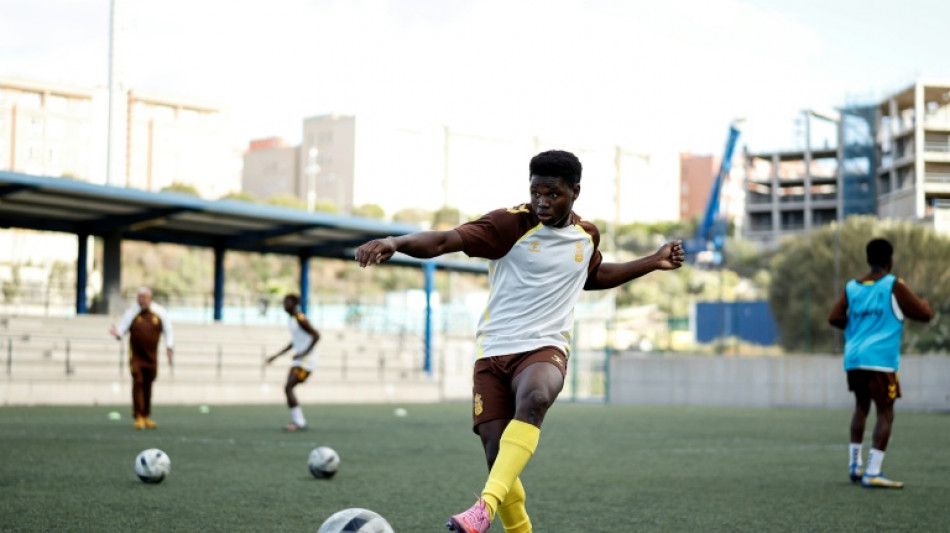
Wearing pink trainers, yellow socks and a beige-and-brown uniform, Ndom trained with a team of boys who arrived in the Canaries as unaccompanied minors.
The initiative, run by professional football club UD Las Palmas and the non-profit association #UP2U in Las Palmas, aims to help integrate them into society.
"I like my teammates and I like the way we play as a team," Ndom told AFP, adding that he is studying to become an electrician so he can help his mother and two brothers in Senegal.
- 'Build different lives' -
Another young migrant, 18-year-old Matar Top, who has braided hair, arrived from Senegal three years ago with similar hopes of sending money home.
"My mother died," he said, adding that his father and two siblings remain in Senegal, while an older brother lives in northern Spain.
He was unable to train that day because he had not had time to collect his kit after finishing work at a papaya plantation.
Several of the 30 members of the integration programme regularly miss training sessions because of work, studies or travel distances that make attendance difficult.
"I try to come every week if I have time," Top said.
The migrants train on a pitch next to the UD Las Palmas stadium in Las Palmas de Gran Canaria, where the pope -- who worked with Venezuelan migrants while serving the Catholic Church in Peru -- is scheduled to celebrate mass.
The programme, which has supported around 300 young migrants over the past decade, has helped some participants find stable employment or further training, said coach Juan Manuel Rodriguez.
"We have waiters, mechanics, managers, lawyers -- people who have been able to build different lives," he told AFP.
One participant went on to become a professional footballer: Aboubacar Bassinga, who arrived in the Canaries from Ivory Coast aged 14 and now plays in Spanish second-division side Ceuta.
- 'Dock of shame' -
At a banana plantation about 25 kilometres (15 miles) from Las Palmas de Gran Canaria, 17-year-old Adama Conde was taking part in a regional government integration programme for unaccompanied migrant minors with about 3,000 participants.
"I want to have a good future," Conde said as he worked in plastic boots and gloves among the banana plants.
He left Guinea at a young age and later boarded a boat in Morocco with around 50 people that reached the nearby island of Fuerteventura last year.
"I was really scared," he said. "Now I am calm and I sleep well."
Conde rises at 5:30 am to take an hour-long bus ride from the reception centre where he lives to the farm.
The plantation owner, Sergio Ayala, said he values the work ethic of the young migrants arriving in Spain, where immigration has become a politically divisive issue.
Unlike much of Europe, Spain's leftist government has adopted a relatively welcoming approach to immigration, one that is opposed by the right.
Amparo Urzainqui, a 66-year-old volunteer with the Catholic charity Caritas in Gran Canaria who assists migrants, said "they need to feel welcomed in our communities."
"You should see the joy they feel when you treat them like just another person," added Urzainqui, who will take part in an event where the pope will meet migrants at the port of Arguineguin.
The port became known as the "dock of shame" after more than 2,500 migrants slept there in the open or under makeshift shelters during a surge in arrivals in 2020.
The pope is expected to lay a floral tribute at the port in memory of those who died trying to reach the Canary Islands.
A.Evans--SFF