'Put our faith in God': Tehran residents adapt to wartime / Photo: © AFP

 London
 17 °C
17 °C

 Manchester
16 °C
Manchester
16 °C
 Glasgow
11 °C
Glasgow
11 °C
 Dublin
 12 °C
12 °C
 Belfast
11 °C
Belfast
11 °C
 Washington
22 °C
Washington
22 °C
 Denver
6 °C
Denver
6 °C
 Atlanta
 19 °C
19 °C
 Dallas
26 °C
Dallas
26 °C
 Houston Texas
24 °C
Houston Texas
24 °C
 New Orleans
21 °C
New Orleans
21 °C
 El Paso
18 °C
El Paso
18 °C
 Phoenix
19 °C
Phoenix
19 °C
 Los Angeles
20 °C
San Diego
17 °C
San Francisco
15 °C
Chicago
15 °C
Minneapolis
9 °C
Seattle
11 °C
Portland
Los Angeles
20 °C
San Diego
17 °C
San Francisco
15 °C
Chicago
15 °C
Minneapolis
9 °C
Seattle
11 °C
Portland
 13 °C
Salt Lake City
7 °C
Las Vegas
16 °C
Miami
13 °C
Salt Lake City
7 °C
Las Vegas
16 °C
Miami
 27 °C
Jacksonville
21 °C
San Antonio
25 °C
Bermuda
23 °C
Nassau
14 °C
Iqaluit
27 °C
Jacksonville
21 °C
San Antonio
25 °C
Bermuda
23 °C
Nassau
14 °C
Iqaluit
 -1 °C
Yellowknife
-2 °C
Anchorage
4 °C
Fairbanks
-1 °C
Barrow
-9 °C
Calgary
4 °C
Edmonton
22 °C
Winnipeg
7 °C
Goose Bay
8 °C
Halifax
13 °C
Boston
13 °C
Ottawa
7 °C
Toronto
11 °C
Detroit
13 °C
Cleveland
14 °C
New York
16 °C
Baltimore
20 °C
Philadelphia
17 °C
Nuuk (Godthåb)
1 °C
Hong Kong
-1 °C
Yellowknife
-2 °C
Anchorage
4 °C
Fairbanks
-1 °C
Barrow
-9 °C
Calgary
4 °C
Edmonton
22 °C
Winnipeg
7 °C
Goose Bay
8 °C
Halifax
13 °C
Boston
13 °C
Ottawa
7 °C
Toronto
11 °C
Detroit
13 °C
Cleveland
14 °C
New York
16 °C
Baltimore
20 °C
Philadelphia
17 °C
Nuuk (Godthåb)
1 °C
Hong Kong
 30 °C
Singapore
32 °C
Melbourne
26 °C
Canberra
13 °C
Adelaide
30 °C
Singapore
32 °C
Melbourne
26 °C
Canberra
13 °C
Adelaide
 20 °C
Darwin
31 °C
Perth
21 °C
Fort Worth
26 °C
Honolulu
25 °C
Sydney
14 °C
Johannesburg
25 °C
Dubai
36 °C
Mumbai
37 °C
Zürich
12 °C
Tokyo
21 °C
Seoul
20 °C
Delhi
33 °C
Beijing
20 °C
Darwin
31 °C
Perth
21 °C
Fort Worth
26 °C
Honolulu
25 °C
Sydney
14 °C
Johannesburg
25 °C
Dubai
36 °C
Mumbai
37 °C
Zürich
12 °C
Tokyo
21 °C
Seoul
20 °C
Delhi
33 °C
Beijing
 27 °C
Riyadh
35 °C
Prague
9 °C
Pennsylvania
16 °C
Valletta
22 °C
Manama
34 °C
Warsaw
8 °C
Stockholm
8 °C
27 °C
Riyadh
35 °C
Prague
9 °C
Pennsylvania
16 °C
Valletta
22 °C
Manama
34 °C
Warsaw
8 °C
Stockholm
8 °C
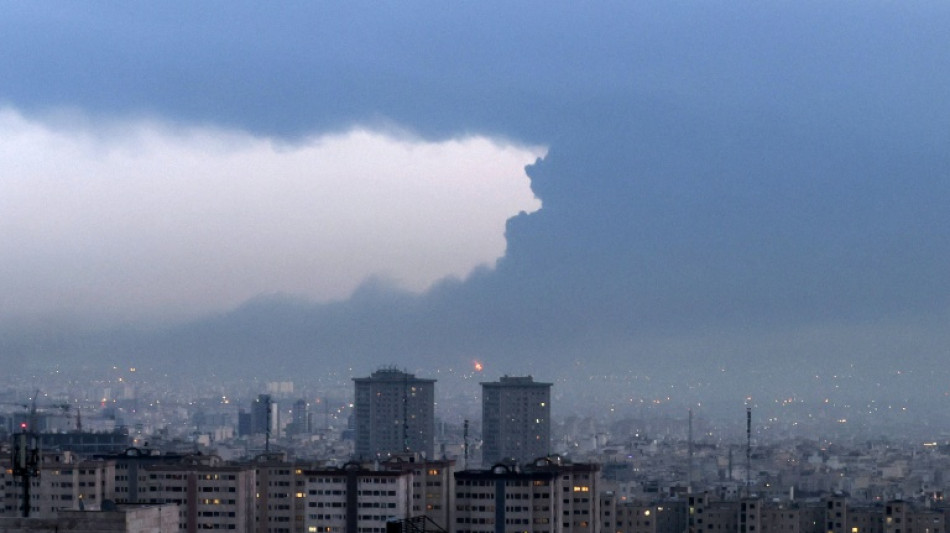
With daily attacks shaking the city, schools shuttered for days and many shops closed, Tehran residents are trying to adapt to wartime conditions under an Israeli-US assault seeking to determine the future of the Islamic republic.
Normal routine has been absent for some time in the teeming mega-city of millions of people, ever since the January protests against the clerical leadership.
But now Tehran and other Iranian cities have been plunged into a conflict of an intensity unseen in the country since the 1980s war against Saddam Hussein's Iraq.
Residents have taped up windows to prevent their homes from being damaged by flying debris from explosions. Security forces patrol the streets in armoured vehicles. Children are unable to go to school as people hunker down in their homes, relying on deliveries.
"People are calm," said a resident of the north of the capital, who spoke to AFP in Paris. "They are getting used to living despite everything and adapting -- as best they can -- to this situation."
Uncertainty is a constant as Tehranis receive no advance warning when US-Israeli air strikes are about to hit the capital.
A woman in her forties said she found some reassurance in her impression that the bombings "don't target ordinary buildings", but rather "police stations, mosques and military sites".
"But imagine a police station is hit at the end of your street. All your windows shatter. That's what many people have experienced."
Beyond the damage, it's "the noise of the bombings that is extremely disturbing", she added.
- 'Not going very far' -
In this situation, "people are staying in their neighbourhoods, they're not going very far, except for those who have to go to work", said another woman in her seventies.
"Generally speaking, people are helping each other a lot," she emphasised, giving the example of one family that offered accommodation to another that had lost its home.
One especially visible change has been the sudden appearance of billboards with the face of Iran's new number one Mojtaba Khamenei, the hitherto low-profile son of longstanding supreme leader Ali Khamenei, who was killed in an air strike at the start of the war.
Authorities encouraged people to take to the streets Monday to celebrate the appointment of Mojtaba Khamenei -- who has yet to appear in public since he was given the title. Otherwise, authorities warn residents to limit movements due to the risk of bombings.
Communications remain severely restricted, with only the local intranet and its homegrown apps functioning, while contact with other countries remains virtually impossible.
"Buses are running, but they're mostly empty," added another resident, saying that traffic consisted mainly of delivery drivers in vans and on motorcycles.
Many shops and shopping centres are closed, at a time of year that normally sees intense commercial activity in the run-up to Iranian New Year Nouruz, which is celebrated in less than two weeks time.
But crucially corner shops and bakeries, which are critical to everyday life in Iranian neighbourhoods and churn our hot bread daily, remain open.
- 'Very stressed' -
"We didn't do anything special: I just put a few documents and papers in my bag, and some cash, because the banks don't lend money for large sums," said Tehran resident Mahvash, 70, describing her emergency preparations.
"We've put our faith in God. For now, there's food in the shops; every day I go to buy greens and bread, that's all. We already have everything we need at home, thank God, especially since we still have running water and electricity, so we can live normally," she added.
Adelshah Mansoori, an Afghan national working in a supermarket in Tehran, said he was asked to deliver goods to customers' doorsteps as they would not leave their homes.
"I was delivering goods from the store to homes. Most people were not in Tehran. They had left. The few who remained were very stressed," he told AFP on the border in Afghanistan after crossing to return home.
"They had taped up the windows of their homes but had no shelter. Everyone was inside residential buildings."
B.Johnson--SFF