Aid groups petition Israel's top court to halt ban on Gaza, West Bank ops / Photo: © AFP/File

 London
 17 °C
17 °C

 Manchester
 11 °C
11 °C
 Glasgow
 13 °C
13 °C
 Dublin
11 °C
Dublin
11 °C
 Belfast
9 °C
Belfast
9 °C
 Washington
17 °C
Washington
17 °C
 Denver
 12 °C
12 °C
 Atlanta
29 °C
Atlanta
29 °C
 Dallas
32 °C
Dallas
32 °C
 Houston Texas
 31 °C
31 °C
 New Orleans
29 °C
New Orleans
29 °C
 El Paso
26 °C
El Paso
26 °C
 Phoenix
31 °C
Phoenix
31 °C
 Los Angeles
32 °C
San Diego
31 °C
San Francisco
28 °C
Chicago
Los Angeles
32 °C
San Diego
31 °C
San Francisco
28 °C
Chicago
 18 °C
Minneapolis
9 °C
Seattle
19 °C
Portland
26 °C
Salt Lake City
17 °C
Las Vegas
27 °C
Miami
18 °C
Minneapolis
9 °C
Seattle
19 °C
Portland
26 °C
Salt Lake City
17 °C
Las Vegas
27 °C
Miami
 30 °C
Jacksonville
28 °C
San Antonio
32 °C
Bermuda
26 °C
Nassau
15 °C
Iqaluit
-2 °C
Yellowknife
8 °C
Anchorage
7 °C
Fairbanks
6 °C
Barrow
-8 °C
Calgary
12 °C
Edmonton
28 °C
Winnipeg
8 °C
Goose Bay
11 °C
Halifax
11 °C
Boston
30 °C
Jacksonville
28 °C
San Antonio
32 °C
Bermuda
26 °C
Nassau
15 °C
Iqaluit
-2 °C
Yellowknife
8 °C
Anchorage
7 °C
Fairbanks
6 °C
Barrow
-8 °C
Calgary
12 °C
Edmonton
28 °C
Winnipeg
8 °C
Goose Bay
11 °C
Halifax
11 °C
Boston
 13 °C
Ottawa
11 °C
Toronto
10 °C
Detroit
15 °C
Cleveland
18 °C
New York
13 °C
Ottawa
11 °C
Toronto
10 °C
Detroit
15 °C
Cleveland
18 °C
New York
 17 °C
Baltimore
17 °C
Philadelphia
18 °C
Nuuk (Godthåb)
1 °C
Hong Kong
25 °C
Singapore
27 °C
Melbourne
29 °C
Canberra
12 °C
Adelaide
18 °C
Darwin
27 °C
Perth
12 °C
Fort Worth
31 °C
Honolulu
28 °C
Sydney
18 °C
Johannesburg
20 °C
Dubai
32 °C
Mumbai
30 °C
Zürich
12 °C
Tokyo
18 °C
Seoul
15 °C
Delhi
21 °C
Beijing
11 °C
Riyadh
29 °C
Prague
9 °C
Pennsylvania
19 °C
Valletta
20 °C
Manama
30 °C
Warsaw
8 °C
Stockholm
12 °C
17 °C
Baltimore
17 °C
Philadelphia
18 °C
Nuuk (Godthåb)
1 °C
Hong Kong
25 °C
Singapore
27 °C
Melbourne
29 °C
Canberra
12 °C
Adelaide
18 °C
Darwin
27 °C
Perth
12 °C
Fort Worth
31 °C
Honolulu
28 °C
Sydney
18 °C
Johannesburg
20 °C
Dubai
32 °C
Mumbai
30 °C
Zürich
12 °C
Tokyo
18 °C
Seoul
15 °C
Delhi
21 °C
Beijing
11 °C
Riyadh
29 °C
Prague
9 °C
Pennsylvania
19 °C
Valletta
20 °C
Manama
30 °C
Warsaw
8 °C
Stockholm
12 °C
More than a dozen international humanitarian organisations have petitioned Israel's Supreme Court to block an imminent order that would force 37 NGOs to cease operations in Gaza, the West Bank and east Jerusalem, warning of catastrophic consequences for civilians.
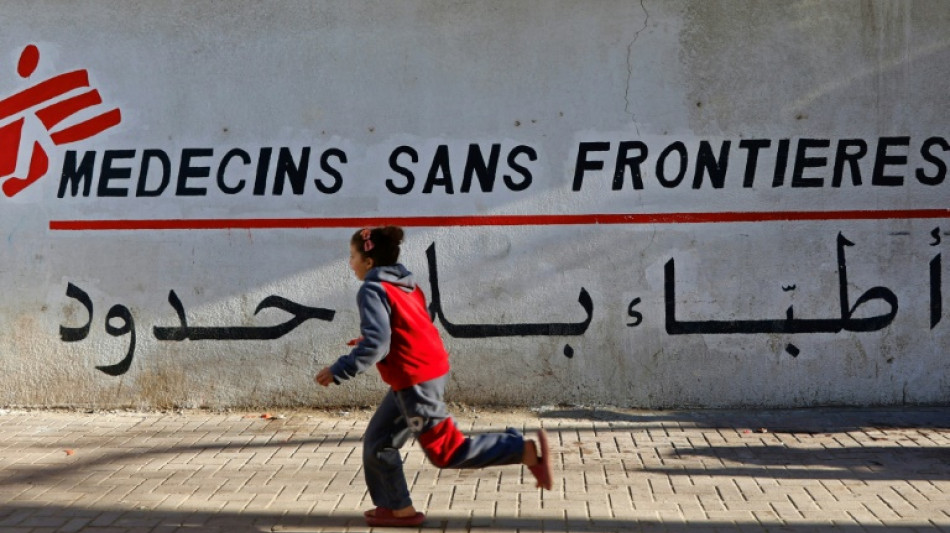
Organisations including Doctors Without Borders (MSF), Oxfam, the Norwegian Refugee Council and CARE were notified on December 30, 2025 that their Israeli registrations had expired and that they had 60 days to renew them by providing lists of their Palestinian staff.
If they fail to do so, they will have to cease operations in Gaza and the occupied West Bank, including east Jerusalem, from March 1.
The petition, described as unprecedented in its scale and joint nature, seeks an urgent interim injunction from Israel's top court to suspend the closures pending full judicial review.
The 17 petitioners, which include some of the NGOs hit by the ban, argue the Israeli measures are incompatible with an occupying power's obligations under international humanitarian law.
The NGOs say compliance would expose local employees to potential retaliation, undermine the principle of humanitarian neutrality and violate European data protection law.
"Turning humanitarian organisations into an information-gathering arm for a party to the conflict stands in total contradiction to the principle of neutrality," the petition states.
According to the United Nations, 133 NGO workers have been killed in the Gaza Strip since the war started on October 7, 2023, including 15 MSF employees.
The petitioners say they have proposed practical alternatives to handing over staff lists to Israel, including "independent sanctions screening" and "donor-audited vetting systems."
- Supplies blocked -
The organisations say that they collectively support or implement more than half of all food assistance in Gaza, 60 per cent of field hospital operations and all inpatient treatment for children suffering severe acute malnutrition.
The petitioners say enforcement has already begun in practice, with supplies blocked and visas denied to foreign staff.
"We haven't been able to get international staff inside Gaza since the beginning of January. Israeli authorities denied any entry to Gaza, but also to the West Bank," MSF head of mission in the Palestinian territories Filipe Ribeiro told AFP last week.
"For the time being, we are still working in Gaza, and we plan to keep running our operations as long as we can," he added.
The ban comes as Israel hardens its stance towards humanitarian actors in general, having banned the UN agency for Palestinian refugees, UNRWA, from Israel in early 2025.
UNRWA, whom Israel accused of employing people who took part in Hamas's October 7 attack which triggered the war, also can no longer coordinate with Israeli authorities in the occupied West Bank, as will be the case for the banned, or deregistered, NGOs.
For international NGOs, the current ban goes back to a change in rules for foreign organisations working with Palestinians in March 2025.
The law updated the framework for how aid groups must register to maintain their status within Israel, along with provisions that outline how their applications can be denied or registration revoked.
The absence of coordination with Israel complicates operations by denying Israeli visas to foreign aid workers, or by denying direct contact to plan around Israeli military operations in the Palestinian territory.
The NGOs argued in their petition that Israel, as an occupying power in the West Bank and parts of Gaza, "must facilitate relief for civilians under its control" under the Geneva Convention.
K.Hernandez--SFF