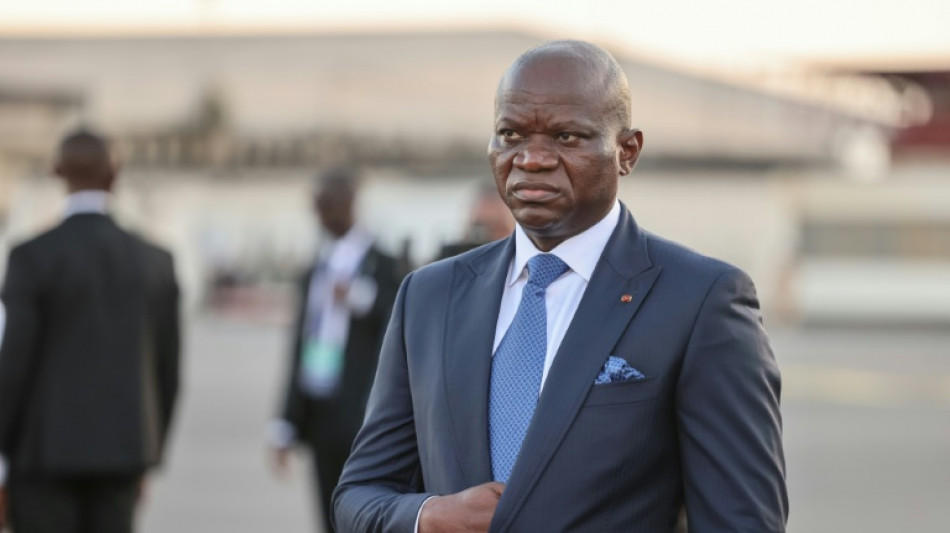
Gabon cuts off Facebook, TikTok amid teachers' strike / Photo: © AFP

 London
 8 °C
8 °C
 Manchester
5 °C
Manchester
5 °C
 Glasgow
 11 °C
11 °C
 Dublin
6 °C
Dublin
6 °C
 Belfast
 6 °C
6 °C
 Washington
 17 °C
17 °C
 Denver
9 °C
Denver
9 °C
 Atlanta
17 °C
Atlanta
17 °C
 Dallas
 15 °C
15 °C
 Houston Texas
19 °C
Houston Texas
19 °C
 New Orleans
21 °C
New Orleans
21 °C
 El Paso
13 °C
El Paso
13 °C
 Phoenix
26 °C
Phoenix
26 °C
 Los Angeles
31 °C
San Diego
31 °C
San Francisco
22 °C
Chicago
10 °C
Minneapolis
5 °C
Seattle
18 °C
Portland
20 °C
Salt Lake City
13 °C
Las Vegas
26 °C
Miami
27 °C
Jacksonville
26 °C
San Antonio
17 °C
Bermuda
26 °C
Nassau
18 °C
Iqaluit
-10 °C
Yellowknife
5 °C
Anchorage
8 °C
Fairbanks
3 °C
Barrow
Los Angeles
31 °C
San Diego
31 °C
San Francisco
22 °C
Chicago
10 °C
Minneapolis
5 °C
Seattle
18 °C
Portland
20 °C
Salt Lake City
13 °C
Las Vegas
26 °C
Miami
27 °C
Jacksonville
26 °C
San Antonio
17 °C
Bermuda
26 °C
Nassau
18 °C
Iqaluit
-10 °C
Yellowknife
5 °C
Anchorage
8 °C
Fairbanks
3 °C
Barrow
 -3 °C
Calgary
12 °C
Edmonton
9 °C
Winnipeg
6 °C
Goose Bay
7 °C
Halifax
18 °C
Boston
18 °C
Ottawa
6 °C
Toronto
7 °C
Detroit
8 °C
Cleveland
10 °C
New York
19 °C
Baltimore
17 °C
Philadelphia
18 °C
Nuuk (Godthåb)
1 °C
Hong Kong
-3 °C
Calgary
12 °C
Edmonton
9 °C
Winnipeg
6 °C
Goose Bay
7 °C
Halifax
18 °C
Boston
18 °C
Ottawa
6 °C
Toronto
7 °C
Detroit
8 °C
Cleveland
10 °C
New York
19 °C
Baltimore
17 °C
Philadelphia
18 °C
Nuuk (Godthåb)
1 °C
Hong Kong
 30 °C
Singapore
31 °C
Melbourne
27 °C
Canberra
19 °C
Adelaide
30 °C
Singapore
31 °C
Melbourne
27 °C
Canberra
19 °C
Adelaide
 26 °C
Darwin
26 °C
Darwin
 33 °C
Perth
21 °C
Fort Worth
14 °C
Honolulu
28 °C
Sydney
21 °C
Johannesburg
18 °C
Dubai
29 °C
Mumbai
30 °C
Zürich
11 °C
Tokyo
23 °C
Seoul
23 °C
Delhi
21 °C
Beijing
33 °C
Perth
21 °C
Fort Worth
14 °C
Honolulu
28 °C
Sydney
21 °C
Johannesburg
18 °C
Dubai
29 °C
Mumbai
30 °C
Zürich
11 °C
Tokyo
23 °C
Seoul
23 °C
Delhi
21 °C
Beijing
 13 °C
Riyadh
25 °C
Prague
8 °C
Pennsylvania
17 °C
Valletta
21 °C
Manama
31 °C
Warsaw
6 °C
Stockholm
9 °C
13 °C
Riyadh
25 °C
Prague
8 °C
Pennsylvania
17 °C
Valletta
21 °C
Manama
31 °C
Warsaw
6 °C
Stockholm
9 °C
Social media platforms including Facebook and TikTok were no longer available in Gabon on Wednesday, AFP journalists and a watchdog said, after regulators suspended them over security concerns amid an anti-government labour strike.
The central African country's media regulator (HAC) on Tuesday announced "the immediate suspension of social media platforms" in the country until further notice, saying that online posts were stoking conflict, in a move branded repressive by the opposition.
"Metrics show multiple online platforms are now restricted in Gabon," connectivity monitor NetBlocks said on X on Wednesday.
According to the watchdog, Facebook, TikTok and WhatsApp, the most widely used social networks in Gabon, were all affected, along with YouTube and Instagram.
In a televised statement on Tuesday, HAC spokesman Jean-Claude Mendome complained of "inappropriate, defamatory, hateful, and insulting content" on social media.
He said it was undermining "human dignity, public morality, the honour of citizens, social cohesion, the stability of the Republic's institutions, and national security".
The communications body spokesman also cited the "spread of false information", "cyberbullying" and "unauthorised disclosure of personal data" as reasons for the decision.
"These actions are likely, in the case of Gabon, to generate social conflict, destabilise the institutions of the Republic, and seriously jeopardise national unity, democratic progress, and achievements," he added.
The regulator said "freedom of expression, including freedom of comment and criticism", remained "a fundamental right enshrined in Gabon".
- 'Climate of fear' -
Less than a year after being elected, Gabonese President Brice Oligui Nguema has faced his first wave of social unrest, with teachers on strike and other civil servants threatening to do the same.
School teachers began striking over pay and conditions in December and protests over similar demands have since spread to other public sectors -- health, higher education and broadcasting.
Opposition leader Alain-Claude Bilie-By-Nze said the social media crackdown imposed "a climate of fear and repression" in the central African state.
In an overnight post on Facebook, he called on civil groups "and all Gabonese people dedicated to freedom to mobilise and block this liberty-destroying excess".
The last action by teachers took place in 2022 under then president Ali Bongo Ondimba, whose family ruled the small central African country for 55 years.
Oligui overthrew Bongo in a military coup a few months later and acted on some of the teachers' concerns, buying calm during the two-year transition period that led up to the presidential election in April 2025.
He won that election with a huge majority, generating high expectations with promises that he would turn the country around and improve living standards.
A wage freeze decided a decade ago by the Bongo government has left teachers struggling to cope with the rising cost of living.
Authorities last month arrested two prominent figures from the teachers' protest movement, leaving teachers and parents afraid to discuss the strike in public.
They were later released and Oligui met representatives of health and higher education unions.
The communications minister meanwhile promised to accede to demands from strikers at public broadcaster Gabon Television, whose protest took some TV news programmes off air for three days.
E.Jones--SFF