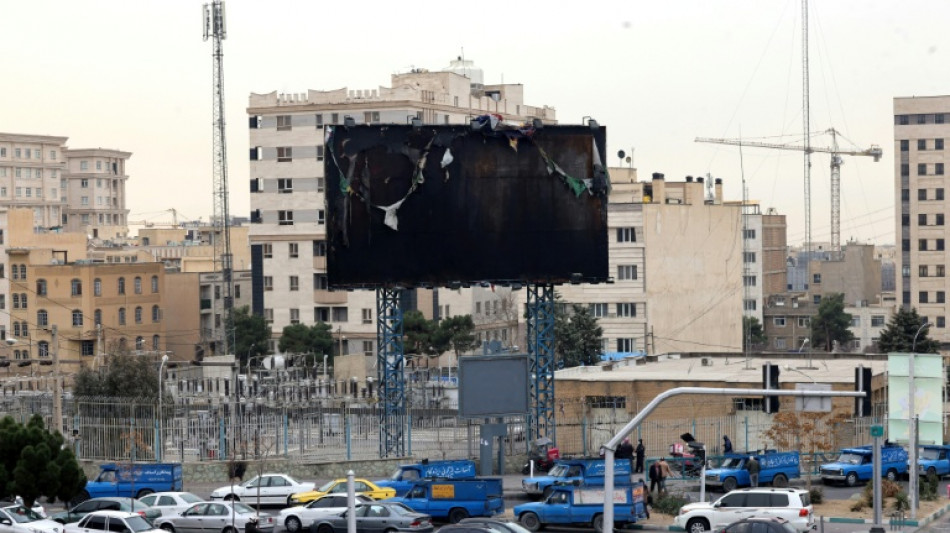
Iran warns protesters who joined 'riots' to surrender / Photo: © AFP

 London
 10 °C
10 °C

 Manchester
 9 °C
9 °C
 Glasgow
 10 °C
10 °C
 Dublin
 7 °C
7 °C
 Belfast
5 °C
Belfast
5 °C
 Washington
 15 °C
15 °C
 Denver
25 °C
Denver
25 °C
 Atlanta
19 °C
Atlanta
19 °C
 Dallas
19 °C
Dallas
19 °C
 Houston Texas
22 °C
Houston Texas
22 °C
 New Orleans
21 °C
New Orleans
21 °C
 El Paso
16 °C
El Paso
16 °C
 Phoenix
25 °C
Phoenix
25 °C
 Los Angeles
32 °C
San Diego
32 °C
San Francisco
27 °C
Chicago
14 °C
Minneapolis
16 °C
Seattle
15 °C
Portland
Los Angeles
32 °C
San Diego
32 °C
San Francisco
27 °C
Chicago
14 °C
Minneapolis
16 °C
Seattle
15 °C
Portland
 17 °C
Salt Lake City
21 °C
Las Vegas
25 °C
Miami
28 °C
Jacksonville
22 °C
San Antonio
20 °C
Bermuda
27 °C
Nassau
10 °C
Iqaluit
-9 °C
Yellowknife
9 °C
Anchorage
17 °C
Salt Lake City
21 °C
Las Vegas
25 °C
Miami
28 °C
Jacksonville
22 °C
San Antonio
20 °C
Bermuda
27 °C
Nassau
10 °C
Iqaluit
-9 °C
Yellowknife
9 °C
Anchorage
 5 °C
Fairbanks
1 °C
Barrow
-3 °C
Calgary
21 °C
Edmonton
5 °C
Fairbanks
1 °C
Barrow
-3 °C
Calgary
21 °C
Edmonton
 16 °C
Winnipeg
15 °C
Goose Bay
7 °C
Halifax
9 °C
Boston
9 °C
Ottawa
6 °C
Toronto
10 °C
Detroit
13 °C
Cleveland
10 °C
New York
11 °C
Baltimore
14 °C
Philadelphia
11 °C
Nuuk (Godthåb)
16 °C
Winnipeg
15 °C
Goose Bay
7 °C
Halifax
9 °C
Boston
9 °C
Ottawa
6 °C
Toronto
10 °C
Detroit
13 °C
Cleveland
10 °C
New York
11 °C
Baltimore
14 °C
Philadelphia
11 °C
Nuuk (Godthåb)
 1 °C
Hong Kong
1 °C
Hong Kong
 28 °C
Singapore
27 °C
Melbourne
23 °C
Canberra
7 °C
Adelaide
20 °C
Darwin
26 °C
Perth
17 °C
Fort Worth
18 °C
Honolulu
28 °C
Sydney
14 °C
Johannesburg
21 °C
Dubai
32 °C
Mumbai
29 °C
Zürich
10 °C
Tokyo
16 °C
Seoul
20 °C
Delhi
22 °C
Beijing
14 °C
Riyadh
30 °C
Prague
12 °C
Pennsylvania
12 °C
Valletta
22 °C
Manama
30 °C
Warsaw
7 °C
Stockholm
2 °C
28 °C
Singapore
27 °C
Melbourne
23 °C
Canberra
7 °C
Adelaide
20 °C
Darwin
26 °C
Perth
17 °C
Fort Worth
18 °C
Honolulu
28 °C
Sydney
14 °C
Johannesburg
21 °C
Dubai
32 °C
Mumbai
29 °C
Zürich
10 °C
Tokyo
16 °C
Seoul
20 °C
Delhi
22 °C
Beijing
14 °C
Riyadh
30 °C
Prague
12 °C
Pennsylvania
12 °C
Valletta
22 °C
Manama
30 °C
Warsaw
7 °C
Stockholm
2 °C
Iran's top police officer issued an ultimatum on Monday to protesters who joined what authorities have deemed "riots", saying they must hand themselves in within three days or face the full force of the law.
But the government also pledged to tackle economic hardships that sparked the demonstrations, which were met with a crackdown that rights groups say has left thousands dead.
The protests constituted the biggest challenge to the Iranian leadership in years, with the full scale of the violence yet to emerge amid an internet blackout.
National police chief Ahmad-Reza Radan on Monday urged young people "deceived" into joining the "riots" to turn themselves in and receive lighter punishment.
Those "who became unwittingly involved in the riots are considered to be deceived individuals, not enemy soldiers", and "will be treated with leniency", he told state television.
Officials have said the demonstrations were peaceful before descending into chaos fuelled by Iran's arch-foes the United States and Israel in an effort to destabilise the nation.
The heads of the country's executive, legislative and judicial branches on Monday all pledged to work "around the clock" in "resolving livelihood and economic problems", according to a joint statement published by state television.
But they would also "decisively punish" the instigators of "terrorist incidents", said the statement from President Masoud Pezeshkian, parliament speaker Mohammad Bagher Ghalibaf and judiciary chief Gholamhossein Mohseni Ejei.
Alarm has grown over the possibility that authorities will use capital punishment against protesters.
The United Nations on Monday warned the country was using executions as "a tool of state intimidation".
Iran -- the world's most prolific executioner after China, according to rights groups -- reportedly executed 1,500 people last year, UN rights chief Volker Turk said in a statement.
Security officials cited by Iran's Tasnim news agency said late last week that around 3,000 people have been arrested in connection with the demonstrations, but rights groups say the number could be as high as 20,000.
Supreme leader Ayatollah Ali Khamenei said on Saturday that authorities "must break the back of the seditionists".
The scale of the crackdown has emerged piecemeal as Iran remains under an unprecedented internet shutdown that is now in its 11th day.
Despite difficulty accessing information, the Iran Human Rights NGO says it has verified that 3,428 protesters were killed by security forces, warning the actual toll could be far higher.
Internet access would "gradually" return to normal this week, Hossein Afshin, Iran's vice president for science, technology and the knowledge economy, said Monday on state television, after limited access briefly returned the day before.
Images from the capital Tehran showed buildings and billboards destroyed during the rallies.
In Iran's second-largest city of Masshad, damage to public infrastructure exceeded $15 million, Mayor Mohammadreza Qalandar Sharif told state television.
Outside Iran, President Recep Tayyip Erdogan of neighbouring Turkey, in his first comments on the protests, described the unrest as a "new test" for Tehran, pledging Turkey would "stand against any initiative" that would drag the region into chaos.
"We believe that, with a... policy prioritising dialogue and diplomacy, our Iranian brothers will, God willing, get through this trap-filled period," he said in a televised speech.
C.Williams--SFF