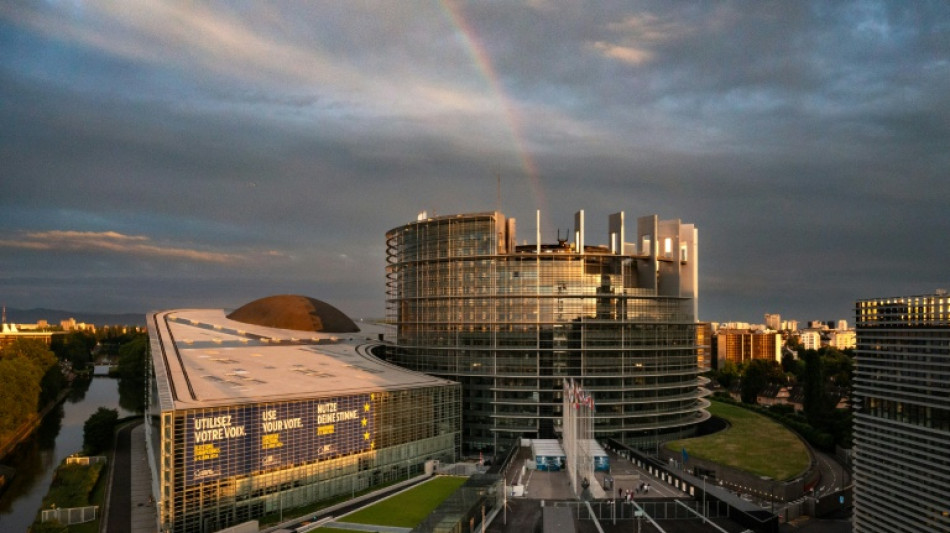
EU urged to broadly restrict 'forever chemicals' / Photo: © AFP

 London
 9 °C
9 °C

 Manchester
 10 °C
10 °C
 Glasgow
10 °C
Glasgow
10 °C
 Dublin
 9 °C
9 °C
 Belfast
 8 °C
8 °C
 Washington
 19 °C
19 °C
 Denver
 14 °C
14 °C
 Atlanta
 21 °C
21 °C
 Dallas
27 °C
Dallas
27 °C
 Houston Texas
27 °C
Houston Texas
27 °C
 New Orleans
24 °C
New Orleans
24 °C
 El Paso
25 °C
El Paso
25 °C
 Phoenix
27 °C
Phoenix
27 °C
 Los Angeles
26 °C
San Diego
27 °C
San Francisco
22 °C
Chicago
23 °C
Minneapolis
Los Angeles
26 °C
San Diego
27 °C
San Francisco
22 °C
Chicago
23 °C
Minneapolis
 12 °C
Seattle
11 °C
Portland
9 °C
Salt Lake City
15 °C
Las Vegas
22 °C
Miami
26 °C
Jacksonville
21 °C
San Antonio
27 °C
Bermuda
21 °C
Nassau
17 °C
Iqaluit
12 °C
Seattle
11 °C
Portland
9 °C
Salt Lake City
15 °C
Las Vegas
22 °C
Miami
26 °C
Jacksonville
21 °C
San Antonio
27 °C
Bermuda
21 °C
Nassau
17 °C
Iqaluit
 -4 °C
Yellowknife
0 °C
Anchorage
4 °C
Fairbanks
0 °C
Barrow
-1 °C
Calgary
0 °C
Edmonton
25 °C
Winnipeg
5 °C
Goose Bay
15 °C
Halifax
16 °C
Boston
17 °C
Ottawa
18 °C
Toronto
17 °C
Detroit
20 °C
Cleveland
19 °C
New York
19 °C
Baltimore
-4 °C
Yellowknife
0 °C
Anchorage
4 °C
Fairbanks
0 °C
Barrow
-1 °C
Calgary
0 °C
Edmonton
25 °C
Winnipeg
5 °C
Goose Bay
15 °C
Halifax
16 °C
Boston
17 °C
Ottawa
18 °C
Toronto
17 °C
Detroit
20 °C
Cleveland
19 °C
New York
19 °C
Baltimore
 18 °C
Philadelphia
19 °C
Nuuk (Godthåb)
-5 °C
Hong Kong
25 °C
Singapore
26 °C
Melbourne
27 °C
Canberra
10 °C
Adelaide
10 °C
Darwin
28 °C
Perth
12 °C
Fort Worth
27 °C
Honolulu
28 °C
Sydney
17 °C
Johannesburg
21 °C
Dubai
18 °C
Philadelphia
19 °C
Nuuk (Godthåb)
-5 °C
Hong Kong
25 °C
Singapore
26 °C
Melbourne
27 °C
Canberra
10 °C
Adelaide
10 °C
Darwin
28 °C
Perth
12 °C
Fort Worth
27 °C
Honolulu
28 °C
Sydney
17 °C
Johannesburg
21 °C
Dubai
 31 °C
Mumbai
31 °C
Zürich
8 °C
Tokyo
20 °C
Seoul
16 °C
Delhi
19 °C
Beijing
10 °C
Riyadh
28 °C
Prague
8 °C
Pennsylvania
18 °C
Valletta
20 °C
Manama
31 °C
Warsaw
8 °C
Stockholm
9 °C
31 °C
Mumbai
31 °C
Zürich
8 °C
Tokyo
20 °C
Seoul
16 °C
Delhi
19 °C
Beijing
10 °C
Riyadh
28 °C
Prague
8 °C
Pennsylvania
18 °C
Valletta
20 °C
Manama
31 °C
Warsaw
8 °C
Stockholm
9 °C
"Forever chemicals" pose a growing risk to health and the environment and should be broadly banned across the European Union, with some exceptions, EU experts said in findings published on Thursday.
Officially called PFAS, the substances are a group of more than 10,000 chemicals used in things like non-stick pans, stain-proof carpets, and other common products -- and often end up tainting food, water and wildlife.
Two committees of EU experts on Thursday published findings that highlighted their effects and that called for broad restrictions on the per- and polyfluoroalkyl substances (PFAS).
"PFAS pose growing risks to people and the environment. They are highly persistent, remaining in the environment for long periods, travelling long distances, contaminating groundwater and soil, while some cause serious health issues, such as cancer and reproductive harm," one of the committees said in a statement accompanying its findings.
The European Union is expected to put forward a proposal to ban PFAS, known as "forever chemicals", in everyday consumer products such as clothing and pizza boxes, with exemptions for strategic sectors, like the medical field.
A legislative proposal was initially promised for the end of 2025, but Brussels was waiting for opinions from the two committees set up by the European Chemicals Agency's (ECHA) -- one on the risks associated with 'forever chemicals', and one evaluating the economic and social impact of a ban.
The first committee, the Risk Assessment Committee (RAC), found the chemicals posed growing risks and said that the EU needed new regulations to address them.
- Balancing act -
But the two committees differed on how far the new restrictions should go.
Scientific risk assessment experts of the RAC said a total ban on "forever chemicals' would be the most effective way to minimise their impact, saying that exemptions would cause additional "emissions, leading to an uncontrolled risk."
But, the Socio-Economic Analysis Committee (SEAC) said a blanket ban is "likely not proportionate," given the lack of alternatives to the chemicals in several fields.
The committee still supported a "broad restriction" but stressed the need for a "balanced approach" in light of the wide use of the chemicals, and recommended "targeted" exemptions.
It recommended that risks be minimised through clear labelling on products containing "forever chemicals" and site-specific management plans for each industrial facility.
Environmental NGO ClientEarth welcomed the findings.
"PFAS pollution is ubiquitous and the health impacts on EU citizens are becoming clearer every day," Helene Duguy, a lawyer working for the organisation, said in a statement.
"Our policymakers owe it to people and our ecosystems across Europe to act now and prevent this emerging large-scale public health disaster," she added.
The European Union has already taken sector-specific action against certain PFAS.
A directive imposed since January has set a maximum threshold of 0.1 micrograms per litre for the combined concentration of 20 PFAS for "water intended for human consumption".
The European Parliament has also adopted rules on food packaging, introducing maximum PFAS concentrations from August, and on toys, in which forever chemicals and endocrine disruptors will be banned by 2030.
Chronic exposure to even low levels of the chemicals has been linked to liver damage, high cholesterol, reduced immune responses, low birth weights and several kinds of cancer.
In Brussels, environmental organisations accuse the European Union of being slow to legislate, under pressure from industrial lobbies.
European Union environment chief Jessika Roswall also welcomed the findings.
"We support the transition away from forever chemicals. As always, any new rules need to be simple by design and give certainty, clarity and predictability for consumers as well as businesses," Roswall said in a statement to AFP.
In January, an EU-commissioned report found that continued use of PFAS could cost Europe up to 1.7 trillion euros ($2 trillion) by 2050 because of their impact on people's health and the environment.
G.Allen--SFF