In crisis-hit Cuba, World Cup offers brief respite / Photo: © AFP

 London
 14 °C
14 °C

 Manchester
 12 °C
12 °C
 Glasgow
14 °C
Glasgow
14 °C
 Dublin
11 °C
Dublin
11 °C
 Belfast
11 °C
Belfast
11 °C
 Washington
13 °C
Washington
13 °C
 Denver
 16 °C
16 °C
 Atlanta
 15 °C
15 °C
 Dallas
21 °C
Dallas
21 °C
 Houston Texas
22 °C
Houston Texas
22 °C
 New Orleans
20 °C
New Orleans
20 °C
 El Paso
18 °C
El Paso
18 °C
 Phoenix
29 °C
Phoenix
29 °C
 Los Angeles
21 °C
San Diego
21 °C
San Francisco
Los Angeles
21 °C
San Diego
21 °C
San Francisco
 15 °C
Chicago
18 °C
Minneapolis
16 °C
Seattle
9 °C
Portland
10 °C
Salt Lake City
22 °C
Las Vegas
27 °C
Miami
28 °C
Jacksonville
25 °C
San Antonio
19 °C
Bermuda
25 °C
Nassau
12 °C
Iqaluit
15 °C
Chicago
18 °C
Minneapolis
16 °C
Seattle
9 °C
Portland
10 °C
Salt Lake City
22 °C
Las Vegas
27 °C
Miami
28 °C
Jacksonville
25 °C
San Antonio
19 °C
Bermuda
25 °C
Nassau
12 °C
Iqaluit
 -4 °C
Yellowknife
1 °C
Anchorage
8 °C
Fairbanks
-2 °C
Barrow
-4 °C
Yellowknife
1 °C
Anchorage
8 °C
Fairbanks
-2 °C
Barrow
 0 °C
Calgary
3 °C
Edmonton
15 °C
Winnipeg
14 °C
Goose Bay
2 °C
Halifax
8 °C
Boston
8 °C
Ottawa
1 °C
Toronto
10 °C
Detroit
15 °C
Cleveland
14 °C
New York
14 °C
Baltimore
13 °C
Philadelphia
12 °C
Nuuk (Godthåb)
0 °C
Hong Kong
0 °C
Calgary
3 °C
Edmonton
15 °C
Winnipeg
14 °C
Goose Bay
2 °C
Halifax
8 °C
Boston
8 °C
Ottawa
1 °C
Toronto
10 °C
Detroit
15 °C
Cleveland
14 °C
New York
14 °C
Baltimore
13 °C
Philadelphia
12 °C
Nuuk (Godthåb)
0 °C
Hong Kong
 29 °C
Singapore
29 °C
Singapore
 29 °C
Melbourne
26 °C
Canberra
15 °C
Adelaide
16 °C
Darwin
30 °C
Perth
17 °C
Fort Worth
20 °C
Honolulu
26 °C
Sydney
22 °C
Johannesburg
29 °C
Dubai
38 °C
Mumbai
36 °C
Zürich
13 °C
Tokyo
22 °C
Seoul
21 °C
Delhi
33 °C
Beijing
22 °C
Riyadh
37 °C
Prague
13 °C
Pennsylvania
9 °C
Valletta
25 °C
Manama
35 °C
Warsaw
12 °C
Stockholm
6 °C
29 °C
Melbourne
26 °C
Canberra
15 °C
Adelaide
16 °C
Darwin
30 °C
Perth
17 °C
Fort Worth
20 °C
Honolulu
26 °C
Sydney
22 °C
Johannesburg
29 °C
Dubai
38 °C
Mumbai
36 °C
Zürich
13 °C
Tokyo
22 °C
Seoul
21 °C
Delhi
33 °C
Beijing
22 °C
Riyadh
37 °C
Prague
13 °C
Pennsylvania
9 °C
Valletta
25 °C
Manama
35 °C
Warsaw
12 °C
Stockholm
6 °C
"You need to be happy," reads graffiti spray-painted on a ruined building swamped in trash in Cuba's capital Havana.
And for 100 minutes, as Morocco held local favorites Brazil to a draw, Cubans complied and put their troubles aside as football's World Cup came to state television on Saturday -- two days late.
In a small cafe in the densely populated Centro Habana district of pastel-colored townhouses with peeling facades and washing lines strung from the balconies, men perched on stools were watching the action on a small screen.
Baseball-mad Cuba has never taken part in a World Cup tournament.
But on the communist island, reeling from the worst economic crisis in over a generation, intensified by a US-imposed oil blockade, football is king among the kids particularly.
So when state television announced, a day after kick-off in nearby Mexico, that it would broadcast 16 games from the opening stages, the national mood lightened.
Now, if only the energy gods would also play ball by keeping the lights on for the matches.
There was no such luck for Ismael Veranes, the round-faced human resources director of Cuba's national theater.
Sipping a juice out of a carton -- his one indulgence for the game -- he came to the cafe after spending 20 hours without power at home.
Speaking in fluent French, this man of mixed Les Bleus and Selecao loyalties said the tournament provided a welcome respite amid chronic fuel shortages which have grounded most cars and public buses.
His commute to work now is an eight-kilometer (five-mile) roundtrip by foot, in crushing summer heat.
"And when you get home, exhausted, there's no electricity," he complained. "It's hot and there are mosquitoes."
- 'Clear our minds' -
An hour before the game, on a nearby corner, nine-year-old Lionel Messi fan Michael and his 10-year-old sister Meiliuvis were dribbling with a bottle top, under the benevolent watch of beret-clad Che Guevara on the wall of a gallery across the street.
Whereas in the past Cuban children were weaned on baseball -- Fidel Castro was known to bat for the crowds -- since the arrival of smartphones in 2018, "children lean more towards football," Michael's father Osmany explained.
And while the crisis is also etched in the island's "very degraded" football pitches, the World Cup "allows us to clear our minds for a while," he said with a smile.
Many Cubans speak nostalgically of World Cups past, when all the games were broadcast by state television, and food and fuel were not as scarce -- except in the early 1990s, when Soviet aid dried up.
This time round, only bars with cable TV and expensive beer show all the games, leaving many on the outside looking in, literally -- from the sidewalk.
"It's not the same," 36-year-old Alan said mournfully as he stood on the street discussing Brazil's prospects with two friends, a can of beer in hand.
In Cuba, however, some football fans are more equal than others.
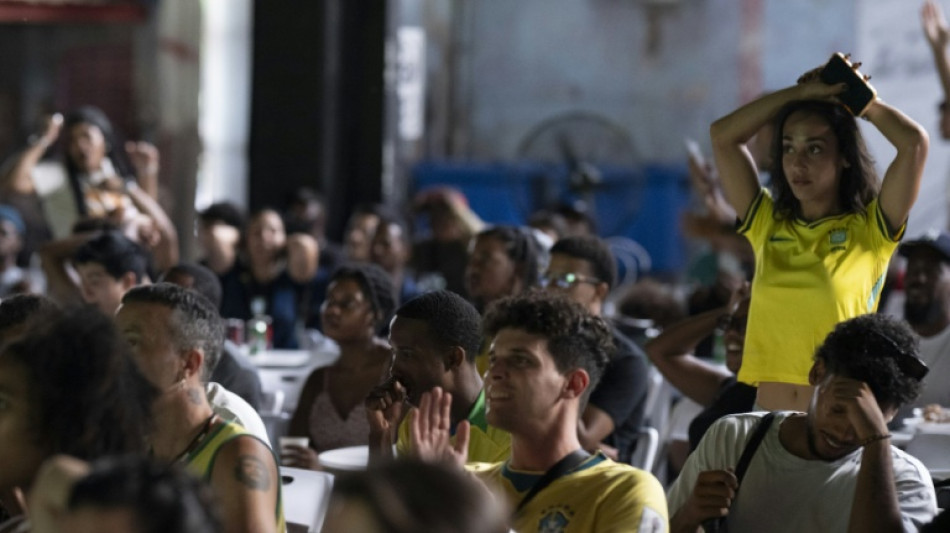
In Havana's leafy middle-class Vedado neighborhood, pints at a dollar a pop were flowing at a watch party in a cultural center festooned with a Brazil flag and World Cup bunting.
Outside, a row of SUVs attested to the existence of a small elite that is doing well on dollar salaries from the expanding private sector -- even as other Cubans rummage through rubbish bins for food.
But even here, the long arm of the crisis is visible, with the TV reception periodically freezing, triggering loud groans from supporters clad in the yellow Brazilian jerseys of stars Vinicius Junior, Neymar and others.
Victor Diaz, a 24-year-old biologist, looked grave as he described the need for escapism.
Having "something to lighten all the burdens that we're dealing with day by day is incredible," he said.
K.Torres--SFF