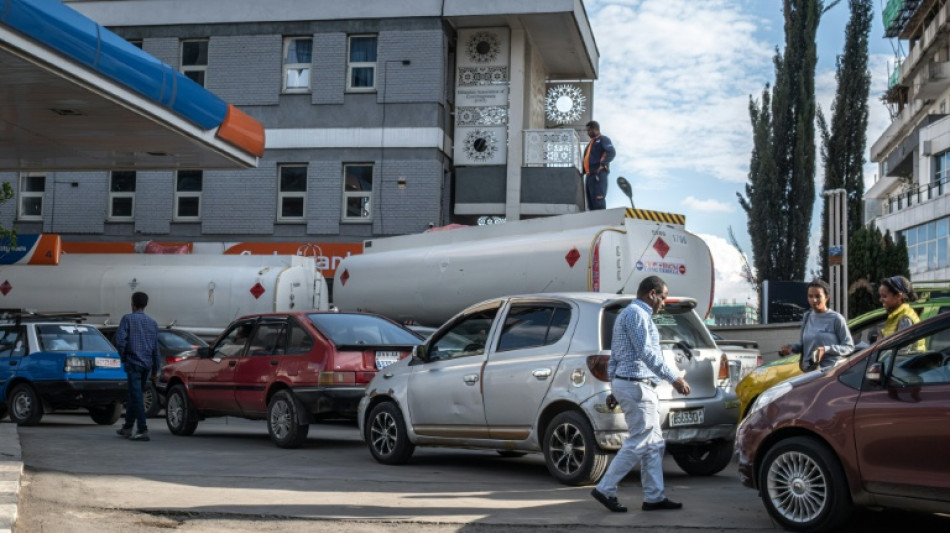
Overnight petrol queues in Ethiopia as war shortages hit / Photo: © AFP

 London
 10 °C
10 °C
 Manchester
9 °C
Manchester
9 °C
 Glasgow
9 °C
Glasgow
9 °C
 Dublin
8 °C
Dublin
8 °C
 Belfast
7 °C
Belfast
7 °C
 Washington
 17 °C
17 °C
 Denver
18 °C
Denver
18 °C
 Atlanta
17 °C
Atlanta
17 °C
 Dallas
 22 °C
22 °C
 Houston Texas
22 °C
Houston Texas
22 °C
 New Orleans
20 °C
New Orleans
20 °C
 El Paso
23 °C
El Paso
23 °C
 Phoenix
24 °C
Phoenix
24 °C
 Los Angeles
22 °C
San Diego
19 °C
San Francisco
12 °C
Chicago
17 °C
Minneapolis
23 °C
Seattle
7 °C
Portland
6 °C
Salt Lake City
18 °C
Las Vegas
21 °C
Miami
27 °C
Jacksonville
25 °C
San Antonio
23 °C
Bermuda
25 °C
Nassau
14 °C
Iqaluit
-4 °C
Yellowknife
Los Angeles
22 °C
San Diego
19 °C
San Francisco
12 °C
Chicago
17 °C
Minneapolis
23 °C
Seattle
7 °C
Portland
6 °C
Salt Lake City
18 °C
Las Vegas
21 °C
Miami
27 °C
Jacksonville
25 °C
San Antonio
23 °C
Bermuda
25 °C
Nassau
14 °C
Iqaluit
-4 °C
Yellowknife
 5 °C
Anchorage
6 °C
Fairbanks
2 °C
Barrow
-1 °C
Calgary
5 °C
Anchorage
6 °C
Fairbanks
2 °C
Barrow
-1 °C
Calgary
 0 °C
Edmonton
14 °C
Winnipeg
11 °C
Goose Bay
9 °C
Halifax
5 °C
Boston
8 °C
Ottawa
6 °C
Toronto
12 °C
Detroit
16 °C
Cleveland
14 °C
New York
15 °C
Baltimore
18 °C
Philadelphia
16 °C
Nuuk (Godthåb)
-1 °C
Hong Kong
0 °C
Edmonton
14 °C
Winnipeg
11 °C
Goose Bay
9 °C
Halifax
5 °C
Boston
8 °C
Ottawa
6 °C
Toronto
12 °C
Detroit
16 °C
Cleveland
14 °C
New York
15 °C
Baltimore
18 °C
Philadelphia
16 °C
Nuuk (Godthåb)
-1 °C
Hong Kong
 30 °C
Singapore
32 °C
Melbourne
26 °C
Canberra
15 °C
Adelaide
30 °C
Singapore
32 °C
Melbourne
26 °C
Canberra
15 °C
Adelaide
 25 °C
Darwin
25 °C
Darwin
 34 °C
Perth
18 °C
Fort Worth
22 °C
Honolulu
25 °C
Sydney
22 °C
Johannesburg
21 °C
Dubai
37 °C
Mumbai
37 °C
Zürich
11 °C
Tokyo
26 °C
Seoul
34 °C
Perth
18 °C
Fort Worth
22 °C
Honolulu
25 °C
Sydney
22 °C
Johannesburg
21 °C
Dubai
37 °C
Mumbai
37 °C
Zürich
11 °C
Tokyo
26 °C
Seoul
 28 °C
Delhi
31 °C
Beijing
26 °C
Riyadh
34 °C
Prague
10 °C
Pennsylvania
14 °C
Valletta
26 °C
Manama
34 °C
Warsaw
11 °C
Stockholm
8 °C
28 °C
Delhi
31 °C
Beijing
26 °C
Riyadh
34 °C
Prague
10 °C
Pennsylvania
14 °C
Valletta
26 °C
Manama
34 °C
Warsaw
11 °C
Stockholm
8 °C
Ethiopians said Friday they slept in their cars in hours-long queues for petrol as shortages caused by the Middle East war began to take their toll.
The effective blockade of the Strait of Hormuz by Iran, through which a fifth of the world's oil and gas normally passes, has caused shortages in many countries.
Ethiopia, a nation in the Horn of Africa with around 130 million people, is particularly vulnerable as it imports all its petrol, primarily from the Gulf.
Drivers waiting in an enormous queue at a petrol station in the Summit 72 area of the capital Addis Ababa said the wait was "more than a day".
"I've been in the queue since last night at around 7:00 pm. I spent the night in my car without food," said taxi driver Awoke Derese on Friday morning.
"I have already lost two days of business. I pay 2,000 birr ($13) per day in rental fees for the car. My family is at risk because I can't support them," he told AFP.
Shortages started to be noticed earlier this week. At another petrol station in the Summit 72 area, a worker said they had been closed for four days and did not know when fresh deliveries would arrive.
Bakery worker Natenahel Gedamu said his business needed fuel for generators and baking machines.
"We ran out yesterday and have not produced anything since," he said.
"I'm worried the station may run out of fuel before I reach it. I've already tried several stations -- this feels like my last chance," added Natenahel, who had been queueing since 4:00 pm the previous day.
Land-locked Ethiopia relies on the port of Djibouti for its imports. It has only 13 strategic reserve depots, according to the state-owned Ethiopian Petroleum Supply Enterprise, which did not respond to requests for comment from AFP.
Prime Minister Abiy Ahmed last week urged Ethiopians to "use oil sparingly and prioritise basic needs" until "the problem is resolved".
More than 40 percent of Ethiopians live below the poverty line, according to the World Bank, and fear the inflation -- already running around 10 percent -- from rising fuel prices.
Addis Ababa has been undergoing a major reconstruction drive in recent years, but some building projects were on hold this week, AFP journalists saw.
This included the "corridor" project to widen and renovate its streets and work in the Bole district near the airport.
F.Garcia--SFF