India's 'Tree Father' plants for a greener future / Photo: © AFP

 London
 13 °C
13 °C

 Manchester
 15 °C
15 °C
 Glasgow
12 °C
Glasgow
12 °C
 Dublin
14 °C
Dublin
14 °C
 Belfast
 13 °C
13 °C
 Washington
13 °C
Washington
13 °C
 Denver
18 °C
Denver
18 °C
 Atlanta
18 °C
Atlanta
18 °C
 Dallas
 30 °C
30 °C
 Houston Texas
31 °C
Houston Texas
31 °C
 New Orleans
29 °C
New Orleans
29 °C
 El Paso
23 °C
El Paso
23 °C
 Phoenix
 27 °C
27 °C
 Los Angeles
 23 °C
San Diego
24 °C
San Francisco
17 °C
Chicago
18 °C
Minneapolis
15 °C
Seattle
14 °C
Portland
21 °C
Salt Lake City
22 °C
Las Vegas
33 °C
Miami
28 °C
Jacksonville
21 °C
San Antonio
31 °C
Bermuda
28 °C
Nassau
16 °C
Iqaluit
3 °C
Yellowknife
9 °C
Anchorage
23 °C
San Diego
24 °C
San Francisco
17 °C
Chicago
18 °C
Minneapolis
15 °C
Seattle
14 °C
Portland
21 °C
Salt Lake City
22 °C
Las Vegas
33 °C
Miami
28 °C
Jacksonville
21 °C
San Antonio
31 °C
Bermuda
28 °C
Nassau
16 °C
Iqaluit
3 °C
Yellowknife
9 °C
Anchorage
 12 °C
Fairbanks
10 °C
Barrow
-1 °C
Calgary
16 °C
Edmonton
18 °C
Winnipeg
16 °C
Goose Bay
11 °C
Halifax
12 °C
Boston
11 °C
Ottawa
12 °C
Toronto
13 °C
Detroit
13 °C
Cleveland
13 °C
New York
17 °C
Baltimore
14 °C
Philadelphia
15 °C
Nuuk (Godthåb)
2 °C
Hong Kong
12 °C
Fairbanks
10 °C
Barrow
-1 °C
Calgary
16 °C
Edmonton
18 °C
Winnipeg
16 °C
Goose Bay
11 °C
Halifax
12 °C
Boston
11 °C
Ottawa
12 °C
Toronto
13 °C
Detroit
13 °C
Cleveland
13 °C
New York
17 °C
Baltimore
14 °C
Philadelphia
15 °C
Nuuk (Godthåb)
2 °C
Hong Kong
 30 °C
Singapore
30 °C
Melbourne
26 °C
Canberra
23 °C
Adelaide
24 °C
Darwin
30 °C
Perth
18 °C
Fort Worth
30 °C
Honolulu
28 °C
Sydney
25 °C
Johannesburg
13 °C
Dubai
30 °C
Mumbai
29 °C
Zürich
11 °C
Tokyo
27 °C
Seoul
24 °C
Delhi
25 °C
Beijing
21 °C
Riyadh
29 °C
Prague
11 °C
Pennsylvania
12 °C
Valletta
23 °C
Manama
32 °C
Warsaw
11 °C
Stockholm
12 °C
30 °C
Singapore
30 °C
Melbourne
26 °C
Canberra
23 °C
Adelaide
24 °C
Darwin
30 °C
Perth
18 °C
Fort Worth
30 °C
Honolulu
28 °C
Sydney
25 °C
Johannesburg
13 °C
Dubai
30 °C
Mumbai
29 °C
Zürich
11 °C
Tokyo
27 °C
Seoul
24 °C
Delhi
25 °C
Beijing
21 °C
Riyadh
29 °C
Prague
11 °C
Pennsylvania
12 °C
Valletta
23 °C
Manama
32 °C
Warsaw
11 °C
Stockholm
12 °C
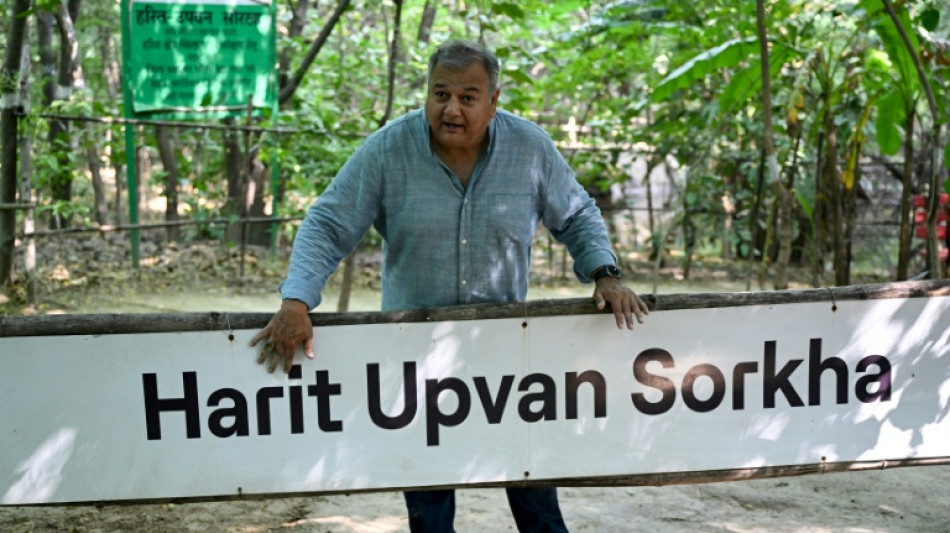
With Delhi's choking haze hanging overhead, Peepal Baba presses a young tree into the earth, continuing a nearly half-century mission to restore India's vanishing green cover.
"When I was young, I planted saplings like a soldier," said Swami Prem Parivartan, better known as "Peepal Baba", or "tree father", rubbing earth between his fingers and mixing wet mulch around the sapling's base.
It is the latest tree among millions that his teams estimate to have planted.
"What started as a solitary act of planting became contagious," he said.
At 60, he has turned a childhood fascination with trees into one of India's largest grassroots planting movements.
"We did not wait for governments to act," he said. "We gathered friends, volunteers, wanderers, believers."
In Delhi, a sprawling megacity of 30 million people with scorching summers and toxic winter air, his answer to environmental despair is stubbornly simple -- plant a tree, keep it alive, then plant another.
"Whatever little we can do for the environment, we have to do," he said, beaming a warm smile.
- 'Cooling towers' -
Exactly how many trees he has planted, and how much land has been restored, are not his focus.
His trust estimates it has restored vegetation across more than 270,000 hectares, or 2,700 square kilometres -- more than twice the size of Delhi and nearly as large as California's Yosemite National Park.
The organisation says it has planted or preserved 26 million trees.
But he insists numbers and exact areas are not the point.
"I never counted shade in digits," he said.
"It is not about planting one tree or two trees or 1,000 trees. It's about how you manage the land on which those plants have been planted."
His fascination with trees was nurtured by his grandmother and a garden he loved tending.
He planted his first trees on his 11th birthday, including a peepal, or Ficus religiosa, a tree with vast spreading roots, sacred to several of India's religions.
Peepal trees have provided shade for village meetings, temples, tea stalls and markets for centuries.
He calls them "cooling towers of human hope" in his 2026 autobiography.
- 'Touch the soil' -
He put aside a career in academia after university.
Instead, he set off across India by scooter to encourage people to grow trees -- and his nickname came from a villager he met while planting.
"Peepal Baba", he decided, carried more authority than "environmentalist", which he regarded as a foreign-sounding word at the time.
"My nickname travelled faster than my scooter," he writes.
That scooter carried him across India multiple times.
From his notebooks, he estimates he travelled nearly 540,000 kilometres (335,500 miles) -- enough to circle the Earth more than 13 times.
He slept wherever he found shelter -- in temples, homes, bus shelters or beneath a peepal tree.
Long sustained by individual and community donations, the trust has in recent years also brought on major corporate donors to expand its work.
With more than 1.6 million Instagram followers, he now also spreads his message through social media and a growing network of volunteers in the field.
His philosophy has expanded from planting trees to restoring the soil that sustains them.
"Every civilisation that respected its soil prospered; everyone that ignored it perished," he said.
"We've built skyscrapers tall enough to touch clouds, but forgotten how to kneel and touch the soil."
For him, the task remains simple: plant a tree, care for it and make sure it survives.
"When people ask, 'How many?', I answer, 'As many as it takes to give the Earth a second chance'."
B.Johnson--SFF