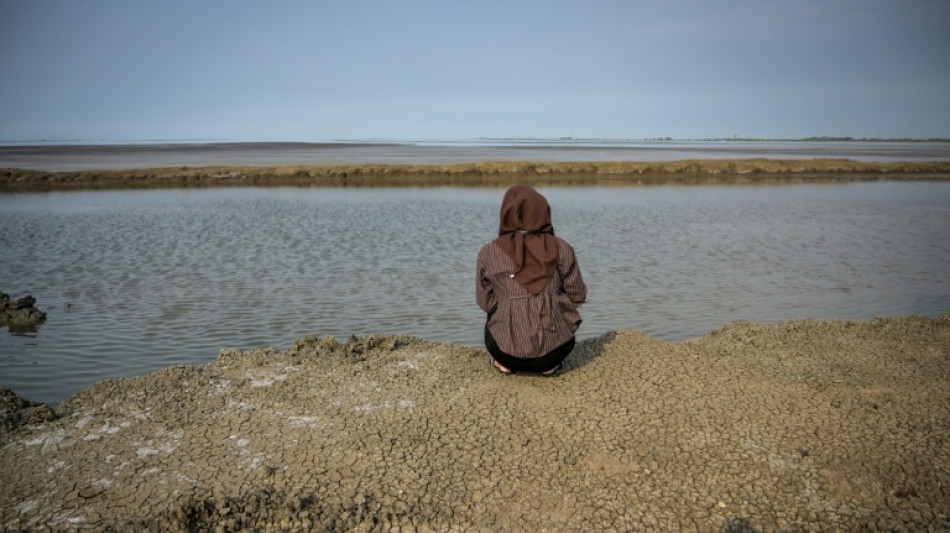
Two decades later, impacts from Indonesia mud volcano linger / Photo: © AFP

 London
 11 °C
11 °C

 Manchester
 11 °C
11 °C
 Glasgow
 14 °C
14 °C
 Dublin
11 °C
Dublin
11 °C
 Belfast
 11 °C
11 °C
 Washington
17 °C
Washington
17 °C
 Denver
 26 °C
26 °C
 Atlanta
18 °C
Atlanta
18 °C
 Dallas
29 °C
Dallas
29 °C
 Houston Texas
30 °C
Houston Texas
30 °C
 New Orleans
25 °C
New Orleans
25 °C
 El Paso
27 °C
El Paso
27 °C
 Phoenix
 38 °C
38 °C
 Los Angeles
27 °C
San Diego
28 °C
San Francisco
17 °C
Chicago
Los Angeles
27 °C
San Diego
28 °C
San Francisco
17 °C
Chicago
 19 °C
Minneapolis
19 °C
Seattle
12 °C
Portland
16 °C
Salt Lake City
26 °C
Las Vegas
35 °C
Miami
29 °C
Jacksonville
26 °C
San Antonio
30 °C
Bermuda
26 °C
Nassau
17 °C
Iqaluit
0 °C
Yellowknife
4 °C
Anchorage
9 °C
Fairbanks
5 °C
Barrow
1 °C
Calgary
12 °C
Edmonton
22 °C
Winnipeg
15 °C
Goose Bay
11 °C
Halifax
12 °C
Boston
14 °C
Ottawa
9 °C
Toronto
15 °C
Detroit
17 °C
Cleveland
16 °C
New York
19 °C
Baltimore
17 °C
Philadelphia
17 °C
Nuuk (Godthåb)
1 °C
Hong Kong
26 °C
Singapore
19 °C
Minneapolis
19 °C
Seattle
12 °C
Portland
16 °C
Salt Lake City
26 °C
Las Vegas
35 °C
Miami
29 °C
Jacksonville
26 °C
San Antonio
30 °C
Bermuda
26 °C
Nassau
17 °C
Iqaluit
0 °C
Yellowknife
4 °C
Anchorage
9 °C
Fairbanks
5 °C
Barrow
1 °C
Calgary
12 °C
Edmonton
22 °C
Winnipeg
15 °C
Goose Bay
11 °C
Halifax
12 °C
Boston
14 °C
Ottawa
9 °C
Toronto
15 °C
Detroit
17 °C
Cleveland
16 °C
New York
19 °C
Baltimore
17 °C
Philadelphia
17 °C
Nuuk (Godthåb)
1 °C
Hong Kong
26 °C
Singapore
 28 °C
Melbourne
29 °C
Canberra
18 °C
Adelaide
17 °C
Darwin
28 °C
Perth
17 °C
Fort Worth
28 °C
Honolulu
29 °C
Sydney
19 °C
Johannesburg
19 °C
Dubai
34 °C
Mumbai
30 °C
Zürich
12 °C
Tokyo
21 °C
Seoul
14 °C
Delhi
24 °C
Beijing
15 °C
Riyadh
26 °C
Prague
12 °C
Pennsylvania
14 °C
Valletta
25 °C
Manama
31 °C
Warsaw
11 °C
Stockholm
6 °C
28 °C
Melbourne
29 °C
Canberra
18 °C
Adelaide
17 °C
Darwin
28 °C
Perth
17 °C
Fort Worth
28 °C
Honolulu
29 °C
Sydney
19 °C
Johannesburg
19 °C
Dubai
34 °C
Mumbai
30 °C
Zürich
12 °C
Tokyo
21 °C
Seoul
14 °C
Delhi
24 °C
Beijing
15 °C
Riyadh
26 °C
Prague
12 °C
Pennsylvania
14 °C
Valletta
25 °C
Manama
31 °C
Warsaw
11 °C
Stockholm
6 °C
Harwati clasped her hands and offered a prayer on the edge of a sludge lake on the Indonesian island of Java, as dozen of residents gathered to mark two decades since mud volcano eruptions began displacing thousands.
On May 29, 2006, the earth in the Sidoarjo district of East Java province opened up, ejecting pungent, steaming hot mud that swallowed villages and factories.
Thirteen people died when an underground gas pipeline in the disaster zone exploded.
The eruptions, which continue to occur, destroyed at least a dozen villages and have displaced tens of thousands of people.
Harwati said the gathering, held on Friday to mark two decades since the disaster, was organised to remind the government that residents are still feeling the impact of the mudflow.
"Even though presidents change, we still hope (the government will) provide justice for us," the 50-year-old told AFP on Saturday, insisting that the disaster was "far" from over.
She demanded the government conduct a thorough examination of the mudflow's impacts on the health of nearby residents, saying many locals have suffered from cancers after the incident.
An area of over 600 hectares was swallowed by the mud, according to the government, as efforts to plug it, including with huge concrete balls, have proved ineffective.
The disaster forced Muhammad Irsyad to leave his village in 2012, as he could no longer tolerate pollution that seeped into the well his family relied on for cooking and bathing.
"I was angry when I wanted to take a bath because when we shower, my eyes got stung as soon as the water hits it," Irsyad, 62, told AFP.
Two decades since the disaster, Irsyad said he was still "rearranging" his life, with his family surviving on income earned from their food stall and drinking water sales.
Irsyad's wife Siti Chusniawati said she was "sad" to relocate to a new place, but added that the family had little choice.
"It was tough, but whether we want it or not, we just go on day by day, trying to be able to adapt with this new circumstance," the 48-year-old said.
- 'Not finished' -
Independent studies alternate blame between oil and gas company PT Lapindo Brantas, which was drilling in the area at the time, and an earthquake that struck two days earlier about 260 kilometres (162 miles) away.
Lapindo -- part of a business empire controlled by Indonesia's powerful Bakrie family -- was eventually ordered to compensate victims, but payments took years, triggering angry protests.
The government eventually intervened and loaned the company the funds to expedite the remaining payments.
Irsyad called the use of public money to pay for damages following the disaster an "injustice". He said the company should take responsibility.
Lapindo, which has since changed its name to Minarak Brantas Gas, did not immediately respond to an AFP request for comment, but the firm previously said investigations "determined that no correlation could be proven between the drilling activities and the mud eruption".
Environmental groups have found that groundwater near in area has been polluted following the disaster, causing illnesses for locals, said Melky Nahar, a coordinator of NGO Mining Advocacy Network (JATAM).
"After two decades, the destruction over the health, environment and base of production of people... are not finished," he said.
Irsyad, who moved to his current home some four kilometres away from his old one, said he told his friend that he wished to be buried in his old village.
"So my child and grandchild will look for me there. And from there they possibly will have a question: 'why grandfather was buried here?'"
J.Martinez--SFF